Iceland may be known for waterfalls and volcanoes, but its traditional Icelandic food is one of the most fascinating—and misunderstood—parts of its culture. Rooted in survival, shaped by isolation, and perfected over centuries, Icelandic cuisine tells the story of a people who learned to thrive in one of the harshest environments on earth.
Before modern refrigeration and imports, Icelanders had to use what the land and sea gave them: lamb, fish, dairy, wild herbs, and simple grains. Because of long winters and almost no vegetables, preservation became an art form—smoking, fermenting, pickling, drying, curing, and salting. During our visit to Iceland in March, we go to try all of the delicious food of Iceland.
More than a third of the population lives around the country’s capital, Reykjavik, which has more than 200 restaurants in the center, serving traditional and modern Icelandic food. A very popular and beloved way to experience authentic Reykjavik food is the walking tours the city offers for tourists and enthusiastic foodies.
Traditional Icelandic food could be called simple, yet it’s easily one of the healthiest one on the globe. The small island of Iceland is remote, far away from neighboring lands, surrounded by the cold Atlantic Ocean, and its land is mostly barren.
Top Questions on Icelandic Food
Table of Contents
What is the most eaten food in Iceland?
Pylsa (pulsa) or a hot dog – often listed as the top thing to eat in Iceland, it is made from a blend of lamb, beef, and pork.
Do they eat puffins in Iceland?
Puffin is not as readily available in shops as it used to be. Although it isn’t as common, you will be able to find Puffin on some menus in restaurants.
What is the national dish of Iceland?
I’m not sure if lamb is the national dish but they do eat lamb often and there are more lamb than people in Iceland.
What is a typical breakfast in Iceland?
Icelanders love dairy for their first meal of the day. I loved Skyr for breakfast when I was in Iceland. It is like Greek Yogurt but thicker and tastier.
Why do Icelanders eat rotten shark?
Fermented shark or “kæstur hákarl” is it is called in Icelandic is simply a way for Icelanders to stay in touch with their roots and ancestry.
Is there a Starbucks in Iceland?
There’s no Starbucks in Iceland.
Is there McDonald’s in Iceland?
Reykjavík is currently the only Western European capital city without a McDonald’s restaurant, as Iceland is one of only a few countries in the world where the hamburger chain has no restaurants. The US based fast food franchise once operated four restaurants in Iceland, but the last of these closed its doors in 2009.
This Iceland Food post may contain affiliate links. Purchasing or booking through these links earns us a commission at no extra charge to you. Thank you.
Book yourIcelandic Food tour here to eat your way through Reykjavik and trying all the delicious food of Iceland.
Top 10 Traditional Icelandic Foods You Must Try
Traditional Icelandic food is deeply rooted in survival, resourcefulness, and a strong connection to nature. For centuries, Icelanders preserved ingredients through drying, pickling, fermenting, and smoking, creating a cuisine shaped by harsh winters and limited resources. Today, these foods remain an important part of Iceland’s culture, heritage, and identity. Below are ten of the most iconic and traditional foods of Iceland—rich in history, flavor, and character.

1. Icelandic Lamb (Kjötsúpa, Hangikjöt & More)
The lamb in Iceland ranges free and feeds on wild grasses and Icelandic moss, and breathes the extremely fresh Icelandic air, all of these resulting in the animal growing naturally and healthy. This means their meat is really healthy and good tasting.
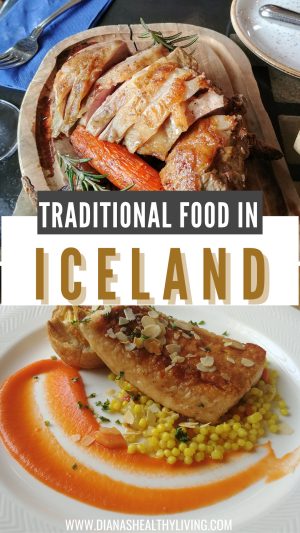
The Icelandic lamb fillet, or tenderloin, is very soft meat, one of the softest parts of the animal. It’s made from a part that the animal barely uses (from under the short loin), which means this piece of meat has no fat and no connective tissue. It’s so tender it almost melts in your mouth. Lamb fillet is very rich in protein, vitamin B12, iron, and zinc.
2. Codhead Food of Iceland
Now don’t let the name scare you away from this delicacy. Matur og drykkur, a famous Reykjavik restaurant that prepares centuries old traditional Icelandic dishes, makes amazingly delicious codhead. The Codhead is really big, and has a lot of tender and salty meat on it to consume (don’t think of it as just a face or something).
It’s being roasted in a barbeque for 40 minutes, after which the rich flavorful meat is one of the best fish you’ll ever try. Their cod is of course completely fresh caught locally. The Icelandic cod is the most common fish in the Atlantic ocean.

3. Kjötsúpa (Lamb soup)
Kjötsùpa, or also called Meat soup, is one of the oldest Icelandic foods that exists and is still being consumed today, presumably part of the Icelandic cuisine since the settlement (around 870). It’s originally called meat soup, because for long centuries the word meat was synonymous with lamb.
They had very little or no other type of meat to consume for long centuries. Kjötsùpa is made from the organic, free-roaming, grass-fed lamb, and the collection of some root vegetables (such as potato, carrots, onion), the only types that grew on these harsh and mostly barren lands. This is still a very popular dish, part of every household, as it’s very easy to prepare, it’s delicious and gives you a good energy boost. They serve it in literally every restaurant, food stand, or fast food place.
Where to find it: Icelandic Street Food

4. Pylsur (Lamb hotdog)
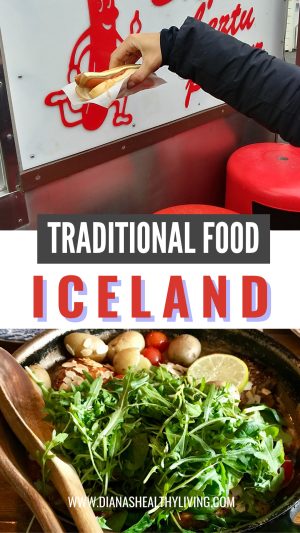
Icelandic lamb hotdog, Iceland street food, is a cherished food of Iceland both by locals and tourists alike. Even though many fast food places sell these lush hotdogs, we recommend trying it at the one and only Bæjarins Beztu Pylsur hot dog stand (which modestly translates to “best hot dogs in town”). This famous place is located in Reykjavik, near the harbor, and it has been proudly serving its signature Icelandic hotdog since 1936. It’s made out of fresh Icelandic lamb, served on a warm bun, with raw white onions, crispy fried onions, topped with ketchup, remoulade (mayo, capers, mustard, herbs), and pylsusinnep (brown mustard).
Read next: Top Things to do in Reyljavik

5. Fish of the day
Almost every restaurant in Iceland, and most likely in Reykjavik, has Catch of the day or Fish of the day written on their menus. Since they are surrounded by the Atlantic Ocean, and also have many freshwater on land (crystal clear rivers, lakes and streams), their seafood options are plenty. You can be sure that the fish of the day is the freshest fish you can ever try. The most common ones being Arctic charr, Salmon and Cod.
Arctic Charr is a freshwater fish, very common on the island, since Iceland is the largest Arctic charr producer in the world. It’s caught and also farmed, but no artificial products or medicaments are used on them. In case you are not familiar with this type of fish, but it is part of the Salmonidae family, which means it’s closely related to salmon.
It has a light, sweet and buttery taste, some would say somewhere between salmon and trout. Arctic charr has a large variety of ways that it can be consumed. It can be cooked, smoked, grilled, broiled, barbecued, it can be consumed with mushrooms, vegetables, fries.
Atlantic cod is a saltwater fish, and particularly the Icelanic one is one of the healthiest in the world. Thanks to the rich marine life of the Atlantic Ocean, Icelandic cod is consuming a lot of healthy seafood and has the ability to grow quite large as a result. By the time they grow large, they won’t have many natural predators left so they’re able to multiply fast and naturally. They have a very rich and flavorful meat, thanks to the large variety of seafood it costumes in its life.
Salmon is perhaps the most known and popular fish in the whole world, it being sold in supermarkets and restaurants in every corner of the globe. Icelandic salmon can be found in the oceans, and the freshwaters of Iceland (even in glacial rivers). Just like all the other fish types in the Nordic waters, salmon consumes plenty of high quality marine food.
6. Langoustine soup
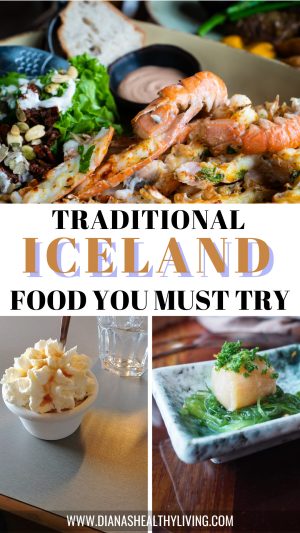
The Icelandic Langoustine (which means small lobster) soup is one of the most in-demand dishes of Sægreifinn restaurant in Reykjavik, by tourists and locals alike. Icelandic lobster, delicious food of Iceland, is caught in the wild (and never farmed) in the South Coast waters of Iceland. Because it eats very good quality marine food during its lifetime, Icelandic lobster has very tender meat, rich in flavor. The langoustine soup is creamy and salty, a real delicacy for any time of the year. It’s consumed with either toasts or baguette slices on the side.

7. Icelandic fish & chips
Funnily enough, this world famous British food also has its Icelandic version, except that Icelandic fish & chips is way healthier than the original British one. First of all, they have the freshest and healthiest fish in the world on their hands. Second of all, they prepare the batter from different ingredients. While the classic British version contains flour, vinegar, salt, beer, and baking soda, Icelandic fast food shops make theirs from Spelt flour and without beer, cooking in rapeseed oil. As a result, Icelandic fish & chip is light, tender, and healthier. Chips are not deep-fried, but roasted in the oven, making it crispy on the outside but creamy on the inside.
8. Plokkfiskur (Fish stew)
Plokkfiskur is the national stew of Iceland. As we mentioned, for long centuries, food was scarce and hard to come by, and the lands were not exactly fertile. So the Icelanders had to use absolutely every bit of food they could get their hands-on, and never waste any of it. This is how Plokkfiskur or fish stew came to be. They mixed up all the leftovers from other foods, that’s how they made Plokkfiskur. Plokkfiskur today is a simple but tasty mix of cooked and mashed Atlantic cod, flour, milk, potatoes, and onions, seasoned with salt and pepper. The tasty traditional food of Iceland.

9. Hákarl (Fermented shark)
This dish is not everyone’s cup of tea. You might like it or probably not, but it’s something truly quirky and special, found only in Iceland and Greenland. Fermented shark has a strong fishy taste with a bit of ammonia aftertaste. After eating, you are recommended to drink a shot of Brennívín, the local’s favorite Schnapp. This is a very unique traditional food of Iceland.

10. Brennivín
We’d like to end this list with the most popular spirituous drink the Icelanders consume, the Brennívín, because it’s so popular it deserves its own paragraph. It’s also nicknamed Black Death, a fitting name for a Viking drink. Brennivín is a strong schnapps made of fermented grain, containing no added sugar. It originates from Scandinavia, and it’s been an important part of Icelandic culture since the 16th century. It is often consumed after main dishes.
FAQs About Icelandic Food
Is Icelandic food expensive?
Yes—food in Iceland can be quite pricey. Because many ingredients are imported and the cost of living is high, restaurant meals and groceries often cost more than in other European destinations. Traditional dishes, especially seafood, can also be expensive due to their high quality and freshness. Budget travelers often opt for bakeries or street food to keep costs down.
Is Icelandic food safe to eat?
Absolutely. Iceland has some of the strictest food safety standards in the world. Its seafood is incredibly fresh, the water is pure, and meats are typically free from hormones and antibiotics. Even adventurous foods like fermented shark are safe—just an acquired taste!
What is the most famous traditional Icelandic dish?
The most iconic dish is hákarl (fermented shark). It’s widely known—not necessarily for its flavor, but for the bravery required to try it. On the more delicious side, Iceland is famous for lamb, fresh seafood, and hot dogs (pylsur).
Do Icelanders really eat whale and puffin?
Some restaurants serve whale and puffin, but these are not everyday dishes for most locals. Whale consumption in Iceland has decreased significantly, and many travelers choose not to eat it due to ethical reasons. Puffin is more commonly found in traditional or tourist-oriented restaurants.
What is a typical Icelandic breakfast?
A classic breakfast includes skyr (Icelandic yogurt), fresh berries, homemade bread, cheese, smoked salmon, or oatmeal. Icelanders start the day with hearty, simple foods.
Is Iceland good for vegetarians or vegans?
Traditional Icelandic cuisine is heavily meat- and seafood-based, but modern Iceland is very vegetarian- and vegan-friendly. Reykjavík, in particular, has many plant-based restaurants and grocery options.
Do Icelanders really eat sheep’s head (svið)?
Yes—svið is a traditional dish made from a boiled sheep’s head, dating back to centuries-old preservation methods. While not commonly eaten daily, it’s still served during traditional celebrations like Þorrablót.
What drinks are popular in Iceland?
Locals enjoy Brennivín, Iceland’s famous schnapps, often served with fermented shark. Craft beer has also become very popular, with many local microbreweries offering high-quality Icelandic brews. Icelandic water, straight from the tap, is some of the purest in the world.
What is Þorrablót and why does it involve strange foods?
Þorrablót is a traditional midwinter festival celebrating old Norse culture. It features historical foods like fermented shark, blood pudding, sheep’s head, and pickled ram testicles—foods originally created to survive harsh winters with limited resources.
Is it easy to find gluten-free food in Iceland?
Yes. Icelanders take dietary restrictions seriously, and many restaurants offer gluten-free breads, soups, pastries, and meals. Skyr, fish dishes, and lamb plates are naturally gluten-free.
Conclusion: Iceland’s Food Tradition Is Survival, Ingenuity & Purity
Traditional Icelandic food is not about extravagance—it’s about resourcefulness, purity, and a deep respect for nature. From geothermal bread to air-dried fish, from lamb roaming wild to shark fermented underground, every dish tells the story of Iceland’s people.
If you’re traveling to Iceland, these traditional foods will connect you to the country’s Viking roots, its challenging history, and its rich food culture that continues to evolve today.
More Iceland Travel & Food Posts You’ll Love
If you’re planning a trip to Iceland or want to dive deeper into Icelandic culture, food, and travel tips, here are more guides from the blog. These posts will help you plan where to eat, when to visit, and how to make the most of your Iceland adventure.
30 Fun Facts About Iceland
From quirky traditions to fascinating natural wonders, learn surprising facts about Iceland’s culture, food, and landscapes.
Lækjarbrekka Restaurant Reykjavík Iceland
Discover one of Reykjavík’s most charming restaurants serving elevated Icelandic cuisine in a cozy, historic setting.
Iceland Fine Dining – Kopar Restaurant Review
A full review of Kopar’s incredible 9-course tasting menu featuring fresh seafood, Icelandic lamb, and local ingredients.
The 6 Best Whale-Friendly Reykjavík Restaurants
Eco-friendly travelers will love this list of sustainable restaurants that avoid whale meat while serving amazing local Iceland foods.
13 Epic Reasons to Visit Iceland in March
Considering a March trip? Here’s why it might be the best time — including weather, northern lights opportunities, and quieter travel.