Cyprus is a land where history and faith are deeply intertwined. Beyond the beaches, tavernas, and cosmopolitan cities lies another Cyprus: one of golden mosaics, Byzantine frescoes, and sacred mountain peaks crowned with centuries-old monasteries.
Monasticism on the island dates back to the dawn of Christianity. According to tradition, St. Paul and St. Barnabas brought the faith here in the 1st century AD. From that moment onward, monasteries became not only places of prayer but also centers of culture, education, and resistance during periods of foreign rule. They preserved manuscripts, produced wine and olive oil, sheltered villagers during invasions, and maintained Cypriot Orthodox identity through Ottoman and British occupation.

Today, many monasteries are still active, while others remain as cultural landmarks and UNESCO World Heritage Sites. Some are grand and richly decorated, like Kykkos, while others are remote and humble, like Trooditissa. All of them, however, tell stories of devotion, resilience, and Cypriot spirit.
This guide explores the top monasteries of Cyprus in detail, followed by other important monastic sites across the Republic of Cyprus, practical travel itineraries and tips, and an FAQ section to help you plan your visit.
Orthodox Monasteries of Cyprus: History and Heritage
Table of Contents
Cyprus, often called the island of saints and churches, is home to a remarkable number of Orthodox monasteries. From mountaintop retreats where monks still live in solitude to richly decorated monasteries that safeguard relics of the Holy Cross, these spiritual centers are not only places of worship but also vital keepers of Cypriot culture, art, and history.
The majority of Cyprus’ monasteries are part of the Autocephalous Church of Cyprus, an independent Orthodox Church since 431 AD. Many were founded in the Byzantine and Medieval periods, often connected with miraculous icons of the Virgin Mary or relics of saints. They remain pilgrimage sites and are also treasures for travelers interested in history, architecture, and the spiritual traditions of the island.
The 17 Major Monasteries of Cyprus – Complete Guide
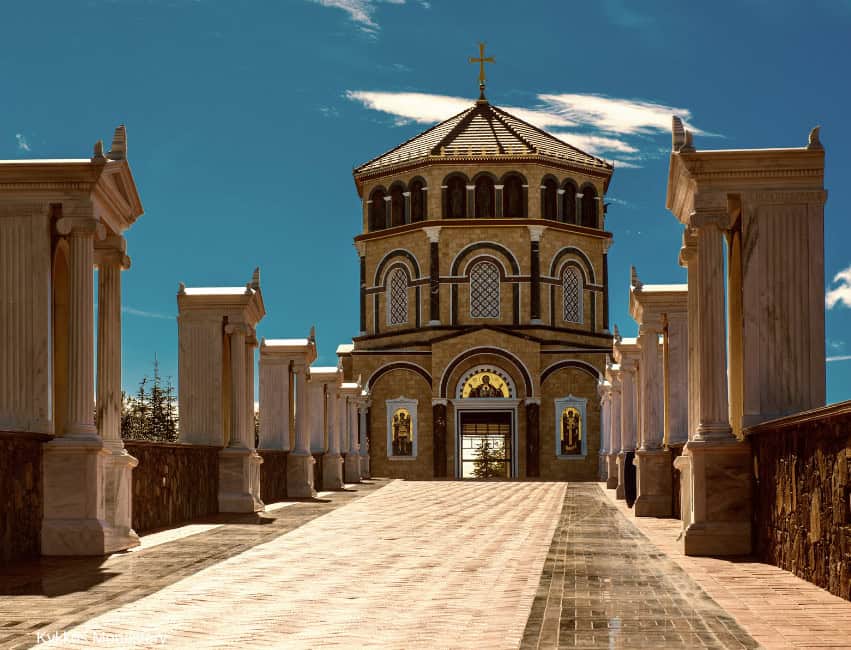
1. Kykkos Monastery (Panagia tou Kykkou) – Troodos Mountains
- Founded: Late 11th century by Byzantine Emperor Alexios I Komnenos.
- Significance: The most famous and wealthy monastery in Cyprus, dedicated to the Virgin Mary.
- Relics: Houses one of three icons attributed to St. Luke the Evangelist, depicting the Virgin and Child. The icon is kept covered, as tradition forbids viewing it directly.
- History: Burned several times by fire, but each time rebuilt grander. Its influence extended beyond religion — Kykkos was a center of political and cultural life. Archbishop Makarios III, the first President of Cyprus, began his clerical career here.
- Highlights for visitors: Golden mosaics, museum with manuscripts, and panoramic views over the Troodos peaks.
Check here for some of the top things to do when visiting Troodos Moutains.
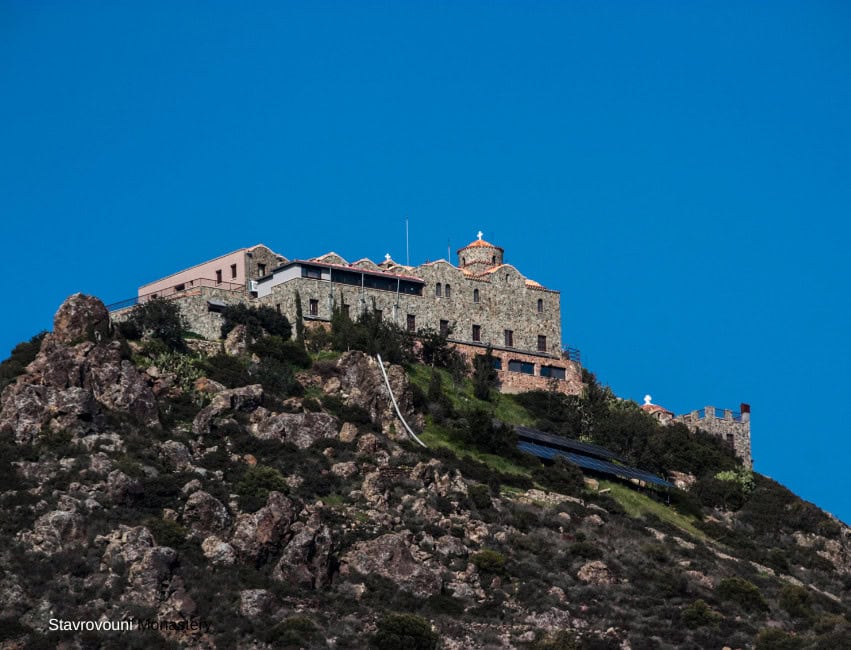
2. Stavrovouni Monastery (Monastery of the Holy Cross) – near Larnaca
- Founded: 4th century by Saint Helena (mother of Emperor Constantine the Great).
- Relics: Contains a piece of the True Cross. Although the original relic is no longer there, Stavrovouni has long been a revered pilgrimage site.
- History: Built on a 750m peak, symbolizing closeness to heaven. It has survived Arab raids, Ottoman rule, and multiple reconstructions.
- Tradition: Women are not permitted inside the main monastery, though they can visit the chapel nearby.
- Highlights: Dramatic hilltop setting, strict monastic life, and centuries of unbroken Orthodox tradition.
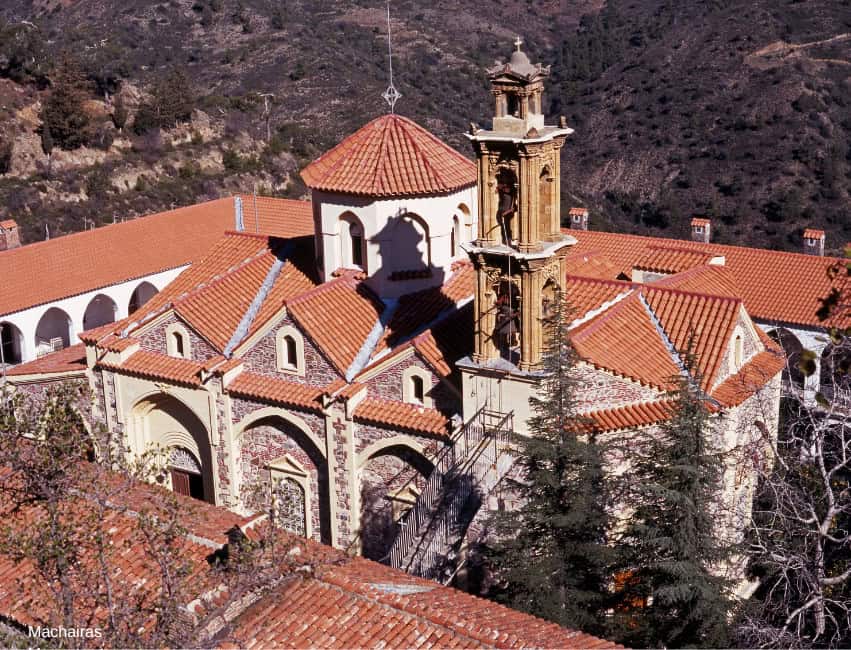
3. Machairas Monastery – Nicosia District, Troodos region
- Founded: 12th century, during Byzantine rule.
- Legend: Two hermits found a miraculous icon of the Virgin Mary hidden in a cave. With a knife (machaira in Greek), they cut through the bushes, giving the monastery its name.
- Role: Important spiritual and cultural center during the Frankish and Ottoman periods.
- Architecture: Features a large katholikon (main church) and fortified walls. The icon of Panagia Machairiotissa remains its most treasured relic.
- Today: Still an active monastery, with monks engaged in icon painting and spiritual teaching.
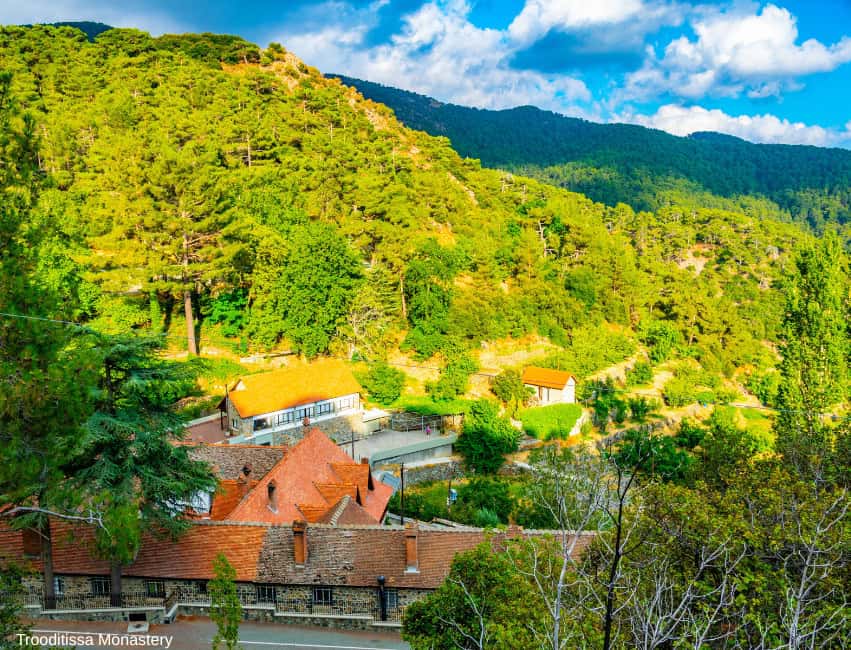
4. Trooditissa Monastery (Troodos Mountains)
- Founded: Believed to date from the 8th–9th century, rebuilt in later centuries.
- Fame: Known for its miraculous icon of the Virgin Mary, associated with fertility and childbearing. Couples often visit to pray for children.
- Tradition: The silver-plated icon, gifted by Emperor Alexios II Komnenos, is a powerful object of veneration.
- Architecture: Beautifully situated among pine trees with classic Troodos stone and timber style.
5. Chrysoroyiatissa Monastery – near Paphos
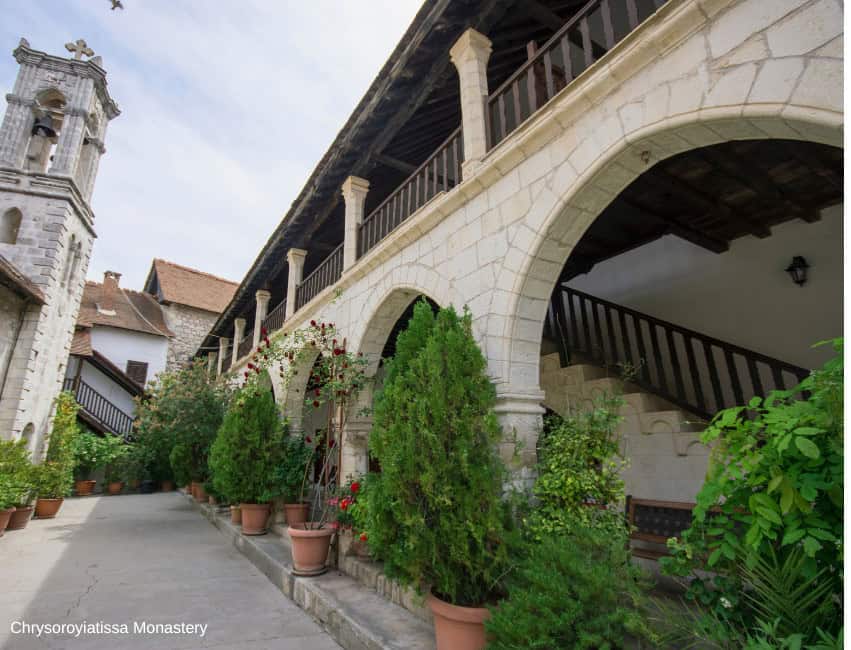
- Founded: 12th century by monk Ignatius who discovered an icon of the Virgin Mary floating on the sea.
- Meaning: “Chrysoroyiatissa” means “Our Lady of the Golden Pomegranate.”
- Fame: Known for its wine production — one of Cyprus’ oldest monastic wineries still operates here.
- Architecture: Restored 18th-century buildings with large courtyards and arched cloisters.
- Cultural Note: Each August 15th, a grand festival honors the Assumption of the Virgin..
You may also enjoy the top things to do when visiting Paphos.
6. Agios Neophytos Monastery – near Paphos
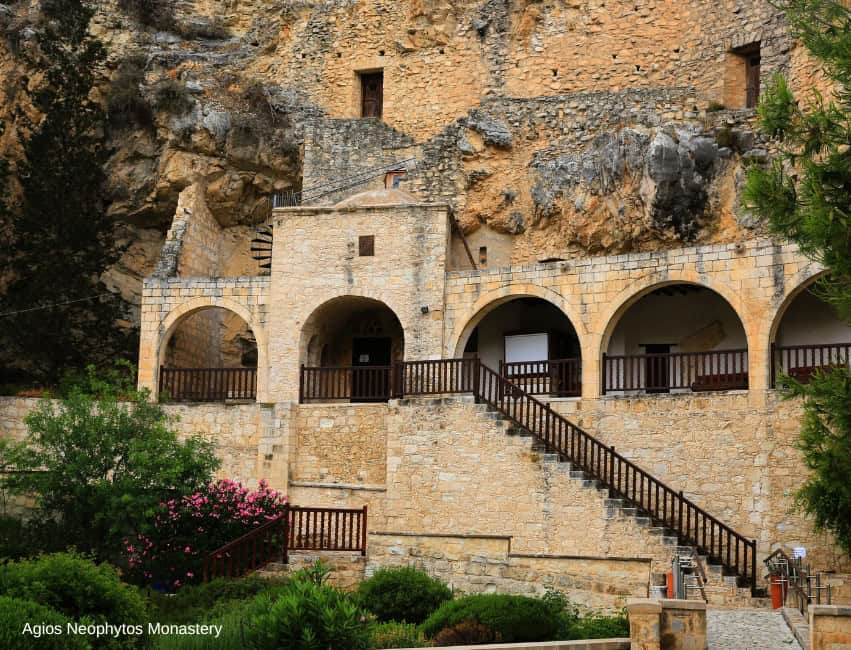
- Founded: 1159 by Saint Neophytos, a hermit who carved out a cave (Enkleistra) to live and pray.
- Highlights: Remarkable 12th–15th century frescoes, including rare examples of Byzantine art.
- History: The monastery grew around Neophytos’ cave, becoming a spiritual and cultural hub.
- Cultural Role: Provides insight into hermit life and Byzantine spirituality. Today, the monastery houses a museum of manuscripts and icons.
7. Timios Stavros Monastery, Omodos – Troodos Mountains

- Founded: 4th century, expanded in medieval times.
- Relics: Holds a fragment of the True Cross, making it one of Cyprus’ most sacred monasteries.
- Role: A center of local life in Omodos village, hosting the Feast of the Holy Cross (September 14th).
- Architecture: Stone-built complex with courtyards and cloisters, surrounded by wine-producing villages.
8. Panagia Sinti Monastery – Xeros Valley, Paphos
- Founded: 16th century.
- History: Abandoned for centuries, restored by UNESCO.
- Architecture: Noted for Renaissance influences in its stonework.
- Atmosphere: Secluded riverside setting, ideal for meditation.
9. Panagia tou Araka – Lagoudera (UNESCO Painted Church)
- Founded: 1192.
- Significance: One of the finest examples of Byzantine art in Cyprus.
- Highlights: Frescoes include Christ Pantocrator, the Last Judgment, and detailed saintly cycles.
- UNESCO: Part of the Painted Churches of Troodos World Heritage list.
10. Agios Ioannis Lampadistis Monastery – Kalopanagiotis
- Founded: 11th–12th century.
- Significance: UNESCO-listed, dedicated to Saint John Lampadistis.
- Highlights: Three churches under one roof, with outstanding frescoes and wooden iconostases.
- Role: One of the richest repositories of Byzantine painting in Cyprus.
11. Agios Minas Monastery – Kato Drys, Larnaca
- Founded: 15th century.
- History: Blend of Gothic and Byzantine architecture.
- Today: A convent; nuns produce olive oil, honey, wine, and handicrafts.
- Highlights: Vaulted church and peaceful rural setting.
12. Agios Georgios Alamanos Monastery – Limassol District
- Founded: 12th century, by soldiers (alamanos) who followed Saint Helena.
- Today: Active convent, with nuns known for handicrafts and farming.
- Products: Visitors can buy herbs, honey, and olive oil.
- Setting: Quiet valley near Limassol’s coast.
13. Panagia Angeloktisti – Kiti, Larnaca District
- Meaning: “Built by Angels,” after a legend of divine intervention.
- Founded: 6th century, over an early Christian basilica.
- Highlights: Mosaic of the Virgin Mary and Child, considered one of the finest in the Mediterranean.
- Role: Active parish and heritage monument.
Check out some of the best things to do when visiting Larnaca.
14. Ayia Napa Monastery – Ayia Napa
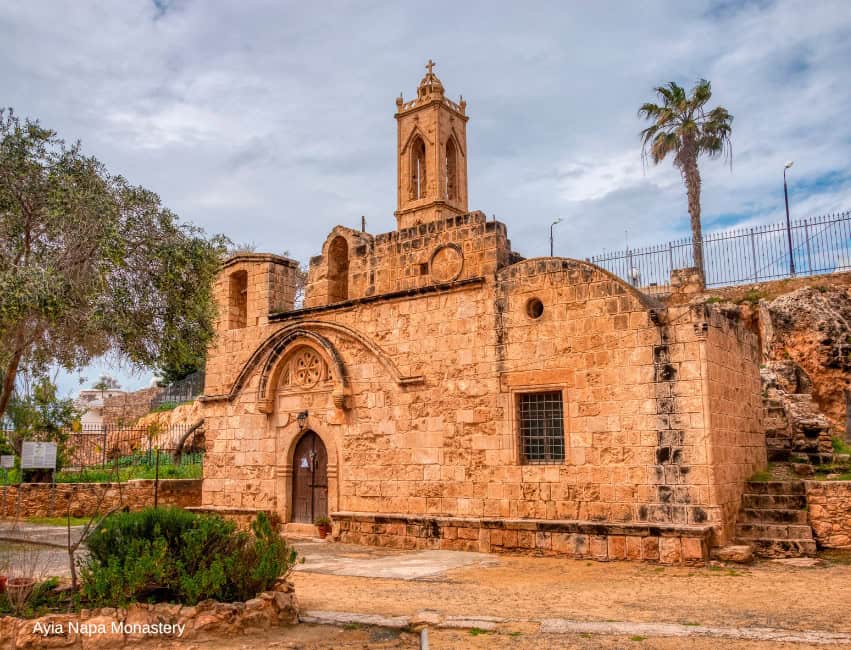
- Founded: 15th century, Venetian era.
- Legend: A hunter discovered an icon of the Virgin Mary in a cave, leading to the monastery’s founding.
- Highlights: Venetian stone arches, cloister, and the iconic sycamore tree in the courtyard.
- Role: Cultural heart of Ayia Napa before the resort boom.
15. Panagia Chrysopolitissa – Larnaca
- History: Early Byzantine foundations, later rebuilt.
- Dedication: To the Virgin “Our Lady of the Golden City.”
- Highlights: Byzantine icons and religious treasures.
- Atmosphere: Quieter, less visited, ideal for reflection.
16. Agios Nikolaos ton Gaton (Monastery of the Cats) – Akrotiri Peninsula, Limassol
- Founded: 4th century by Saint Helena, who brought cats to combat poisonous snakes in the area.
- History: Once very influential; now a small convent.
- Unique Note: Famous for its cats, which remain part of daily life at the monastery.
- Atmosphere: Historical, quirky, and deeply Cypriot.
17. Holy Cross Minthis Monastery (Stavros tis Minthis) – Tsada, Paphos
- Founded: 12th century.
- Relic: Holds a piece of the True Cross.
- History: Named after the mint plants surrounding the monastery.
- Today: Adjacent to Minthis Hills resort, but still retains spiritual character.
- Highlights: Blend of old stone architecture and restored features.
Travel Tips for Visiting Monasteries in Cyprus
- Dress modestly: Cover shoulders and knees. Some monasteries provide wraps.
- Photography: Often allowed outdoors, but not always inside churches.
- Opening hours: Many close midday (12:00–2:00 pm).
- Donations: Entry is usually free, but donations are appreciated.
- Combine with villages: Many monasteries are near wine villages or hiking trails.

Suggested 3-Day Monasteries of Cyprus Itinerary
Day 1: Troodos Mountains & Central Cyprus
Focus on famous mountain monasteries and UNESCO “painted churches”.
Morning:
- Kykkos Monastery (Troodos) – Begin at the most famous monastery in Cyprus, known for its St. Luke icon and opulent golden mosaics. Allow 1.5–2 hours for the monastery and museum.
Midday:
- Drive through the Troodos forest to Trooditissa Monastery, a quieter site famed for its fertility icon. Stop for fresh mountain air and photos.
- Lunch in Platres village or a local Troodos taverna (traditional trout dishes are popular).
Afternoon:
- Agios Nikolaos tis Stegis (UNESCO site near Kakopetria) – See some of the most complete Byzantine frescoes in Cyprus.
- Optional: Panagia Podithou (Galata) or Panagia Asinou (Nikitari) for additional fresco-rich UNESCO churches.
Evening:
- Stay overnight in a Troodos village guesthouse (Platres, Kakopetria, or Omodos) for authentic atmosphere.
Day 2: Larnaca & Nicosia Districts
Explore ancient monasteries linked to early Christianity and rural convents.
Morning:
- Stavrovouni Monastery (Larnaca District) – Start the day at Cyprus’s oldest monastery, founded by St. Helena. Men may enter; women can visit the chapels and admire the panoramic views.
Late Morning:
- Agios Minas Monastery (near Larnaca) – Visit this convent with its Gothic-Byzantine blend and nuns’ icon-painting workshops.
Midday:
- Lunch in Lefkara village, famous for handmade lace and silver.
Afternoon:
- Head north into the mountains to Machairas Monastery, surrounded by forest and legends of its miraculous Virgin Mary icon.
- On the way back, stop at Agios Herakleidios Monastery (Politiko, Nicosia District), built on the tomb of one of Cyprus’s earliest bishops.
Evening:
- Stay in Nicosia or return to your base in Larnaca.
Day 3: Paphos & Famagusta Districts
Combine monastic heritage with archaeology and the coast.
Morning:
- St. Neophytos Monastery (near Paphos) – Explore the rock-hewn hermitage and frescoes created by the saint himself.
- Chrysoroyiatissa Monastery (near Panagia village) – Taste traditional monastic wine and admire the mountain setting.
Midday:
- Lunch in a wine village (Panagia or Kathikas), sampling meze and local wines.
Afternoon:
- Drive toward Famagusta and visit Ayia Napa Monastery, a 15th-century Venetian structure right in the town center.
- If time allows, stroll to nearby Cape Greco for sea views and contrast the sacred with natural beauty.
Evening:
- Overnight in Ayia Napa/Protaras (for beachside rest) or return to your base.
Practical Notes for the Itinerary
- Best Season: Spring (March–May) and Autumn (Sept–Nov) for cooler weather in Troodos and pleasant coastal days.
- Driving Distances:
- Troodos monasteries loop: 2.5–3 hours driving (excluding stops).
- Larnaca/Nicosia monasteries: 2–2.5 hours total.
- Paphos–Ayia Napa drive is longer (~3 hrs), so start early or split over two days if possible.
- Dress Code: Always wear modest clothing (long trousers, covered shoulders). Bring a scarf/shawl for women.
- Combine with Villages: Each day offers stops in wine villages or heritage towns for food and culture.
Quick Reference: Monasteries in Cyprus
| Monastery | District | Founded | Key Highlights | Status Today |
|---|---|---|---|---|
| Kykkos Monastery | Troodos (Nicosia District) | 11th c. | Icon of Virgin Mary by St. Luke, golden mosaics, museum | Active, richest monastery in Cyprus |
| Stavrovouni Monastery | Larnaca | 4th c. | Relic of the True Cross, panoramic views | Active (men only inside main monastery) |
| Machairas Monastery | Nicosia District | 12th c. | Icon discovered by hermits, Byzantine frescoes | Active monastery |
| Trooditissa Monastery | Troodos | 8th c. (rebuilt 18th) | Fertility icon of Virgin Mary, pine forest setting | Active monastery |
| Chrysoroyiatissa Monastery | Paphos District | 1152 | Wine-making tradition, Virgin Mary icon | Active monastery |
| St. Neophytos Monastery | Paphos District | 1159 | Rock-hewn hermitage, frescoes by Apshiales | Active monastery |
| Timios Stavros Monastery (Omodos) | Limassol District | 4th c. | Relics of the True Cross, museum, village square | Active, major pilgrimage site |
| Agios Herakleidios Monastery | Nicosia District | 5th c. (rebuilt 18th) | Tomb of early bishop St. Herakleidios | Active nunnery |
| Panagia Amasgou Monastery | Limassol District | 11th–12th c. | Rare frescoes, icon painting workshops | Active convent |
| Agios Minas Monastery | Larnaca District | 15th c. | Gothic & Byzantine blend, handicrafts by nuns | Active convent |
| Agios Nikolaos tis Stegis | Troodos (near Kakopetria) | 11th c. | UNESCO frescoes (11th–17th c.) | Monument (not active) |
| Panagia Podithou | Troodos (Galata) | 1502 | UNESCO frescoes, Byzantine-Venetian blend | Monument (church only) |
| Panagia Asinou (Phorviotissa) | Troodos (Nikitari) | 12th c. | UNESCO frescoes, Byzantine masterpieces | Monument (not active) |
| Panagia Chrysopolitissa | Paphos Town | 4th c. basilica ruins | St. Paul’s Pillar, mosaics, medieval church | Active parish & archaeological site |
| Panagia Sfalaggiotissa | Limassol District | 13th c. | Restored monastery, quiet retreat | Active convent |
| Ayia Napa Monastery | Famagusta District (Republic side) | 15th c. | Venetian stone architecture, Holy Forest icon | Cultural monument (not monastic) |
Support Local Products at the Monasteries in Cyprus
Many monasteries in Cyprus produce artisanal goods that support their communities. Look for:
- Wine: Especially from Chrysoroyiatissa Monastery.
- Olive oil & honey: Available at Agios Georgios Alamanos and other convents.
- Herbal remedies and teas: Made by nuns and monks from local plants.
- Icon replicas and handicrafts: Unique souvenirs that also sustain monastery upkeep.
Check out our guide on the best souvenirs to buy in Cyprus.
Events and Festivals at the Monasteries in Cyprus
- Kykkos Monastery Feast Day: Celebrated on September 8th and August 15th with processions and liturgies.
- Stavrovouni (Exaltation of the Holy Cross): September 14th, commemorating the relic of the True Cross.
- Local village festivals: Many monasteries are tied to seasonal feasts with music, food, and wine.
Attending one of these celebrations offers a deeper insight into Cypriot Orthodox traditions.
Etiquette and Respect – Monasteries in Cyprus
When visiting monasteries in Cyprus:
- Keep voices low and avoid loud behavior.
- Do not touch or lean on icons unless invited to venerate.
- Remove hats before entering.
- Respect prayer times and avoid interrupting services.
- Always ask before taking photos inside churches.
Best Photo Spots at Cyprus Monasteries
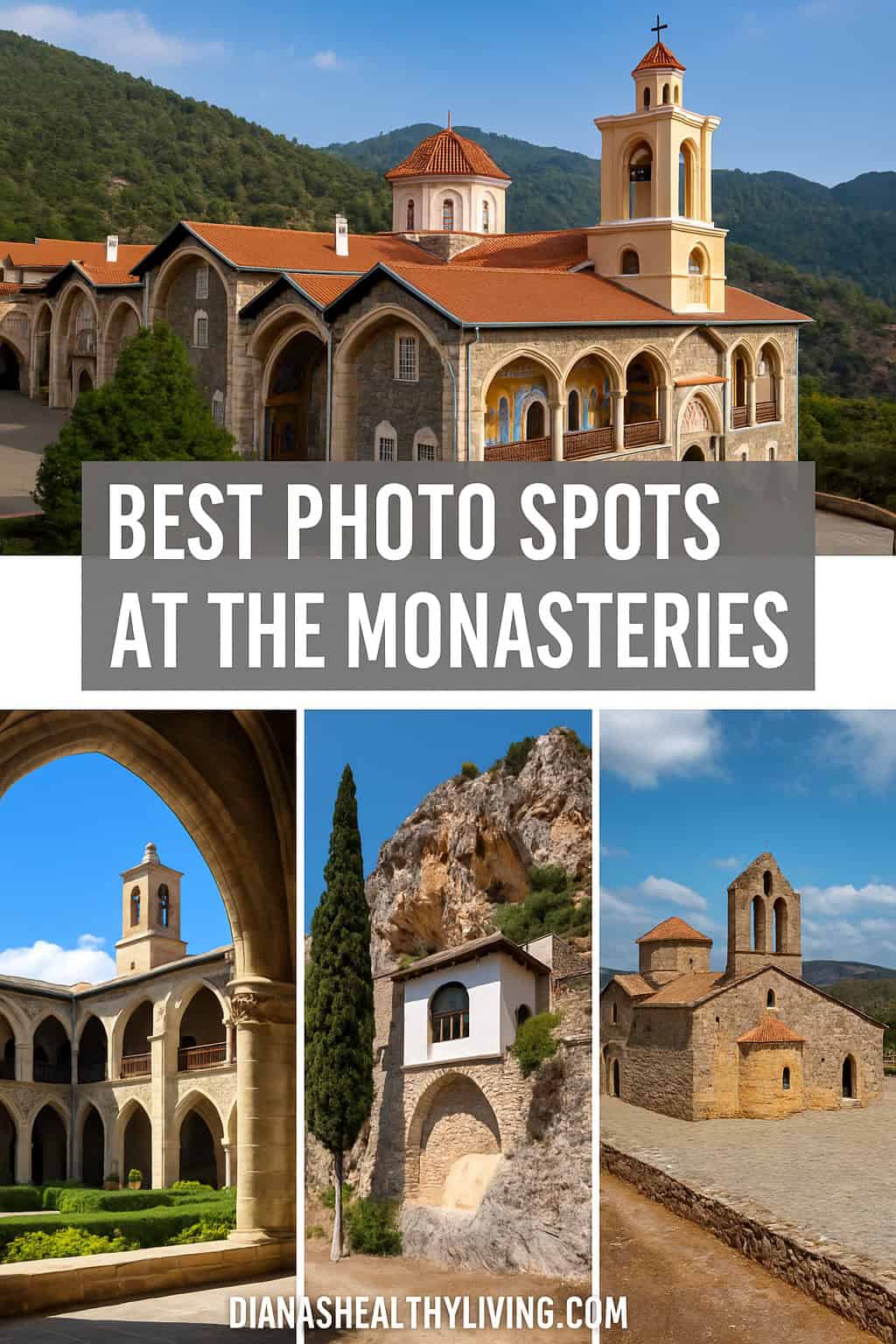
Visiting monasteries in Cyprus isn’t just a spiritual journey — it’s also a chance to capture some of the island’s most beautiful landscapes, courtyards, and frescoes. Here are the most photogenic monasteries to add to your camera roll:
Kykkos Monastery (Troodos Mountains)
- Why it’s photogenic: Grand golden mosaics, sweeping mountain views, colorful icons, and richly decorated halls.
- Best shot: The arched courtyard with mosaic walls or the panoramic view of Troodos forests from the terrace.
Omodos Monastery of the Holy Cross (Limassol District)
- Why it’s photogenic: Cobbled courtyard, lace shops surrounding the village, and beautiful archways.
- Best shot: The stone courtyard framed by arches with the bell tower in the background.
Stavrovouni Monastery (Larnaca District)
- Why it’s photogenic: Perched dramatically on a rocky hilltop with 360° panoramic views.
- Best shot: The monastery against the sky taken from below the hill, or sweeping landscapes from the summit.
Machairas Monastery (Nicosia District)
- Why it’s photogenic: Nestled deep in green pine-covered mountains with Byzantine charm.
- Best shot: The monastery roofline blending into the forested Troodos backdrop.
Chrysorrogiatissa Monastery (Paphos District)
- Why it’s photogenic: Famous for its vineyards, wine cellars, and terraced location.
- Best shot: The monastery façade with vineyards in the foreground.
Agios Neophytos Monastery (Paphos District)
- Why it’s photogenic: Rock-hewn caves and frescoes carved into the hillside.
- Best shot: The entrance to the Enkleistra caves with dramatic stone walls.
Panagia Trooditissa Monastery (Troodos Mountains)
- Why it’s photogenic: Secluded in pine forests, serene and atmospheric.
- Best shot: The quiet stone pathways under tall pines.
👉 Photography Tip: Always ask before photographing interiors or icons. Many monasteries allow courtyard and exterior photos but restrict pictures inside chapels. Early morning or late afternoon gives the softest light for capturing courtyards and mountain views.
FAQs About Monasteries in Cyprus
Do I need to be religious to visit?
Not at all—many come for history, art, and scenery.
Can women enter all monasteries?
Most monasteries are open, but Stavrovouni restricts access for women to chapels only.
Is there an entrance fee?
Most are free, though donations are welcome. Some museums within monasteries may charge €2–€5.
What should I wear?
Modest dress: long trousers for men, long skirts or trousers for women, and covered shoulders.
When is the best time to visit?
Spring and autumn for comfortable weather and beautiful surroundings.
Monasteries of Cyprus Conclusion
The monasteries of Cyprus are living monuments that bridge past and present. From the golden splendor of Kykkos, to the mountaintop majesty of Stavrovouni, to the humble cave hermitage of St. Neophytos, each offers a different perspective on the island’s story.
Together, they reveal Cyprus not only as a crossroads of civilizations but also as a land of deep faith and resilience. Whether you explore them on a day trip through the Troodos Mountains, a wine and monastery route in Paphos, or a quick visit to Ayia Napa’s Venetian monastery, these sacred sites provide insight, peace, and cultural richness.
Visiting monasteries in Cyprus is not just about architecture or history—it is about stepping into centuries of devotion and leaving with a sense of connection to something timeless.
