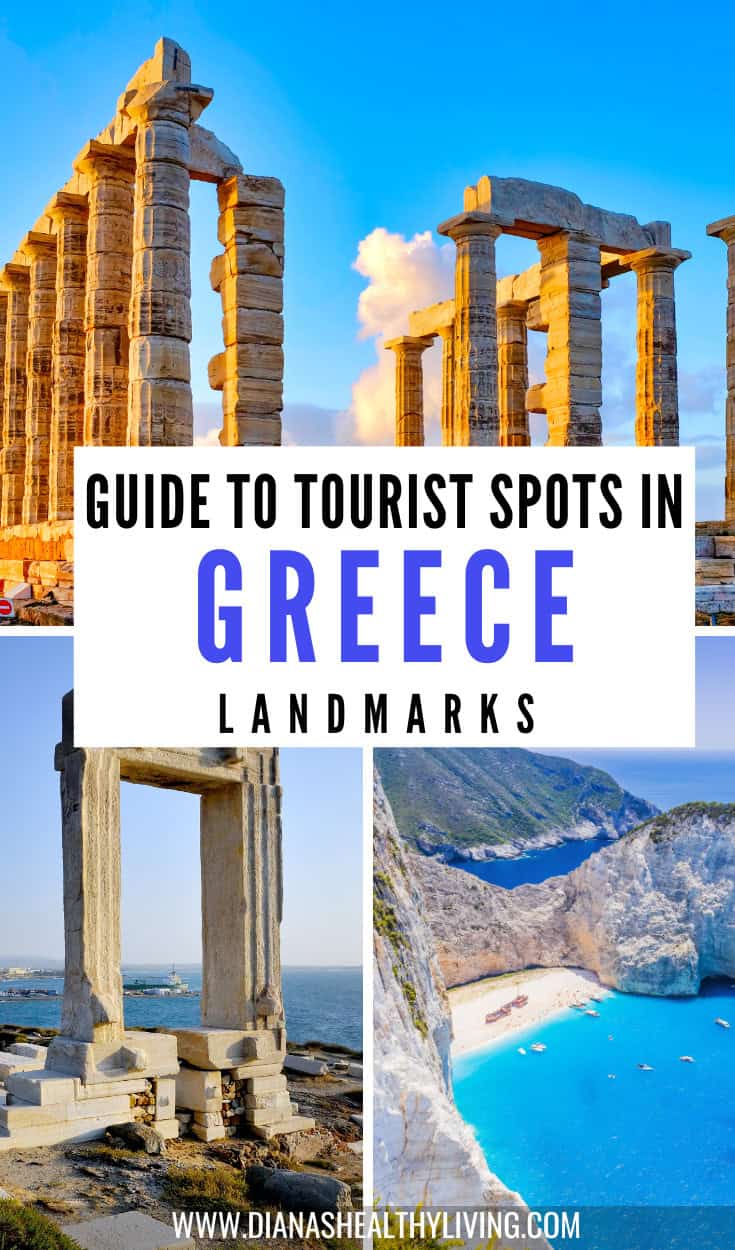
Greece is more than just a vacation—it’s a journey through history, mythology, and breathtaking beauty. From the marble columns of the Acropolis in Athens to the cliff-top monasteries of Meteora, the country is overflowing with Greece attractions that captivate visitors year after year. Whether you dream of watching the sun melt into the Aegean from Santorini’s whitewashed terraces, exploring the birthplace of the Olympic Games in Olympia, or wandering the medieval streets of Rhodes, the list of Greek landmarks and Greece attractions is endless.
Travelers come from across the globe to experience the best tourist spots in Greece, from iconic ruins and UNESCO World Heritage Sites to hidden island gems and charming coastal towns. With its blend of ancient history, vibrant culture, golden beaches, and timeless spirituality, Greece stands as one of the most unforgettable tourist destinations in the world. In this guide, we’ll explore the top 20 Greece attractions—from famous sites steeped in mythology to natural wonders that will leave you breathless—helping you plan the trip of a lifetime. You will also want to try the best Greek food while in Greece.

Top 20 Tourist Spots in Greece – Greece Attractions and Greek Landmarks
Table of Contents
If you’ve ever dreamed of walking among ancient ruins, relaxing on white-sand beaches, or watching legendary sunsets over the Aegean, then Greece should be at the top of your bucket list. This country is overflowing with Greece attractions that combine history, culture, and natural beauty. From the landmarks in Athens like the Acropolis and Parthenon to the mystical monasteries of Meteora, the famous islands of Santorini and Mykonos, and hidden gems like Nafplio, Naxos, and Patmos, Greece offers endless tourist spots to explore. Whether you’re interested in archaeology, mythology, beach escapes, or spiritual sites, this guide to the top Greece tourist attractions highlights the most famous places, must-see landmarks, and unforgettable sightseeing in Greece. It’s difficult to see all the tourist spots in Greece in one trip, a reason to return to Greece.
1. Acropolis & Parthenon (Athens) – Top Tourist Spot in Greece
History & Significance
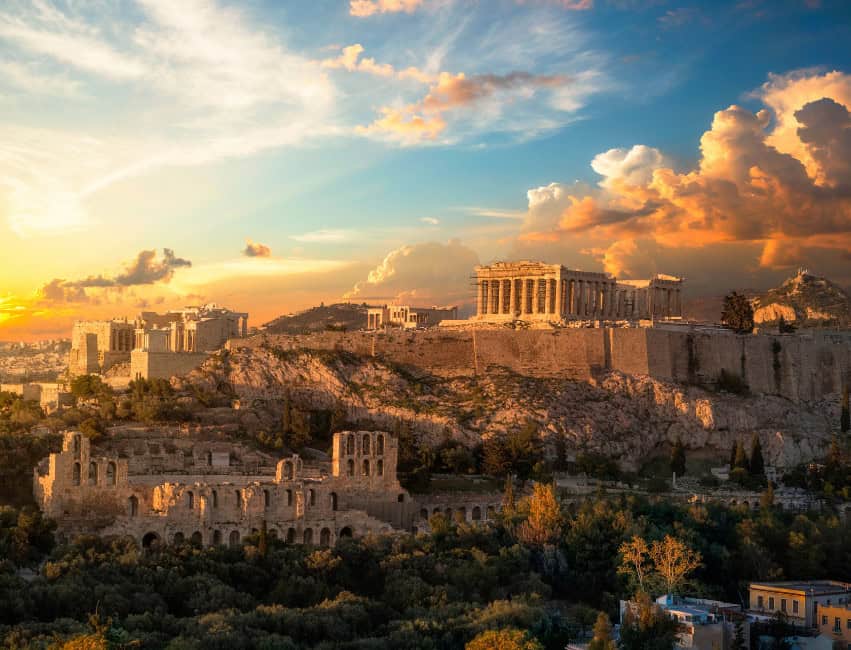
The top tourist spot in Greece, the Acropolis of Athens is not just one of the most famous landmarks in Greece — it’s one of the most iconic monuments in the world. Perched on a rocky hill above Athens, the Acropolis was developed in the 5th century BCE under the leadership of Pericles. The crown jewel, the Parthenon, was built between 447–432 BCE as a temple dedicated to Athena, the patron goddess of the city. Over the centuries, it has also served as a treasury, a Byzantine church, and a mosque during Ottoman rule. Despite wars and destruction, it continues to symbolize democracy, philosophy, and the achievements of classical Greece.
What to See / Highlights
- The Parthenon: Marvel at its perfect Doric design, once filled with sculptures by Phidias.
- Erechtheion: Famous for its porch supported by six graceful Caryatids.
- Temple of Athena Nike: A small temple celebrating victory.
- Propylaea: The monumental gateway into the Acropolis.
- Acropolis Museum: A must-visit for statues, friezes, and artifacts from the site.
Best Time to Visit
Spring (April–June) and autumn (September–October) offer pleasant weather and lighter crowds. In summer, go early in the morning or just before sunset for cooler temperatures and golden light.
Travel Tip
Wear sturdy shoes — the marble is slippery — and allow time to walk down to the Ancient Agora and Plaka neighborhood, which bring the city’s ancient and modern layers together. Plan ahead as it is super busy as it is the top tourist spot in Greece.
2. Delphi – Sanctuary of Apollo
History & Significance
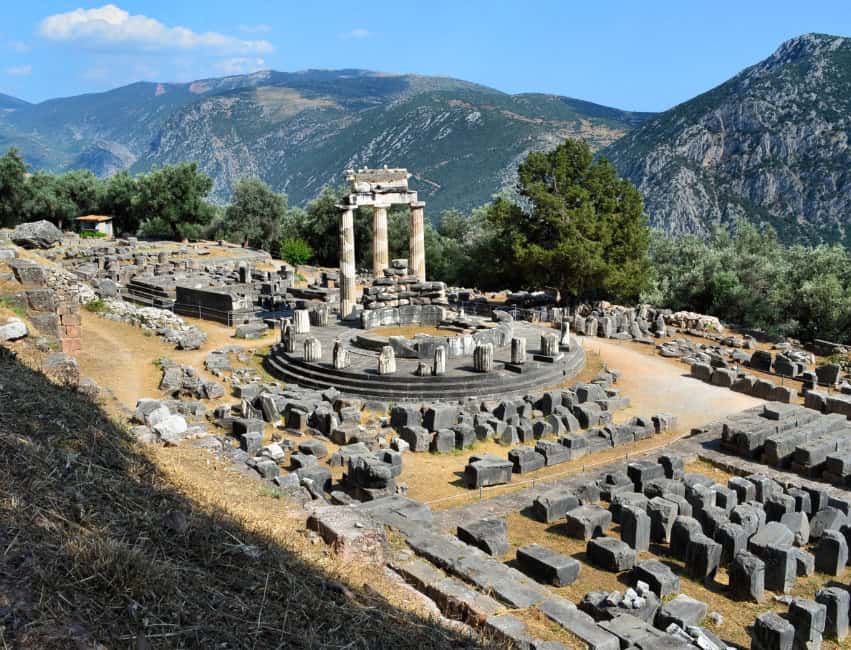
In the heart of Mount Parnassus, Delphi was once believed to be the very center of the world — the “navel” (Omphalos). It was one of the most sacred Greek tourist sites, where pilgrims from across Greece and beyond came to consult the Oracle of Apollo. The high priestess, known as the Pythia, delivered cryptic prophecies that influenced wars, city planning, and politics. Delphi also hosted the Pythian Games, second in prestige only to the Olympics. Its spiritual and cultural importance made it a true crossroads of ancient Greek civilization.
What to See / Highlights
- Temple of Apollo: Where the Pythia gave her oracles.
- Treasuries: Built by various Greek city-states to house offerings.
- Theatre: Set into the hillside, offering sweeping views.
- Stadium: Once hosted athletic competitions.
- Archaeological Museum: Don’t miss the Charioteer of Delphi, one of Greece’s greatest bronze statues.
Best Time to Visit
April–May and September–October, when the weather is mild and wildflowers or autumn leaves enhance the mountain setting.
Travel Tip
Bring good walking shoes — the site spreads across steep slopes — and allow half a day to fully explore both the ruins and the museum.
3. Meteora – Monasteries in the Sky
History & Significance
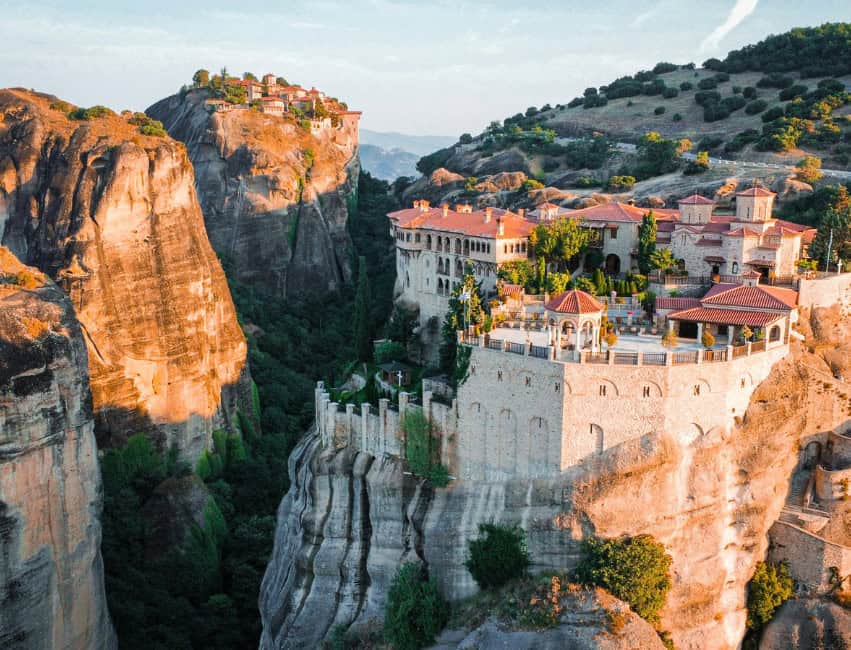
Meteora is one of the most dramatic tourist spots in Greece, where monasteries perch on massive sandstone pillars rising hundreds of meters above the valley floor. Monks began living in caves here as early as the 11th century, seeking isolation and spiritual devotion. By the 14th century, monasteries were constructed on the inaccessible cliffs as protection from invading forces. At its peak, 24 monasteries thrived here; today, 6 remain active. Recognized as a UNESCO World Heritage Site, Meteora blends natural wonder with spiritual heritage, making it a bucket-list Greece attraction.
What to See / Highlights
- Great Meteoron Monastery: The largest, with a museum and frescoes.
- Varlaam Monastery: Known for its impressive size and treasures.
- Rousanou Monastery: Picturesque and accessible.
- Hiking trails: Connecting viewpoints and monasteries through lush landscapes.
- Sunset viewpoints: The rocks glow golden, making it one of the most photogenic sights in Greece.
Best Time to Visit
May–October for warm weather and open monasteries. Winter brings snow and fog, creating a mystical atmosphere, but some monasteries close seasonally.
Travel Tip
Dress modestly — long pants for men, long skirts for women. If you don’t want to hike, join a guided sunset or photography tour.
4. Santorini – The Jewel of the Aegean

History & Significance
Santorini is perhaps the most famous of all Greece tourist destinations. Its crescent-shaped caldera was created by a massive volcanic eruption around 1600 BCE, which wiped out much of the island and buried the advanced Minoan settlement of Akrotiri. Many believe this disaster inspired the legend of Atlantis. Today, Santorini enchants travelers with its blue-domed churches, whitewashed houses clinging to cliffs, luxury cave hotels, and unforgettable sunsets.
What to See / Highlights
- Oia: Famous for postcard-perfect sunsets.
- Fira: The lively capital with shops and nightlife.
- Akrotiri Archaeological Site: A Minoan city preserved in volcanic ash.
- Unique beaches: Red Beach, Black Beach (Perissa/Kamari), and White Beach.
- Wine tours: Santorini’s volcanic soil produces unique wines, especially Assyrtiko.
Best Time to Visit
April–June and September–October. July and August are peak tourist months, very hot and crowded.
Travel Tip
Stay in Imerovigli for caldera views without the chaos of Oia, and try the hike from Fira to Oia for stunning views.
5. Mykonos – The Island of the Winds
History & Significance
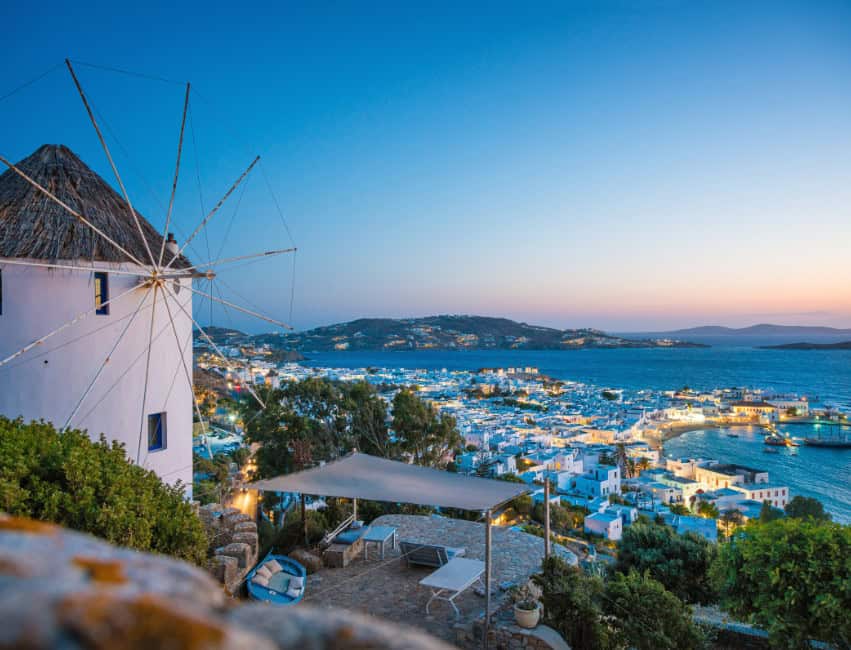
Known worldwide for its cosmopolitan charm and nightlife, Mykonos has roots in mythology — it is said to be where Hercules killed the giants. The island flourished as a trading hub in antiquity and later came under Venetian control, which influenced its architecture. Today, it’s one of the most glamorous tourist spots in Greece, attracting celebrities, partygoers, and beach lovers alike.
What to See / Highlights
- Mykonos Town (Chora): A maze of whitewashed alleys, boutique shops, and chic cafes.
- Kato Mili Windmills: A postcard-perfect Greek landmark overlooking Chora.
- Little Venice: Romantic houses built directly over the water.
- Beaches: Paradise, Super Paradise, Psarou, and Agios Sostis for quieter vibes.
- Delos: Take a short boat ride to this sacred island, one of the most important archaeological sites in Greece.
Best Time to Visit
May–June and September for warm weather without overwhelming crowds. July–August for peak nightlife.
Travel Tip
Explore Ano Mera village for a more authentic side of the island and rent a scooter or ATV to discover hidden beaches.
6. Crete – The Island of Legends
History & Significance
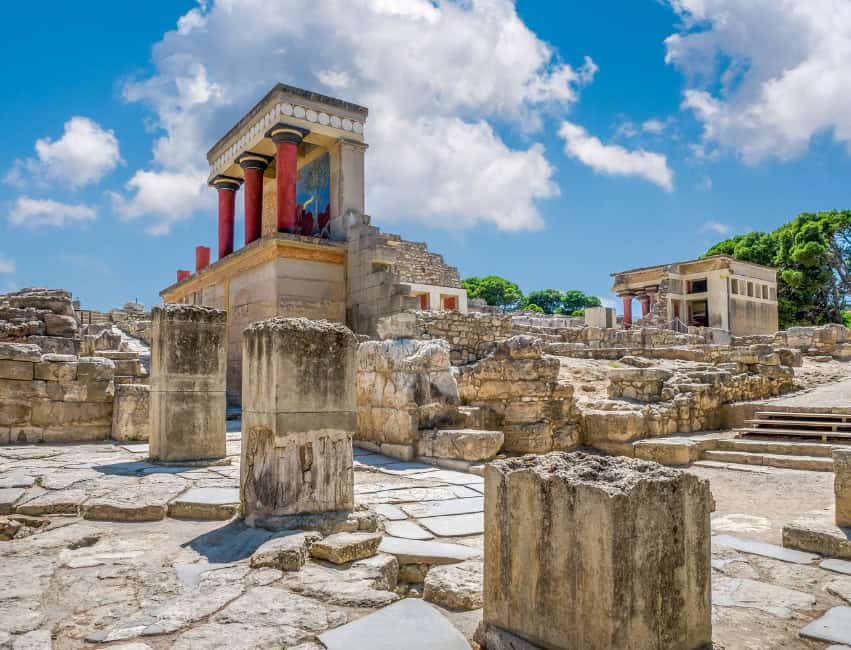
Crete, the largest Greek island, is often called a world of its own. It was the cradle of the Minoan civilization (Europe’s first advanced society), which flourished between 3000–1100 BCE. This was the homeland of King Minos, the mythical Labyrinth, and the Minotaur. Crete later became a crossroads for Romans, Byzantines, Venetians, and Ottomans, each leaving their mark on the island’s architecture and culture. Today, Crete remains one of the most diverse tourist destinations in Greece, blending ancient history, rugged mountains, fertile valleys, and some of the most beautiful beaches in Europe.
What to See / Highlights
- Knossos Palace: A Bronze Age palace linked to the Minotaur legend and one of the most famous landmarks in Greece.
- Samaria Gorge: A spectacular 16 km canyon hike through dramatic cliffs and wild nature.
- Elafonissi Beach: Famous for its pink-tinged sand and shallow turquoise waters.
- Balos Lagoon: A stunning lagoon with powdery sand and exotic scenery.
- Rethymno & Chania Old Towns: Charming Venetian harbors with colorful architecture and lively atmospheres.
Best Time to Visit
May–June and September–October are ideal for sightseeing and swimming. July and August bring intense heat and big crowds, while winter is mild but quieter.
Travel Tip
Crete is huge — rent a car and give yourself at least a week to explore. Each region (Heraklion, Chania, Rethymno, Lassithi) feels like its own world.
7. Rhodes – The Island of the Sun
History & Significance
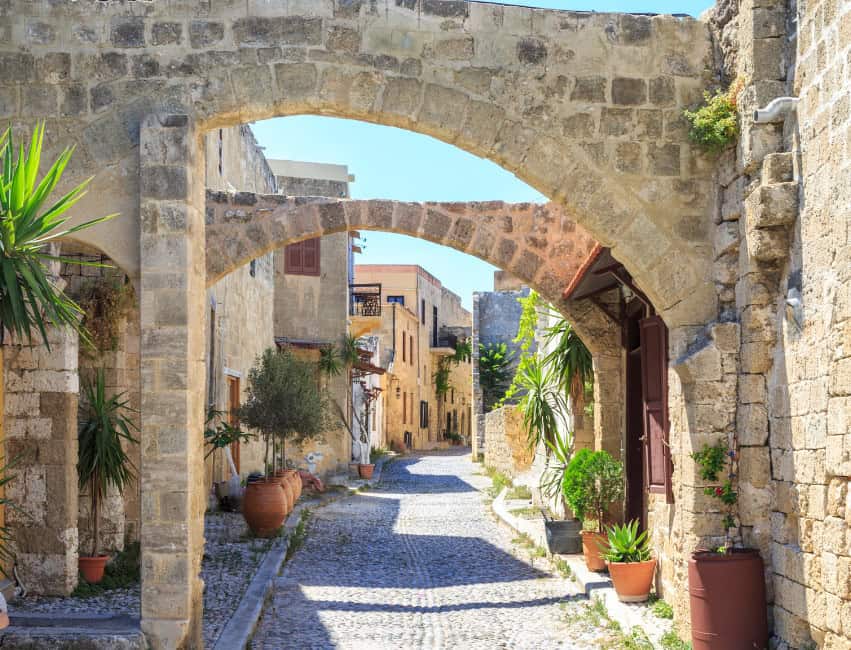
Rhodes has been inhabited since ancient times and was once home to the Colossus of Rhodes, one of the Seven Wonders of the Ancient World. In the medieval period, the island was ruled by the Knights of St. John, who fortified its Old Town, making it one of the best-preserved medieval cities in Europe. Venetian, Ottoman, and Italian influences further enriched Rhodes, turning it into a living museum of different eras. Today, it’s both a cultural treasure and one of the most popular holiday destinations in Greece.
What to See / Highlights
- Rhodes Old Town: A UNESCO World Heritage Site with cobbled streets, Gothic buildings, and Byzantine churches.
- Palace of the Grand Master: A medieval fortress turned museum, symbol of Rhodes’ chivalric history.
- Street of the Knights: The most atmospheric medieval lane in Greece.
- Lindos Acropolis: Perched on a cliff above the sea, combining ancient ruins and breathtaking views.
- Prasonisi Beach: A unique spot where the Aegean and Mediterranean seas meet, ideal for windsurfing.
Best Time to Visit
May–October. June and September are best for warm seas and fewer crowds compared to peak July–August.
Travel Tip
Stay overnight inside the Old Town to experience its medieval charm once cruise ship visitors leave.
8. Olympia – Birthplace of the Olympic Games
History & Significance
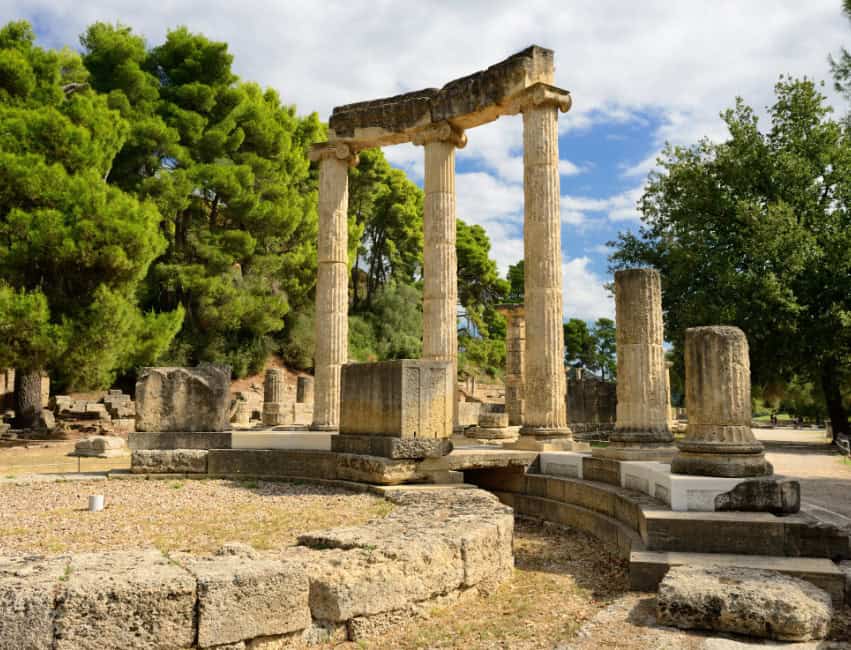
Olympia is one of the most famous Greek tourist sites and the birthplace of the Olympic Games, first held in 776 BCE. Dedicated to Zeus, the site hosted competitions every four years that brought together athletes from across the Greek world, promoting unity and peace. The Temple of Zeus once held a massive gold-and-ivory statue of the god, considered one of the Seven Wonders of the Ancient World. Olympia is both a sports landmark and a deeply spiritual site.
What to See / Highlights
- Ancient Stadium: Imagine the roar of crowds as athletes raced along the 200-meter track.
- Temple of Zeus: Ruins of the once colossal temple.
- Temple of Hera: Still used today to light the Olympic flame.
- Archaeological Museum of Olympia: Houses statues, bronze artifacts, and friezes.
- Leonidaion Guesthouse & Palaestra: Facilities where athletes trained and rested.
Best Time to Visit
Spring (April–May) and autumn (September–October) for pleasant weather. Summers can be extremely hot.
Travel Tip
Olympia pairs perfectly with a Peloponnese road trip — combine it with Nafplio, Epidaurus, and Mycenae.
9. Thessaloniki – Greece’s Cultural Capital
History & Significance
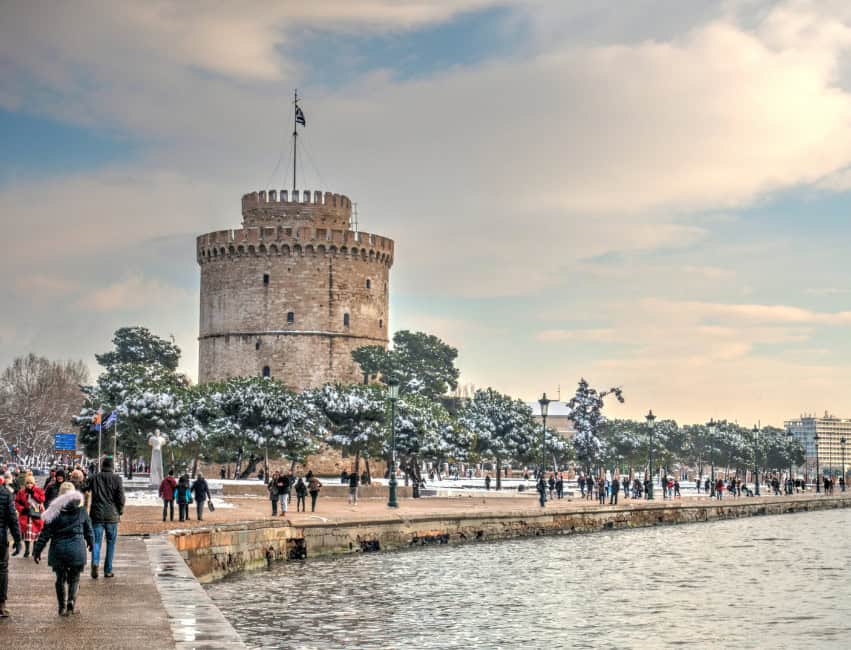
Thessaloniki, founded in 315 BCE by King Cassander and named after Alexander the Great’s sister, has been a crossroads of civilizations for centuries. It flourished as a Roman city, a major Byzantine hub, and later under Ottoman rule. Its rich history can be seen in its Roman ruins, Byzantine churches, Ottoman mosques, and Jewish heritage sites. Today, Thessaloniki is vibrant, youthful, and cosmopolitan, often referred to as the cultural and culinary capital of Greece.
What to See / Highlights
- White Tower: The city’s symbol, a 15th-century Ottoman fort turned museum.
- Rotunda of Galerius: A massive circular structure with Roman, Christian, and Islamic past.
- Arch of Galerius: Commemorating Roman victories.
- Ano Poli (Upper Town): Traditional Ottoman houses, Byzantine walls, and panoramic views.
- Byzantine Churches: UNESCO-protected sites like Hagia Sophia and Hagios Demetrios.
- Waterfront Promenade: A modern highlight, lined with cafes, art installations, and views.
Best Time to Visit
Spring and autumn are best for sightseeing. Summers are lively with festivals, while winters are mild compared to northern Europe.
Travel Tip
Food is a highlight here — try local specialties like bougatsa (custard pastry), koulouri (sesame bread ring), and fresh seafood along the waterfront.
10. Corfu – Venetian Elegance in the Ionian Sea
History & Significance
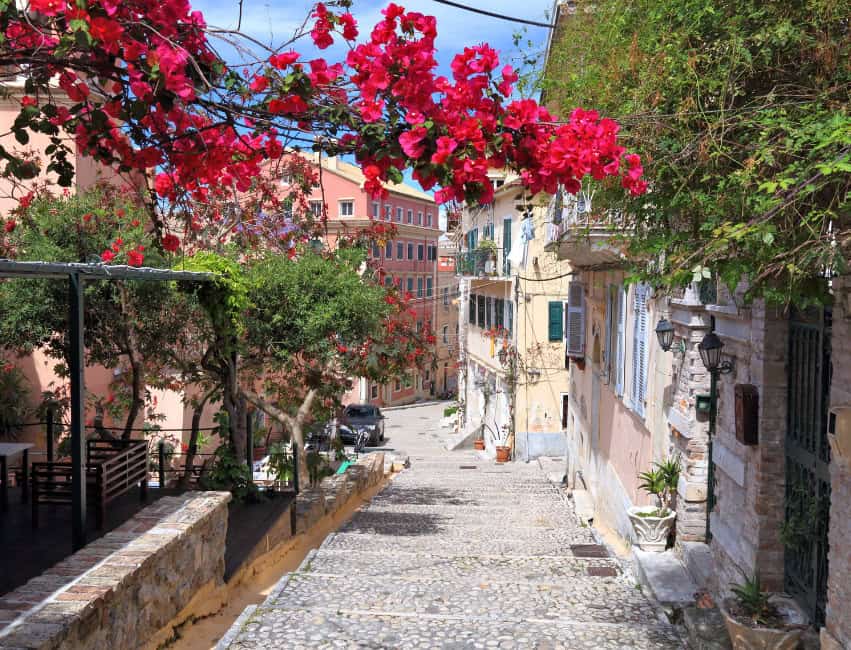
Corfu, located in the Ionian Sea, has a unique history distinct from much of Greece. While much of Greece fell under Ottoman rule, Corfu was controlled by Venetians, then French, then the British. These influences are still visible in its elegant architecture, forts, and culture. The Old Town of Corfu is a UNESCO World Heritage Site and one of the most beautiful places of interest in Greece.
What to See / Highlights
- Corfu Old Town: Wander the narrow alleys, Venetian mansions, and lively Spianada Square.
- Achilleion Palace: Built by Empress Elisabeth of Austria (“Sisi”), decorated with statues of Achilles.
- Old & New Fortresses: Venetian-built structures guarding the town.
- Paleokastritsa: A monastery overlooking emerald bays, one of the island’s most scenic spots.
- Kanoni Viewpoint: Iconic photo of the Mouse Island and Vlacherna Monastery.
Best Time to Visit
May–September. June and September are especially good for warm seas without peak summer crowds.
Travel Tip
Rent a car or scooter to explore hidden beaches and mountain villages. Don’t miss tasting Corfu’s kumquat liqueur, a local specialty.
11. Nafplio – Greece’s Romantic Escape

History & Significance
Nafplio, nestled on the Argolic Gulf in the Peloponnese, is often called one of the most romantic tourist spots in Greece. With its Venetian architecture, Ottoman fountains, and neoclassical mansions, it reflects the many powers that ruled it. Nafplio was also the first capital of modern Greece (1829–1834), making it historically significant for the country’s independence. Its fortresses, seaside promenades, and picturesque old town make it a must-see stop for travelers exploring mainland Greece.
What to See / Highlights
- Palamidi Fortress: Built by the Venetians in the 18th century, it sits dramatically above Nafplio. Brave the 999 steps for sweeping views.
- Bourtzi Castle: A Venetian fortress perched on a small islet in the harbor.
- Old Town: A maze of bougainvillea-lined streets filled with tavernas, shops, and gelaterias.
- Archaeological Museum: Featuring Mycenaean-era artifacts.
- Nearby Sites: Epidaurus and Mycenae, two of the most important archaeological landmarks in Greece, are within a short drive.
Best Time to Visit
Spring and autumn are ideal for sightseeing. Summers are lively with festivals but can be hot.
Travel Tip
Stay overnight rather than just visiting on a day trip — evenings in Nafplio are enchanting when the streets glow under lantern light.
12. Hydra – A Timeless Island

History & Significance
Hydra is unlike any other Greece tourist destination because it has banned cars. Instead, donkeys, boats, and walking remain the only modes of transport, giving the island a tranquil, timeless charm. During the 18th and 19th centuries, Hydra was a wealthy maritime center and played a key role in the Greek War of Independence (1821). In modern times, Hydra has attracted artists, musicians, and writers — Leonard Cohen famously lived here.
What to See / Highlights
- Hydra Port: The heart of the island, lined with mansions, art galleries, and cafes.
- Stone Mansions: Wealthy captains’ homes from Hydra’s naval heyday.
- Historical Archives Museum: Preserving Hydra’s role in the independence struggle.
- Coastal Walks: Scenic paths lead to small beaches like Vlychos and Kamini.
- Art Scene: The island is a hub for contemporary artists and summer exhibitions.
Best Time to Visit
May–September. Spring and autumn are quieter and cooler, while summer is vibrant and festive.
Travel Tip
Although many visit Hydra as a day trip from Athens (90 minutes by ferry), staying overnight lets you experience the island’s serenity once the crowds leave.
13. Delos – The Sacred Island
History & Significance
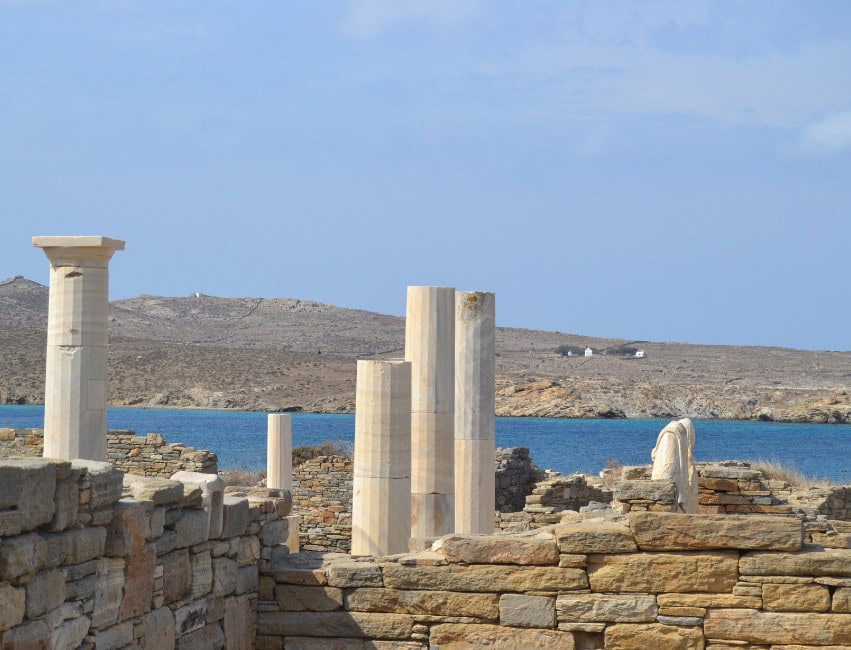
Delos is one of the most important Greek tourist sites, steeped in mythology as the birthplace of Apollo and Artemis. It became a major religious sanctuary and later a bustling commercial hub during the Hellenistic and Roman periods. Today, the island is uninhabited but protected as a UNESCO World Heritage Site. Its ruins give visitors a sense of what life was like in an ancient sacred city.
What to See / Highlights
- Terrace of the Lions: Marble statues dedicated to Apollo that once guarded the sacred way.
- Sanctuary of Apollo: The spiritual heart of the island.
- Sacred Lake: Mythologically tied to the birth of Apollo and Artemis.
- Ancient Ruins: Including the theater, marketplaces, temples, and houses with intricate mosaics.
- Delos Archaeological Museum: Home to sculptures and artifacts uncovered on the island.
Best Time to Visit
April–October, though high summer brings strong winds (Meltemi).
Travel Tip
Delos can only be visited as a day trip (usually from Mykonos). Arrive early in the day and bring water — there are no hotels or permanent facilities.
14. Zakynthos – Navagio Beach & Blue Caves
History & Significance
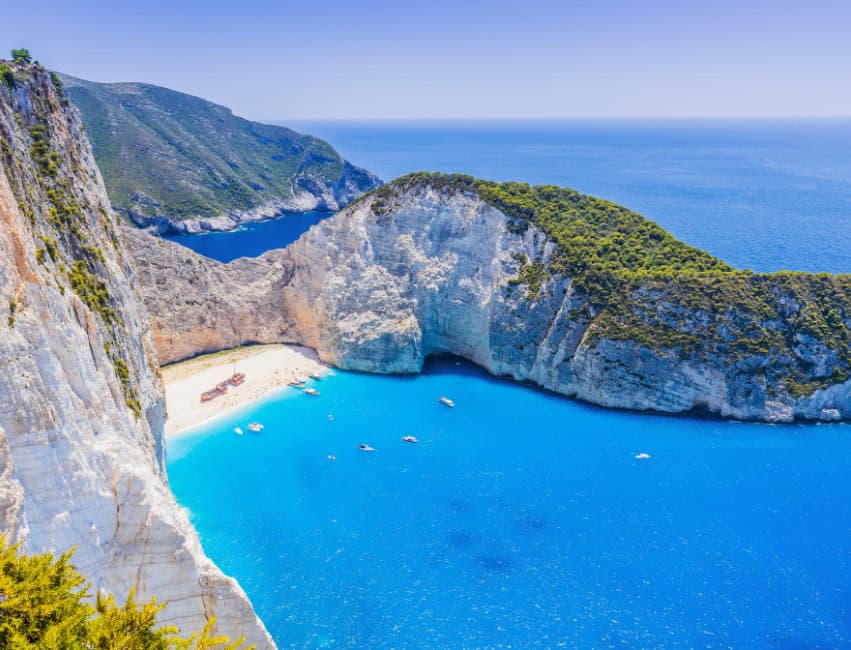
Zakynthos, or Zante, is a lush Ionian island known worldwide for its dramatic coastlines. Its most iconic site, Navagio (Shipwreck Beach), is one of the most photographed Greece tourist attractions. The island also plays an important ecological role as a nesting ground for endangered loggerhead turtles. Under Venetian rule, Zakynthos was called “The Flower of the East,” a name that still reflects its natural beauty.
What to See / Highlights
- Navagio Beach: A white sand cove accessible only by boat, famous for its shipwreck.
- Blue Caves: Sea caves with dazzling turquoise waters, perfect for boat trips.
- Marathonisi (Turtle Island): A nesting site for loggerhead turtles.
- Byzantine Museum: In Zakynthos Town, showcasing local art and history.
- Scenic Villages: Traditional mountain villages like Volimes.
Best Time to Visit
June and September are the sweet spot for warm seas and fewer crowds. July–August is peak tourist season.
Travel Tip
Take an early morning boat tour to Navagio Beach before the crowds. Respect turtle nesting sites and join eco-friendly tours.
15. Mount Athos – The Holy Mountain

History & Significance
Mount Athos is one of the most unique and spiritual landmarks in Greece. Located in northern Greece, it’s an autonomous monastic state dating back to the 9th century. Known as the “Holy Mountain,” it houses 20 Eastern Orthodox monasteries and remains an active center of religious devotion. For over 1,000 years, it has preserved Byzantine traditions, making it a living museum of Christian spirituality.
What to See / Highlights
- Monasteries: Great Lavra, Vatopedi, and Iviron are among the most significant.
- Treasures: Icons, manuscripts, and religious relics.
- Natural Beauty: Forested mountains, secluded coves, and dramatic cliffs.
- Boat Tours: For those who cannot enter, cruises around the peninsula offer views of the monasteries.
Best Time to Visit
Spring and autumn, when weather is pleasant and the monasteries are most accessible.
Travel Tip
Access is restricted — only men are allowed entry with a special permit (diamonitirion). Women can experience Mount Athos by taking boat tours that circle the peninsula.
16. Mycenae – Bronze Age Kingdom
History & Significance
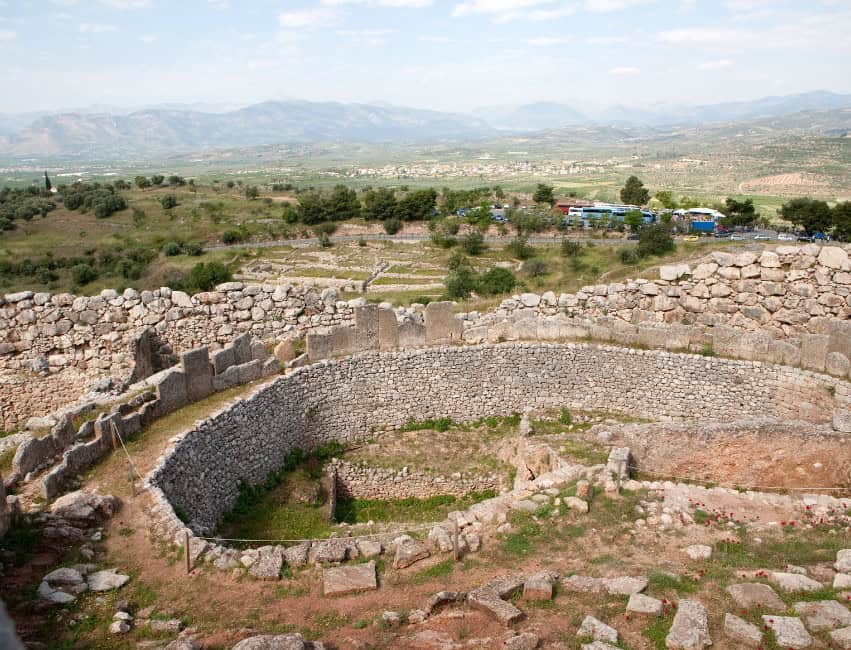
Mycenae was the heart of the Mycenaean civilization (1600–1100 BCE), one of the earliest advanced societies in Europe. It’s closely tied to Homer’s Iliad as the kingdom of King Agamemnon, leader of the Greeks in the Trojan War. Once a powerful citadel, Mycenae fell into decline after the Bronze Age collapse, but its ruins remain among the most important landmarks in Greece. The Cyclopean walls, so massive they were believed to be built by giants, still inspire awe today.
What to See / Highlights
- Lion Gate: The iconic entrance to the citadel, featuring two lion reliefs.
- Treasury of Atreus (Tholos Tomb): A monumental beehive-shaped burial chamber.
- Grave Circles A & B: Burial sites where golden masks and treasures were discovered.
- Cyclopean Walls: Enormous stone fortifications surrounding the citadel.
- Archaeological Museum of Mycenae: Exhibits artifacts, pottery, and replicas of Agamemnon’s mask.
Best Time to Visit
April–June or September–October for cooler weather. Summers are very hot and exposed.
Travel Tip
Combine Mycenae with a trip to Nafplio and Epidaurus for a perfect Peloponnese history circuit.
17. Epidaurus – Theater of the Gods
History & Significance
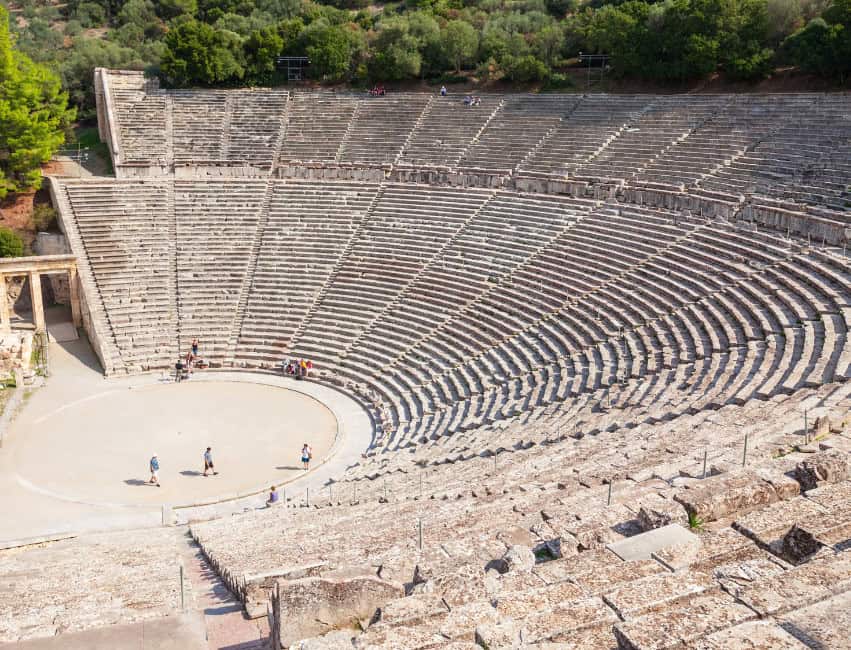
Epidaurus was the most important healing sanctuary in ancient Greece, dedicated to Asclepius, the god of medicine. Pilgrims came from across the Greek world to be healed, making it one of the earliest centers of holistic medicine. Its theater, built in the 4th century BCE, is renowned for its perfect acoustics and is still in use today for summer performances, a living connection between ancient and modern Greece.
What to See / Highlights
- The Ancient Theater: Seats 14,000 spectators; test the acoustics by speaking at the stage.
- Sanctuary of Asclepius: Includes temples, baths, and a stadium.
- Archaeological Museum: Displays medical instruments, inscriptions, and sculptures.
- Hiking Trails: The site is surrounded by lush landscapes, great for exploring.
Best Time to Visit
June–July, when the Athens & Epidaurus Festival brings live performances to the ancient stage. Spring and autumn are also ideal for quieter visits.
Travel Tip
Sit in different areas of the theater to experience its extraordinary sound design.
18. Naxos – The Authentic Cycladic Island

History & Significance
Naxos, the largest island in the Cyclades, has a long history stretching back to the Neolithic era. In Greek mythology, it is where Theseus abandoned Ariadne after escaping Crete’s Labyrinth, and where Dionysus, the god of wine, made her his bride. Unlike glamorous Mykonos or romantic Santorini, Naxos retains a more authentic, laid-back Greek island vibe. Its fertile land, traditional villages, and ancient monuments make it one of the most rewarding tourist spots in Greece.
What to See / Highlights
- Portara (Temple of Apollo Gate): The massive marble doorway at the port, especially striking at sunset.
- Naxos Town (Chora): Venetian Kastro, narrow lanes, and seaside tavernas.
- Beaches: Agios Prokopios, Agia Anna, and Plaka — long stretches of golden sand.
- Inland Villages: Apiranthos and Chalki, famous for their traditional charm.
- Mount Zas: The highest peak in the Cyclades, with hiking trails and caves tied to Zeus myths.
Best Time to Visit
May–June and September–October for warm weather and fewer crowds.
Travel Tip
Try local specialties like graviera cheese and kitron liqueur, made from citron fruit grown only on Naxos.
19. Patmos – The Holy Island

History & Significance
Patmos is one of the most spiritual tourist destinations in Greece. Known as the “Jerusalem of the Aegean,” it is where Saint John the Apostle is believed to have written the Book of Revelation in the Cave of the Apocalypse. The island has remained a place of pilgrimage for centuries and retains a peaceful, authentic character. Its Chora, with whitewashed mansions and Byzantine architecture, is a UNESCO World Heritage Site.
What to See / Highlights
- Monastery of Saint John the Theologian: A fortress-like complex from the 11th century.
- Cave of the Apocalypse: Believed to be where Saint John received his divine visions.
- Chora: Elegant mansions, narrow streets, and beautiful views.
- Secluded Beaches: Such as Psili Ammos and Agriolivado.
- Festivals: Religious celebrations in August and September bring the island to life.
Best Time to Visit
May–September. Religious festivals are particularly atmospheric.
Travel Tip
Patmos is quieter than other islands, making it ideal for those seeking spirituality and relaxation away from mass tourism.
20. Skiathos – Beaches and Natural Beauty

History & Significance
Skiathos, part of the Sporades islands, is celebrated for its natural beauty. Covered in pine forests and fringed by over 60 beaches, it’s one of the best Greece vacation spots for relaxation. The island gained international fame as a filming location for Mamma Mia! but still retains a traditional charm.
What to See / Highlights
- Koukounaries Beach: Often ranked among the best beaches in Europe, surrounded by pine trees.
- Lalaria Beach: Accessible only by boat, famous for its white cliffs and turquoise waters.
- Old Town Skiathos: Bustling with nightlife, tavernas, and charming alleys.
- Monastery of Evangelistria: A historic monastery tied to Greece’s independence movement.
- Island Hopping: Day trips to neighboring Skopelos or Alonissos.
Best Time to Visit
June–September for warm seas and vibrant nightlife. May and October are quieter but still pleasant.
Travel Tip
Rent a small boat to explore hidden coves along the coastline — one of the most magical ways to experience Skiathos.
21. Temple of Poseidon, Cape Sounion
History & Significance:
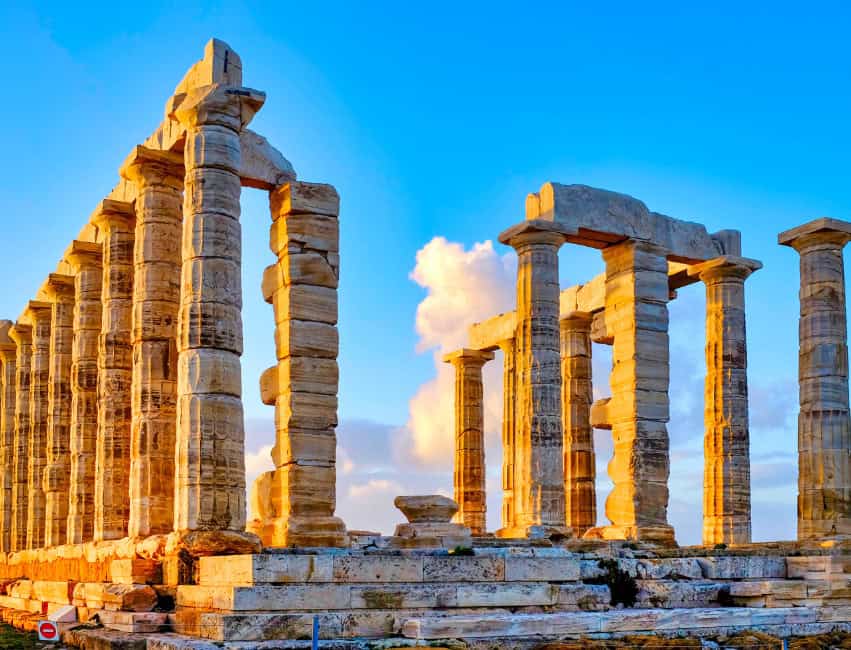
The Temple of Poseidon, built in the 5th century BC, stands majestically on the cliffs of Cape Sounion, about 70 km southeast of Athens. Dedicated to Poseidon, god of the sea, it served as a sacred site for sailors seeking protection before their voyages. Ancient travelers considered it a beacon of safety, and today, it remains one of the most striking Greek landmarks. Lord Byron even carved his name into one of its marble columns during his travels in Greece.
What to See / Highlights:
- The temple ruins, with gleaming marble columns that have withstood centuries.
- Panoramic views of the Aegean Sea, stretching endlessly into the horizon.
- One of the most famous sunsets in Greece, rivaling Santorini’s.
- A scenic coastal drive from Athens along the Saronic Gulf.
Best Time to Visit:
Late afternoon to evening (spring through autumn) is ideal to witness the legendary sunset. In winter, mornings provide a quieter and more serene experience.
Tips:
- Combine the visit with a coastal day trip from Athens, stopping at seaside tavernas.
- Bring a light jacket — it can get windy on the cliffs.
- Arrive an hour before sunset to explore the temple grounds before the sky changes color.
22. Monemvasia – The Gibraltar of Greece
History & Significance:
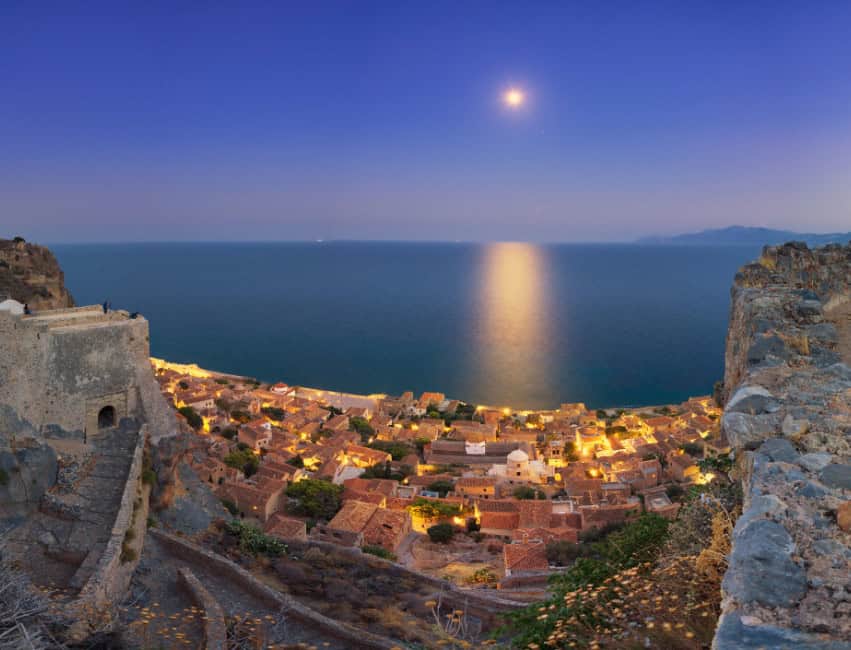
Monemvasia, founded in the 6th century, was a powerful Byzantine fortress town built into a rock island off the Peloponnese coast. It later thrived under Venetian and Ottoman rule, earning its name as the “Gibraltar of Greece” for its impregnable position.
What to See / Highlights:
- The medieval lower town with cobbled alleys and stone houses.
- The upper fortified citadel ruins with panoramic sea views.
- Byzantine churches, including Agia Sophia perched on the cliff.
Best Time to Visit:
Spring and autumn (April–June, September–October) for pleasant weather without crowds.
Tips:
Stay overnight in one of the boutique guesthouses inside the medieval walls to experience the magic after day-trippers leave.
23. Corinth Canal – Engineering Marvel of Greece
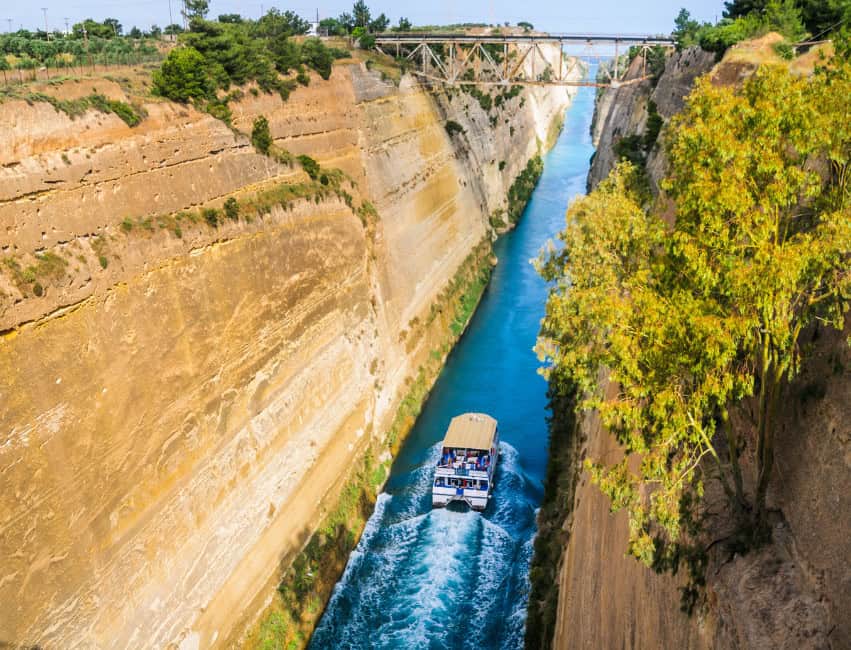
History & Significance:
The Corinth Canal, completed in 1893, cuts through the narrow Isthmus of Corinth, connecting the Aegean and Ionian Seas. Though envisioned since antiquity (Nero even attempted it), it was only realized in modern times, becoming a symbol of human ingenuity.
What to See / Highlights:
- The 6.4 km canal with 80-meter-high limestone walls.
- Watch ships pass through or try bungee jumping for thrill-seekers.
- Visit nearby Ancient Corinth for added history.
Best Time to Visit:
Year-round, but summer offers more boat traffic.
Tips:
Stop here en route between Athens and the Peloponnese. There are pedestrian bridges where you can take amazing overhead photos.
24. Mystras – Byzantine Glory near Sparta
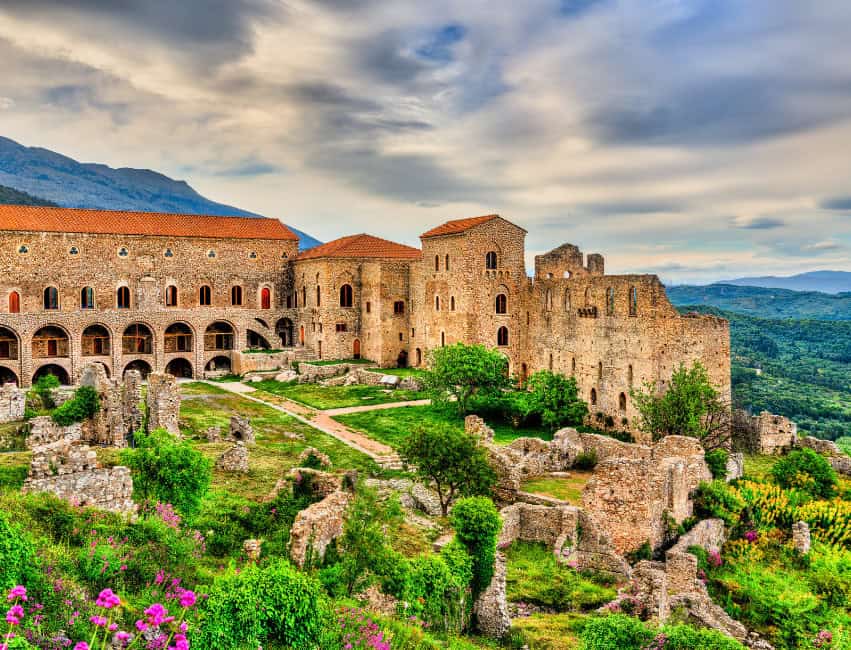
History & Significance:
Mystras was the capital of the Byzantine Despotate of the Morea in the 14th–15th centuries and a hub of art and scholarship before the Ottoman conquest. It’s now a UNESCO World Heritage site.
What to See / Highlights:
- The Palace of the Despots.
- Byzantine churches with stunning frescoes.
- The upper fortress with views across the Laconian plain.
Best Time to Visit:
Spring and autumn for cooler weather when exploring ruins on foot.
Tips:
Wear sturdy shoes, as the site is spread across a steep hillside. Allow 2–3 hours for a full visit.
25. Philippi – Ancient City of Macedonia
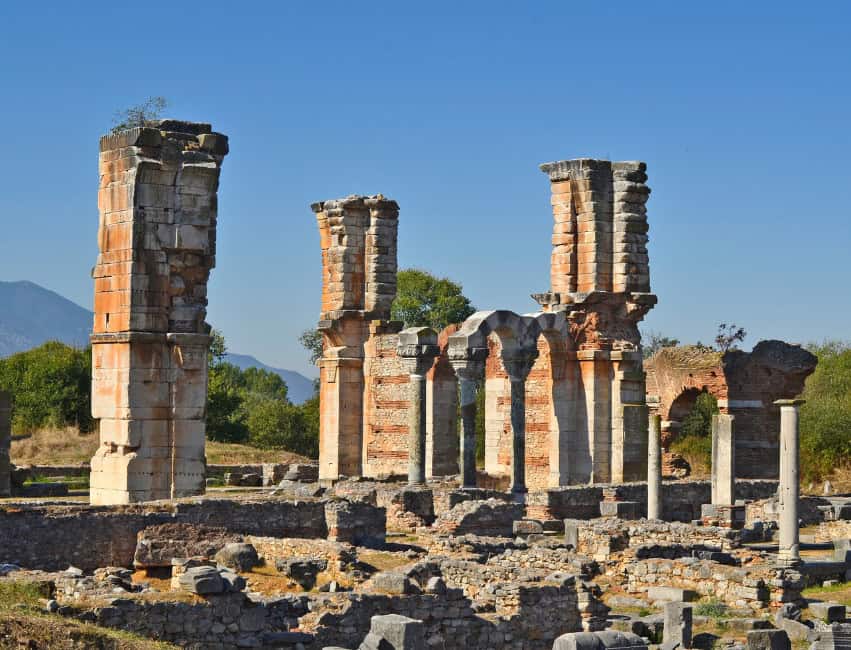
History & Significance:
Founded by Philip II of Macedon, father of Alexander the Great, Philippi was later a major Roman colony. It’s also significant in Christian history, as Saint Paul established one of the first churches here.
What to See / Highlights:
- The ancient theatre of Philippi.
- Roman forum and basilicas.
- The Octagon Church and early Christian ruins.
Best Time to Visit:
Late spring and early autumn for mild weather and fewer crowds.
Tips:
Combine with a visit to nearby Kavala, a historic port city. Bring water, as the site can get hot and exposed.
Quick Reference: Top 25 Tourist Spots in Greece
- Acropolis & Parthenon (Athens) – The cradle of democracy and Greece’s most iconic landmark.
- Delphi – Ancient sanctuary of Apollo and home to the famous Oracle.
- Meteora – Monasteries perched on towering sandstone cliffs.
- Santorini – Volcanic island with breathtaking caldera views and sunsets.
- Mykonos – Cosmopolitan island with beaches, nightlife, and iconic windmills.
- Crete – The island of legends, with Knossos Palace, Samaria Gorge, and pink-sand beaches.
- Rhodes – Medieval Old Town, Lindos Acropolis, and rich history.
- Olympia – Birthplace of the Olympic Games.
- Thessaloniki – Cultural hub with Roman, Byzantine, and Ottoman heritage.
- Corfu – Venetian elegance, Achilleion Palace, and UNESCO Old Town.
- Nafplio – Romantic seafront town and former capital of Greece.
- Hydra – Car-free island of art, mansions, and timeless charm.
- Delos – Sacred island, mythical birthplace of Apollo and Artemis.
- Zakynthos – Navagio Beach, Blue Caves, and turtle nesting sites.
- Mount Athos – The Holy Mountain with Byzantine monasteries.
- Mycenae – Bronze Age citadel of King Agamemnon.
- Epidaurus – Sanctuary of Asclepius and ancient theater with perfect acoustics.
- Naxos – Cycladic island with Portara, sandy beaches, and mountain villages.
- Patmos – Sacred island where Saint John wrote the Book of Revelation.
- Skiathos – Pine-covered island with some of Greece’s best beaches.
- Temple of Poseidon at Cape Sounion – Sunset over the Aegean
- Monemvasia – The Gibraltar of Greece-A medieval fortress town carved into a rock island, often called the “Gibraltar of Greece.
- Corinth Canal – Engineering Marvel of Greece
- Mystras – Byzantine Glory near Sparta
- Philippi – Ancient City of Macedonia
FAQs About Tourist Spots in Greece
What is Greece known for?
Greece is world-famous for its ancient history (Acropolis, Delphi, Olympia), beautiful islands (Santorini, Mykonos, Crete), rich mythology, and Mediterranean cuisine. It’s also known for hospitality, sunshine, and its role as the birthplace of democracy and the Olympics.
What are the top tourist attractions in Greece?
The top Greece tourist attractions include the Acropolis of Athens, Meteora monasteries, Santorini caldera, Knossos Palace in Crete, Rhodes Old Town, and Navagio Beach in Zakynthos.
What are the most famous places in Greece for tourists?
Santorini, Mykonos, Athens, Crete, and Rhodes are among the most famous places in Greece. For history lovers, Delphi, Olympia, and Mycenae are unmissable.
What is the best time to visit Greece?
Spring (April–June): Best for sightseeing, mild weather, blooming landscapes.
Summer (July–August): Best for beaches and island-hopping, but crowded.
Autumn (September–October): Warm seas, fewer crowds, perfect for both beaches and ruins.
Winter (November–March): Best for Athens, Thessaloniki, and mountain regions.
Which are the best islands in Greece to visit?
For romance: Santorini and Hydra.
For nightlife: Mykonos and Ios.
For authenticity: Naxos and Patmos.
For beaches: Zakynthos, Skiathos, and Crete.
For families: Corfu and Rhodes.
What are the best places in Greece for history lovers?
Athens (Acropolis & Agora), Delphi, Olympia, Mycenae, and Epidaurus are the best Greek tourist attractions for ancient history and archaeology.

Conclusion Top Tourist Spots in Greece
Greece is a land where ancient history, mythology, and natural beauty converge. From the awe-inspiring Acropolis in Athens to the peaceful monasteries of Meteora, from the romance of Santorini to the unspoiled charm of Naxos, every corner of Greece offers unforgettable experiences.
Whether you are drawn to world-famous ruins, sun-drenched beaches, vibrant island life, or sacred pilgrim sites, Greece has something for every traveler. Its blend of famous places, landmarks, and tourist spots makes it not only a must-visit destination, but one to return to again and again.
With this ultimate guide to the Top 25 tourist spots in Greece, you have a roadmap to explore the country’s treasures — from the iconic to the hidden gems. Pack your bags, immerse yourself in the myths and history of Greece attractions and let Greece’s timeless beauty inspire you.
Related Posts About Greece 
- Amazing Things to Do in Santorini, Greece
- The 20 Best Greek Islands to Visit
- 40 Traditional Foods in Greece You Must Try
- 40 Best Greek Desserts & Traditional Sweets
- Loukoumades Recipe – Traditional Greek Honey Donuts
- Greek Orange Pie Recipe
- Spanakopita Recipe