If you’re planning a trip to Antelope Canyon in Page, Arizona, one of the most common questions is: Upper vs Lower Antelope Canyon — which one should I choose?
This world-famous slot canyon on Navajo Nation land is a dream destination for travelers, photographers, and adventure seekers. But with two main sections — Upper Antelope Canyon and Lower Antelope Canyon — plus options like Canyon X and other alternatives, it can be tricky to know which experience is right for you.
In this in-depth guide, we’ll compare Upper vs Lower Antelope Canyon side by side, highlight the difference between Upper vs Lower Antelope Canyon, provide tips on the best tours, and answer FAQs like Is Upper or Lower Antelope Canyon better?
Disclosure: This free article contains affiliate links. If you make a purchase after clicking one of these links, I earn a small commission at no extra cost to you. Your support helps me continue to provide helpful, free content for you.
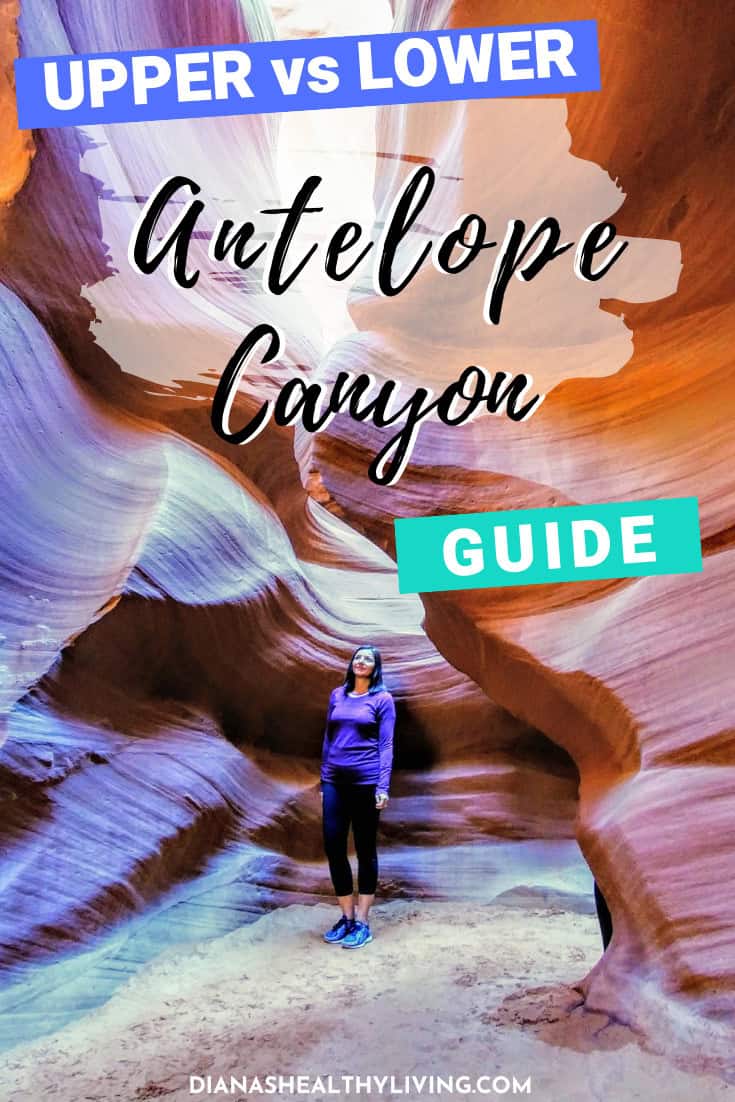
What Is Antelope Canyon?
Table of Contents
Antelope Canyon is one of the most beautiful slot canyons in the American Southwest. Located just outside of Page, Arizona, near Lake Powell and Horseshoe Bend, it was carved by thousands of years of flash flooding and erosion.
The canyon is divided into two main sections:
- Upper Antelope Canyon (also called Tsé bighánílíní in Navajo, meaning “the place where water runs through rocks”)
- Lower Antelope Canyon (called Hazdistazí, meaning “spiral rock arches”)
Both feature breathtaking sandstone walls, swirling colors, and narrow passages that make for unforgettable photos. But the experiences are very different.
TIP: This is a very popular tour. I would recommend booking this prior to your trip.
Check for the best Antelope Canyon and Horseshoe Bend tour here.
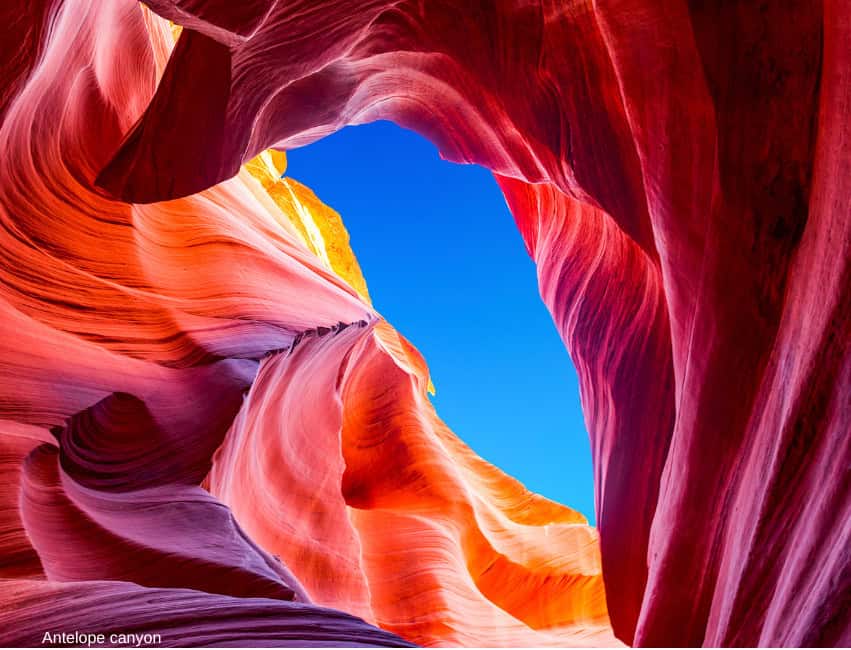
Quick Facts About Antelope Canyon
- Location: Near Page, Arizona, on Navajo Nation land.
- Two Main Sections: Upper Antelope Canyon (also called “The Crack”) and Lower Antelope Canyon (also called “The Corkscrew”).
- Geology: Both canyons were formed over millions of years by flash flooding, which carved out the dramatic sandstone walls.
- Famous For: Upper Canyon is known for its light beams; Lower Canyon is famous for its swirling, wave-like rock formations.
- Accessibility:
- Upper Canyon: Wide, flat sandy path — easy for all ages.
- Lower Canyon: Requires stairs, ladders, and narrow passageways — more adventurous.
- Best Time to Visit: March–October, especially midday (10:30 a.m.–1:00 p.m.) for light beams in Upper Canyon.
- Required Tours: You can’t enter on your own. A Navajo guide is required for both Upper and Lower Antelope Canyon.
- Tour Duration: Typically 60–90 minutes, depending on the operator.
- Photography: Tripods are no longer allowed on standard tours, but both canyons are incredibly photogenic even with handheld cameras or smartphones.
- Nearby Attractions: Horseshoe Bend (10 minutes away), Lake Powell (15 minutes), Grand Canyon (2.5 hours).
- Weather Note: Tours may be canceled in the event of flash flood warnings for safety.
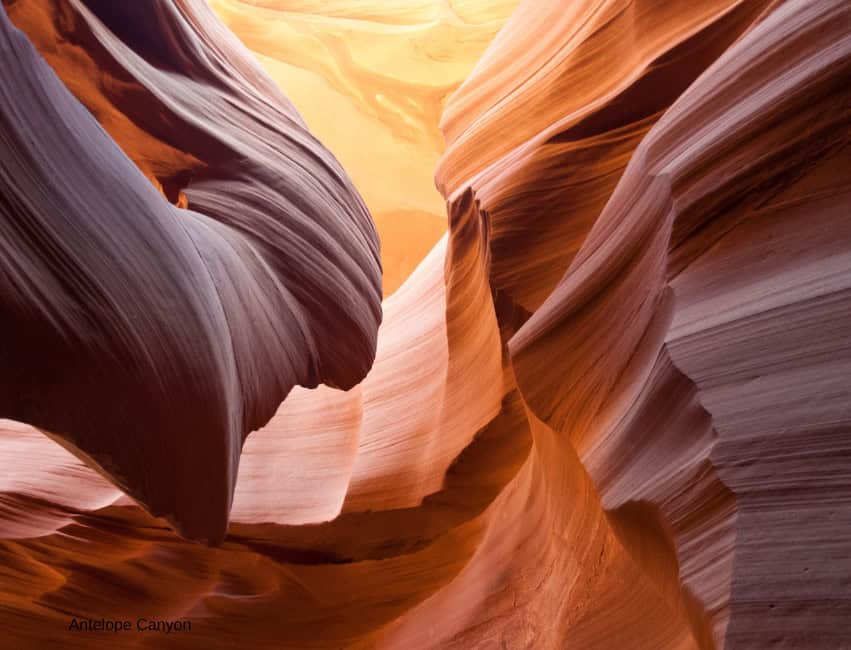
How to Get to Upper vs Lower Antelope Canyon
Both Upper and Lower Antelope Canyon are located just outside the town of Page, Arizona, in the Navajo Nation. The canyons sit only a few miles apart, making it easy to visit either — or both — in the same day.
Closest Towns and Airports
- Page, Arizona is the closest town and the base for most tours. It has a small regional airport (Page Municipal Airport, PGA) with limited flights.
- The nearest major airports are in Las Vegas, Nevada (approx. 4.5–5 hours by car) and Phoenix, Arizona (approx. 4.5 hours by car). Many travelers fly into one of these larger cities and then drive to Page.
- Another option is Flagstaff, Arizona (about 2 hours away), which has a regional airport and connects to Phoenix.
Driving Directions
- From Las Vegas: Take I-15 North to UT-9 East, then US-89 South toward Page.
- From Phoenix: Take I-17 North to Flagstaff, then US-89 North to Page.
- From Grand Canyon South Rim: Drive east along AZ-64, then take US-89 North to Page (about 2.5 hours).
The drive itself is incredibly scenic, passing through red rock landscapes, desert plateaus, and viewpoints of Lake Powell.
Tour Meeting Points
You cannot enter Antelope Canyon on your own — it is on Navajo land, and all visitors must join a guided tour with an authorized Navajo tour company.
- Upper Antelope Canyon tours usually start in downtown Page, where tour operators shuttle you to the canyon in off-road vehicles.
- Lower Antelope Canyon tours typically meet directly at the canyon’s entrance, just a 10-minute drive from Page.
Tips for Getting There
- Book early: Tours for both Upper and Lower canyons often sell out weeks in advance, especially in summer.
- Plan your timing: If you’re hoping to see the light beams in Upper Antelope Canyon, book a midday tour (10:30 a.m.–1:00 p.m.).
- Arrive early: Give yourself at least 30 minutes extra to find parking, check in, and be ready.
- Combine nearby attractions: Horseshoe Bend and Lake Powell are both just minutes from Antelope Canyon, making it easy to create a full-day itinerary.
Best Time of Year to Visit Antelope Canyon
The best time to visit Antelope Canyon depends on what you want to see and your tolerance for crowds.
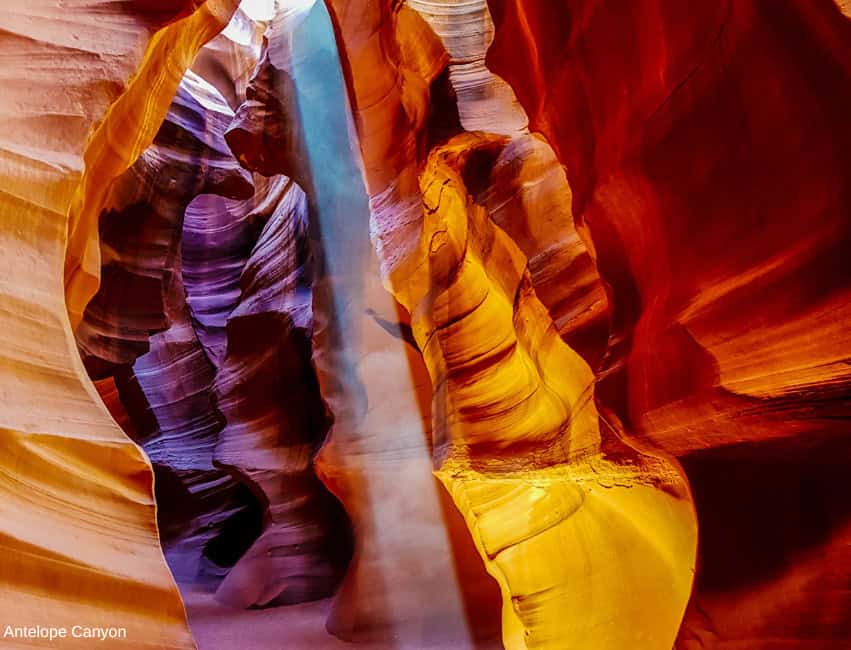
- March to October is the most popular period, with strong sunlight that creates the famous light beams in Upper Antelope Canyon. These usually appear between 10:30 a.m. and 1:00 p.m.
- Summer (June–August) offers the most reliable light beams, but it’s also the busiest season. Expect tours to sell out far in advance, higher prices, and hotter weather (often above 100°F / 38°C).
- Spring and Fall (March–May, September–October) are ideal if you want fewer crowds and pleasant temperatures. Light beams may be slightly less intense, but the colors inside both canyons are still breathtaking.
- Winter (November–February) is the quietest time. Light beams don’t appear, but the canyon walls glow in soft, golden light. It’s an excellent time for photographers and travelers who prefer a peaceful visit.
👉 If light beams are your priority, plan for late spring to early fall at midday. If serenity is more important, consider the cooler months.
Cost & Permits for Antelope Canyon
Visiting Antelope Canyon isn’t free — all tours are run by authorized Navajo tour operators, and you cannot enter without a guide. Here’s what you can expect:
- Upper Antelope Canyon tours generally cost between $80–$120 per person, depending on the time of day (prime light beam tours are more expensive).
- Lower Antelope Canyon tours are slightly cheaper, averaging $50–$90 per person.
- Every visitor must also pay the $8 Navajo Nation permit fee (usually included in the ticket price).
- Photography tours (limited availability) can cost $150+ and require proof of camera equipment.
👉 Tip: Book well in advance, especially if traveling in summer, as tours sell out quickly.
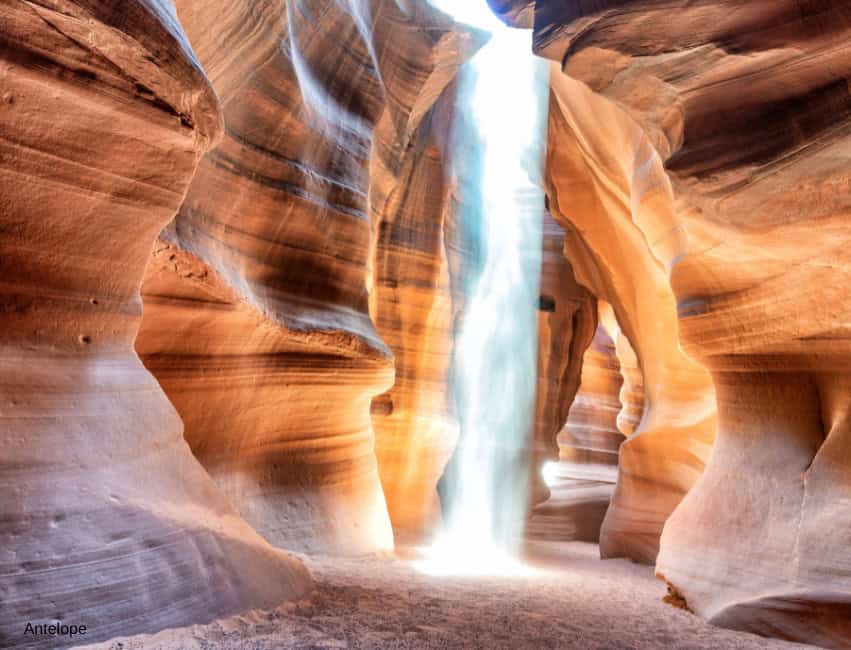
Upper vs Lower Antelope Canyon: What’s the Difference?
If you’re planning a trip to Page, Arizona, one of the most common questions is: Should I visit Upper Antelope Canyon or Lower Antelope Canyon? Both are spectacular slot canyons carved by flash floods over millions of years, but the experience of exploring them feels completely different. Here’s a breakdown of what makes each one unique, so you can decide which is best for your trip.
Accessibility: Upper vs Lower Antelope Canyon
Accessibility is one of the key differences between the two canyons:
- Upper Antelope Canyon is much more accessible — it’s a flat, sandy walk with no stairs. It is considered wheelchair-friendly with certain tour operators (check before booking).
- Lower Antelope Canyon requires descending steep metal staircases and navigating narrow passages. It’s not recommended for those with mobility challenges, small children, or claustrophobia.
👉 If accessibility is a priority, choose Upper Antelope Canyon. If you’re up for an adventure and can handle the ladders, Lower Antelope Canyon offers a thrilling experience.
Light Beams and Photography Upper vs Lower Antelope Canyon
Upper Antelope Canyon is world-famous for its light beams. From March through October, especially around midday, shafts of sunlight filter through the narrow openings above and create magical rays of light that seem to dance across the canyon floor. These beams are what make Upper Canyon the most photographed slot canyon in the world. Lower Antelope Canyon, on the other hand, rarely has light beams, but it’s just as photogenic. Instead of dramatic rays, you’ll find swirling walls, spiral patterns, and rock formations that create stunning textures and colors. Many photographers actually prefer the Lower Canyon for its abstract compositions and quieter environment.
Crowds and Atmosphere Upper vs Lower Antelope Canyon
Because of its popularity, Upper Antelope Canyon draws large crowds. Tours here often sell out weeks in advance, and you’ll likely be walking through with many other visitors at the same time. Guides work hard to manage the flow, but it can still feel busy. Lower Antelope Canyon is less crowded, which makes the experience more intimate and peaceful. You’ll have more time and space to enjoy the natural beauty without feeling rushed. If avoiding crowds is a top priority, Lower Canyon is the better choice.
Cost and Tours
Upper Antelope Canyon is the more expensive option, largely due to its fame and demand. Tours are priced higher and book up quickly, especially for prime times when the light beams are most visible. Lower Antelope Canyon tours are more affordable and usually easier to book, though they too can sell out during peak travel seasons. Both canyons require a guided tour, so factor this into your planning and budget.
Level of Adventure Upper vs Lower Antelope Canyon
If you want a gentle, easy walk with iconic views, Upper Canyon is ideal. It’s beginner-friendly and requires minimal effort. Lower Canyon, on the other hand, feels like an adventure. The ladders, stairs, and tight spaces add an element of excitement that many travelers love. It’s more physically engaging, which can make it especially rewarding for active travelers who want a bit of challenge.
Which One Should You Choose Upper vs Lower Antelope Canyon?
If your dream is to capture the famous Antelope Canyon light beams you’ve seen in magazines and Instagram posts, Upper Canyon is the clear winner. It’s the classic, postcard-perfect experience. But if you’d prefer fewer crowds, lower prices, and a more adventurous atmosphere, Lower Canyon might be the better choice. Many travelers actually choose to visit both canyons in a single day to enjoy the best of each — the iconic beams of the Upper and the dramatic textures of the Lower.
In short:
- Upper Antelope Canyon = Easy access + iconic light beams + crowds.
- Lower Antelope Canyon = More adventurous + unique rock formations + fewer people.
Both are unforgettable, and no matter which one you choose, you’ll leave with incredible memories and photos.

Difference Between Upper and Lower Antelope Canyon
One of the biggest questions travelers ask is: What’s the difference between Upper and Lower Antelope Canyon? While both canyons are part of the same natural formation, the experience of visiting each is very different. The choice depends on whether you want easy access and light beams (Upper) or a more adventurous, less crowded experience (Lower).
Here’s a detailed comparison:
| Feature | Upper Antelope Canyon | Lower Antelope Canyon |
|---|---|---|
| Nickname | Known as “The Crack” because of its wider entrance and flat floor. | Called “The Corkscrew” for its spiral, twisting rock formations. |
| Accessibility | Very easy walk on a flat sandy path. No stairs or climbing. Perfect for children, seniors, and those with mobility concerns. | More challenging. Involves descending steep metal staircases, climbing back up ladders, and squeezing through narrow passageways. |
| Light Beams | Famous for the dramatic shafts of sunlight shining through narrow openings above, especially between March and October at midday. These Upper Antelope Canyon light beams are the iconic photographs you see online. | Rarely produces light beams because of the canyon’s shape and angles. Instead, the focus is on colorful textures, spiral walls, and abstract photo opportunities. |
| Photography | Best for wide, sweeping shots and the famous beam photos. Upper Antelope Canyon pictures are among the most photographed images in the Southwest. | Better for detail-oriented shots. Lower Antelope Canyon pictures showcase narrow, swirling walls, arches, and rich textures. |
| Crowds | The most popular section, often very crowded. Tours sell out weeks in advance. | Less crowded, providing a quieter, more intimate experience. |
| Tour Price | More expensive, due to high demand and popularity. | More budget-friendly, generally cheaper than Upper Canyon tours. |
| Tour Duration | 60–90 minutes. Tours focus heavily on timing light beams. | 60–90 minutes. Tours are slightly more adventurous and often feel longer because of the physical activity involved. |
| Experience Level | Beginner-friendly. Minimal effort, short walk, and easy terrain. | Requires agility and comfort with climbing stairs, ladders, and navigating narrow spaces. |
| Best For | Travelers seeking the iconic Antelope Canyon postcard shot with glowing beams and open chambers. Families with children, seniors, and casual visitors. | Adventurous travelers who want fewer crowds, lower cost, and a more immersive slot canyon experience. Great for photographers who love shapes, textures, and abstract images. |
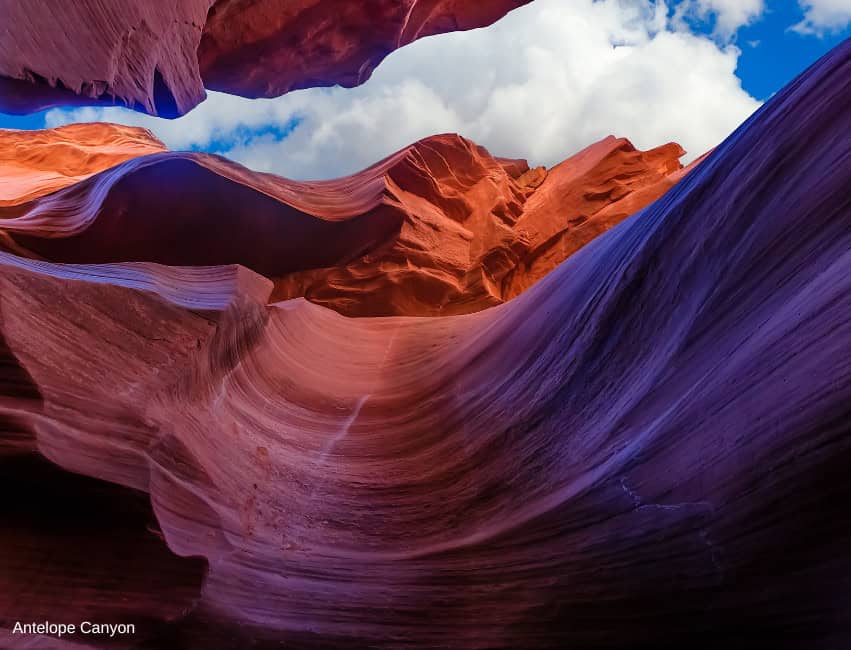
Upper Antelope Canyon: What to Expect
Upper Antelope Canyon is the most famous section, often seen in postcards and professional photography.
Highlights of Upper Canyon
- Flat, sandy walkways make it accessible for all ages.
- Upper Antelope Canyon pictures are world-famous for light beams piercing through the narrow opening above.
- Tours are guided and often timed for light beams.
- Popular with first-time visitors and those who want the most iconic experience.
Best Tours for Upper Antelope Canyon
- Best Upper Antelope Canyon Tour: Look for midday departures for the strongest light beams.
- Upper Antelope Canyon Photo Tours: Some operators offer extended photography tours, though availability is limited.
Pro Tip
Book your Upper Antelope Canyon tours several weeks in advance, especially in peak season (summer).
Lower Antelope Canyon: What to Expect
Lower Antelope Canyon is just as breathtaking, but with a different vibe.
Highlights of Lower Canyon
- Narrower passageways with winding, corkscrew formations.
- Involves climbing down metal staircases and navigating tighter spaces.
- Offers unique Lower Antelope Canyon pictures of textured sandstone walls.
- Less crowded, often cheaper than Upper Canyon.
Best Tours for Lower Antelope Canyon
- Best Lower Antelope Canyon Tour: Look for morning tours for softer light and fewer crowds.
- Lower Antelope Canyon Photography: You’ll get dramatic photos of curves, spirals, and vibrant colors, even without light beams.
Pro Tip
Bring comfortable shoes — you’ll be climbing and navigating uneven terrain.

Which Is Better: Upper vs Lower Antelope Canyon?
This is one of the most searched questions: Which Antelope Canyon is better?
The truth is — it depends on your priorities:
- Best option: If time and budget allow, see both Upper and Lower Antelope Canyon in one day. Many tours make this possible.
- Upper Antelope Canyon is better if you want the iconic light beams and easy access.
- Lower Antelope Canyon is better if you want fewer crowds, a more adventurous experience, and unique rock formations.
Photography Tips: Camera & iPhone
Antelope Canyon is one of the most photographed places in the world — but capturing its beauty can be tricky in the dim, shifting light.
Using a Camera
- Lens Choice: A wide-angle lens (10–24mm range) works best to capture the sweeping canyon walls.
- Settings: Use a higher ISO (400–800) to account for low light. A slower shutter speed (1/30 or lower) can help, but be mindful since tripods are no longer allowed.
- Polarizing Filter: Skip it — filters often darken the already low light in the canyon.
- Pro Tip: Set your camera to “cloudy” or “shade” white balance for warmer tones.
Using an iPhone or Smartphone
- Low-Light Mode: Turn on Night Mode or HDR for better exposure.
- Stability: Hold your phone with both hands or brace it against the canyon wall for sharper photos.
- Angles: Shoot upward toward the openings for dramatic perspectives.
- Editing: Boost contrast, shadows, and saturation afterward to bring out the natural curves and colors.
👉 Remember: Photos look best when the canyon is evenly lit — not just during light beams. Lower Antelope Canyon, with its twisting shapes, is especially stunning for smartphone photography.

Practical Travel Tips for Antelope Canyon
- Book Early: Tours for both Upper and Lower Antelope Canyon often sell out weeks in advance, especially in summer.
- Arrive 30 Minutes Early: You’ll need time to check in and get organized before tours depart.
- Restrooms: There are no restrooms inside the canyon — use the facilities at the tour office before your visit.
- Bring Essentials: Water (in a sealed bottle), comfortable shoes with good grip, and lightweight clothing. Sandals are not recommended.
- Cash: Useful for guide tips and Navajo Nation permit fees (sometimes not included in tour prices).
- Weather Awareness: Tours are canceled during flash flood warnings — safety always comes first.
Packing List for Antelope Canyon
Since the canyon tours are timed and you won’t be able to return to your car once inside, it’s important to come prepared. Here’s what to bring:
- Sturdy shoes (closed-toe; the ground is sandy and uneven).
- Water bottle (hydration is essential in the desert).
- Hat & sunglasses (for the sunny walk to the entrance).
- Camera or smartphone (with extra memory and fully charged battery).
- Lens cloth or phone wipes (sand and dust are common).
- Light jacket (it can be cooler inside the canyon compared to outside).
- Cash or card (for tips, souvenirs, or snacks near the tour office).
👉 Note: Large backpacks, tripods, and selfie sticks are generally not allowed on tours.
Alternatives to Antelope Canyon
If tours are sold out or you’d like to explore other slot canyons, there are excellent alternatives nearby:
- Antelope Canyon X: A newer option, less crowded and more affordable. Offers a similar look to the Upper Canyon but with smaller groups.
- Waterholes Canyon: Just south of Page, with fewer visitors and excellent photo opportunities.
- Canyon X vs Lower Antelope: Canyon X is less physically demanding than Lower but still adventurous.
- Buckskin Gulch: One of the longest slot canyons in the world, best for experienced hikers looking for a full-day adventure.
👉 These alternatives are great if you want fewer crowds or if Antelope Canyon tours are fully booked.
Cultural Respect at Antelope Canyon
Antelope Canyon is a sacred site to the Navajo people. When you visit, you’re not just exploring a natural wonder — you’re entering a place of cultural and spiritual significance.
- Listen to Your Guides: Navajo guides share stories, history, and traditions. Be respectful and attentive.
- Stay on Path: Don’t wander off or climb on rocks.
- No Carving or Touching: Oils from hands damage the sandstone, and carving is strictly forbidden.
- Support Local: Buying from Navajo-owned businesses and artists helps sustain the community.
By treating the canyon with respect, you help preserve it for future generations.

Nearby Itinerary Ideas
Page, Arizona, is packed with natural wonders. If you’re visiting Antelope Canyon, consider adding these stops to your trip:
- Horseshoe Bend (10 minutes away): A short hike leads to one of the most famous bends of the Colorado River.
- Lake Powell (15 minutes away): Perfect for a boat tour, kayaking, or paddleboarding.
- Glen Canyon Dam Overlook: Great viewpoint over the Colorado River.
- Rainbow Bridge National Monument: One of the world’s largest natural bridges, accessible via Lake Powell boat tours.
- Grand Canyon North Rim (2.5 hours): A less crowded, equally stunning part of the Grand Canyon.
- Monument Valley (2 hours): Iconic desert landscape with towering red buttes.
👉 With a couple of days in Page, you can easily combine Upper Antelope Canyon in the morning, Horseshoe Bend at midday, and Lower Antelope Canyon in the afternoon, plus add Lake Powell or Glen Canyon for a full Southwest adventure.

Frequently Asked Questions About Antelope Canyon
Is Antelope Canyon a National Park?
No, Antelope Canyon is not a National Park. It is located on Navajo Nation land and is only accessible with a licensed Navajo guide.
Which is better: Upper or Lower Antelope Canyon?
It depends on what kind of experience you want. Upper Antelope Canyon is better if you’re hoping to see the famous light beams and prefer an easier walk on flat ground. It’s also the more iconic canyon, often featured in magazines and Instagram photos. Lower Antelope Canyon, on the other hand, offers a more adventurous experience with ladders, stairs, and narrow passageways. It’s less crowded, less expensive, and many photographers love its dramatic shapes and textures. Both are stunning, but if you have the time, visiting both is the ultimate experience.
Can you visit both Upper and Lower Antelope Canyon in one day?
Yes, many travelers choose to visit both canyons in the same day. Since they’re only a few miles apart near Page, Arizona, it’s easy to schedule one tour in the morning and the other in the afternoon. A popular option is to see Upper Antelope Canyon around midday for the best chance of catching the light beams, then explore Lower Antelope Canyon later in the afternoon when the walls glow in soft, golden light. Just be sure to book tours in advance, especially in peak season.
How much do Antelope Canyon tours cost?
Prices vary depending on which canyon you visit and the time of year. Upper Antelope Canyon tours are usually more expensive, often ranging between $85–$150 per person, especially during prime light-beam viewing times. Lower Antelope Canyon tours are generally more affordable, starting around $50–$90 per person. All tours include a Navajo guide, and additional Navajo Nation permit fees may apply.
Is Antelope Canyon a national park?
No, Antelope Canyon is not part of the U.S. National Park system. It is located on Navajo Nation land, and entry is only allowed with a licensed Navajo guide. This is important because you cannot hike into the canyon on your own — tours are required for both safety and cultural preservation.
How difficult is Lower Antelope Canyon?
Lower Antelope Canyon requires a moderate level of fitness. You’ll descend steep staircases, climb ladders, and navigate through tight spaces. Most people can manage the tour with ease, but it may not be suitable for very young children, people with mobility issues, or anyone uncomfortable with heights or confined spaces. If accessibility is a concern, Upper Antelope Canyon is a better choice.
What’s the best time to visit Antelope Canyon?
The best time to visit Antelope Canyon is spring through early fall (March–October) when sunlight is strongest. For Upper Antelope Canyon, the famous light beams are most visible between 10:30 a.m. and 1:00 p.m.. Lower Antelope Canyon can be enjoyed at any time of day, as its beauty comes from the glowing walls and intricate rock formations rather than light beams.
Can I take pictures in Antelope Canyon?
Yes — photography is one of the highlights of visiting Antelope Canyon. Both canyons are incredibly photogenic, with swirling sandstone walls and dramatic colors. While tripods are no longer allowed on standard tours, you can still capture amazing photos with a DSLR, mirrorless camera, or even a smartphone. Be ready to shoot quickly, as tours move at a steady pace to accommodate all visitors.
How long does it take to tour Antelope Canyon?
Most tours of Upper and Lower Antelope Canyon last between 60 and 90 minutes. This includes the walk through the canyon and time with your Navajo guide. Plan for additional time to check in before your tour and to get to the meeting point. If you’re doing both canyons in one day, allow at least 3–4 hours total to include breaks and travel between them.
Do I need to book Antelope Canyon tours in advance?
Absolutely. Antelope Canyon tours sell out quickly, especially in summer and during school holidays. Upper Antelope Canyon tours often sell out weeks in advance because of the limited number of midday time slots when light beams appear. To avoid disappointment, book as early as possible — ideally at least 1–2 months ahead.
Are kids allowed in Antelope Canyon?
Yes, children are allowed on both Upper and Lower Antelope Canyon tours. Upper Canyon is more child-friendly since it’s flat and easy to walk. Lower Canyon can be more challenging for very young kids because of the ladders and tight spaces. Some tour companies may have age or height restrictions, so check when booking.
Is Antelope Canyon safe?
Yes, Antelope Canyon is safe to visit with a licensed Navajo guide. However, because it’s a slot canyon, flash flooding is a natural risk. Tours are canceled if there’s any chance of flooding, and safety is taken very seriously. Always follow your guide’s instructions. If you’re claustrophobic or afraid of heights, Lower Canyon may feel a bit more challenging.
What should I wear to Antelope Canyon?
Wear comfortable clothing and sturdy shoes with good grip (closed-toe recommended). The canyon floor can be sandy and uneven. During summer, lightweight clothes are best, but bring water and sun protection for the walk to the entrance. In cooler months, bring a light jacket, as the canyon can be cooler inside.
Can I visit Antelope Canyon without a tour?
No, visiting on your own is not allowed. Antelope Canyon is located on Navajo Nation land, and access is strictly controlled to protect the canyon and ensure visitor safety. All visitors must join a guided tour operated by a licensed Navajo company.
Final Thoughts: Upper vs Lower Antelope Canyon
Whether you choose Upper Antelope Canyon with its famous light beams and easy access, or Lower Antelope Canyon with its adventurous ladders and dramatic angles, one thing is certain — you’ll witness one of the most breathtaking natural wonders in the American Southwest.
Both canyons offer an unforgettable experience, but the best choice comes down to your travel style, physical comfort, and photography goals. Many visitors even book tours to see both Upper vs Lower Antelope Canyon in one day — and if your schedule allows, that’s the ultimate way to appreciate their unique beauty.
No matter which you choose, respect the land, book with licensed Navajo guides, and take time to soak in the otherworldly colors and textures that make Antelope Canyon truly magical.
👉 If you’re planning a trip to Arizona, don’t miss nearby bucket-list spots like Horseshoe Bend, Lake Powell, and the Grand Canyon. For more inspiration, check out my other travel guides [insert internal links here].
Pin this post for later, share it with a friend, and start planning your dream visit to Antelope Canyon today!
If you are planning a trip to Arizona you may enjoy these related Arizona posts:
- Top Must-Do Hikes in Sedona
- Hot Air Balloon Arizona
- Scottsdale Arizona Travel Guide
- Top 5 Things to Do in Tempe Arizona
- Mountain Shadows Resort
- Hotel Valley Ho
- JW Marriott Scottsdale Spa
- The Hermosa Inn