Short on time and looking for the best 7 days in Croatia itinerary?
Croatia has never just been a destination for me.
It’s where my family roots are. It’s the coastline I grew up returning to. It’s the smell of the Adriatic in summer, the stone streets that feel familiar, and the kind of long dinners that stretch late into the night.
I’ve been traveling to Croatia my entire life — in peak summer when the beaches are buzzing and again in September when Dubrovnik feels calmer and easier to explore. I’ve experienced it as both someone who belongs there and someone seeing it through fresh eyes.
If it’s your first time in Croatia and you’re planning 7 days, you don’t need to see the entire country to fall in love with it. You just need the right route.
This 7 days Croatia itinerary focuses on the Dalmatian Coast — starting in Split, island hopping to Hvar, and ending in Dubrovnik. It’s the perfect one week in Croatia for first-time travelers who want history, turquoise water, incredible food, and that effortless Mediterranean rhythm without turning the trip into a rushed checklist.
Some links in this guide are affiliate links, which means I may earn a small commission at no extra cost to you if you book through them. I only recommend tours and stays I’d genuinely suggest to friends visiting Croatia.
7 Days Croatia Itinerary at a Glance
Table of Contents
Day 1: Arrive in Split & explore Diocletian’s Palace
Day 2: Split beaches, Marjan Hill & seaside dinner
Day 3: Ferry from Split to Hvar
Day 4: Pakleni Islands & sunset in Hvar
Day 5: Travel from Hvar to Dubrovnik
Day 6: Dubrovnik Old Town & city walls
Day 7: Lokrum Island or a relaxed Adriatic morning
Route: Split → Hvar → Dubrovnik
Transport: Ferries + walking (no rental car needed)
If you’re visiting Croatia in June, July, or August, I highly recommend booking tours and boat trips in advance — especially in Hvar and Dubrovnik where experiences often sell out days ahead.
If You Only Have 7 Days in Croatia, Do This
If you’re visiting Croatia for the first time, the biggest mistake I see people make is trying to see too much.
Croatia may look small on a map, but distances take longer than you expect — ferries run on schedules, coastal roads curve endlessly, and you don’t want your one week in Croatia spent in transit.
Instead of zigzagging across the country, focus on the Dalmatian Coast.
This 7 day Croatia itinerary keeps you in three iconic places:
You’ll get Roman history, island life, dramatic coastal views, incredible seafood, and that relaxed Mediterranean pace — without constantly packing and unpacking.
And no, you don’t need a rental car.
Parking in Split and Dubrovnik can be a nightmare, Old Town areas are pedestrian-only, and ferries between islands are simple and scenic. For this Croatia itinerary 7 days route, ferries + walking are truly the best way to go.
Read next: If you have more time then check our 10 Day Croatia Itinerary.
Day 1 – Croatia 7 Day Itinerary: Arrive in Split & Wander Through History
There’s something special about arriving in Split for the first time.
The airport drive in already hints at what’s coming — mountains behind you, sea ahead — but the magic really begins once you step into Old Town. After checking into your accommodations head straight into the Old Town — because you are not walking into a historic district.
After landing at Split Airport (SPU), expect:
- 30–40 minutes by taxi to Old Town (€35–€45)
- Or airport bus to the port area (~€8–€10 per person)
If you’re staying within walking distance of Diocletian’s Palace — which I always recommend — drop your bags and head out immediately. Split is compact, and everything you need is within a 10–15 minute radius.
Don’t plan heavy sightseeing today. Arrival days are about orientation.
You begin your 7 days in Croatia standing inside a Roman palace. You sit where locals sit. You eat a dish that’s been made the same way for generations.
🤩 The Easiest and Fastest Way to Get to Split is With a Private Airport Transfer
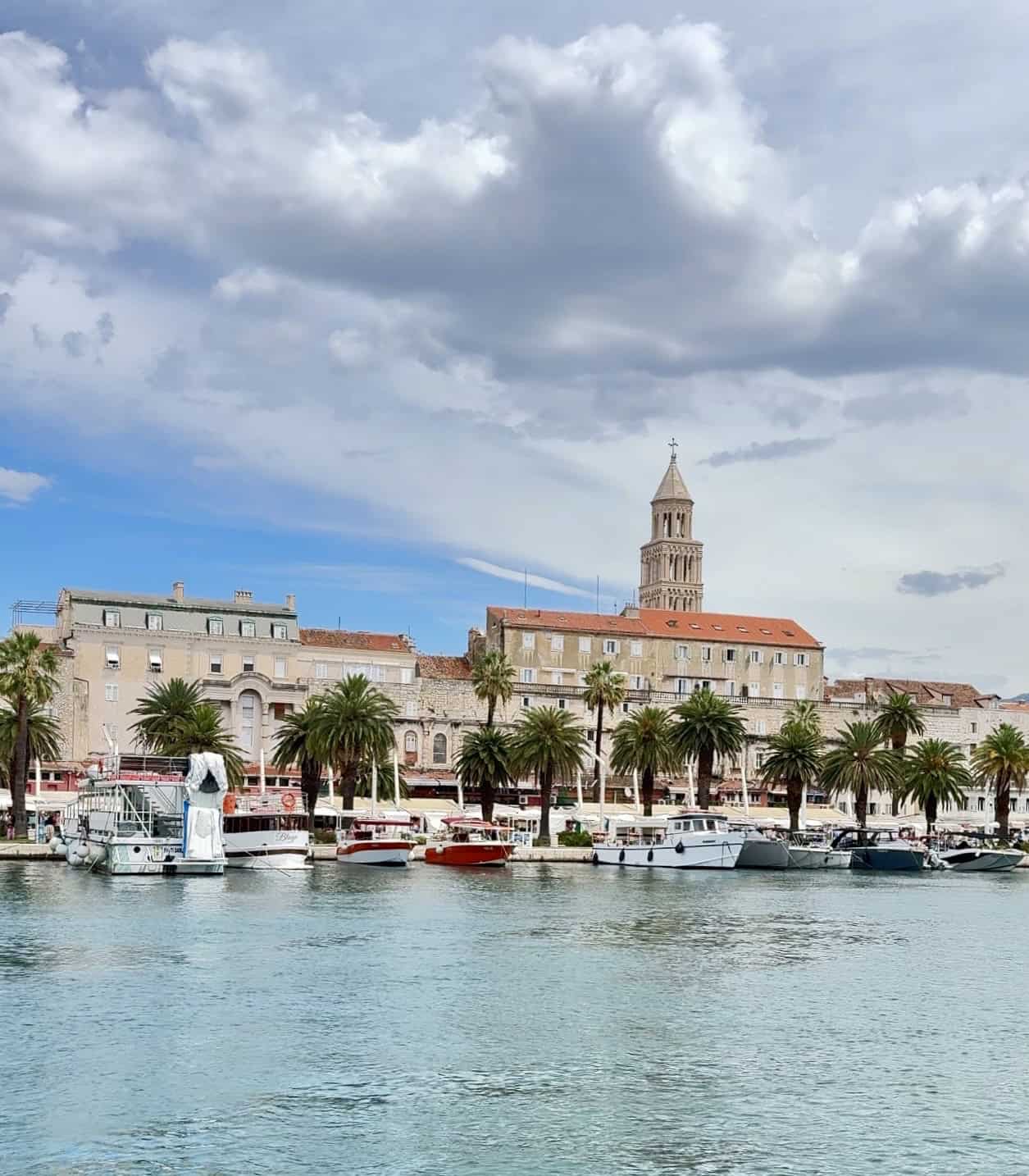
Diocletian’s Palace (Free)
Diocletian built this palace in 305 AD as his retirement residence. What makes it extraordinary is that it was never abandoned. Over centuries, homes, shops, and restaurants were built inside its walls. Today, locals live where Roman emperors once walked.
You are walking inside a 1,700-year-old structure that never stopped functioning.
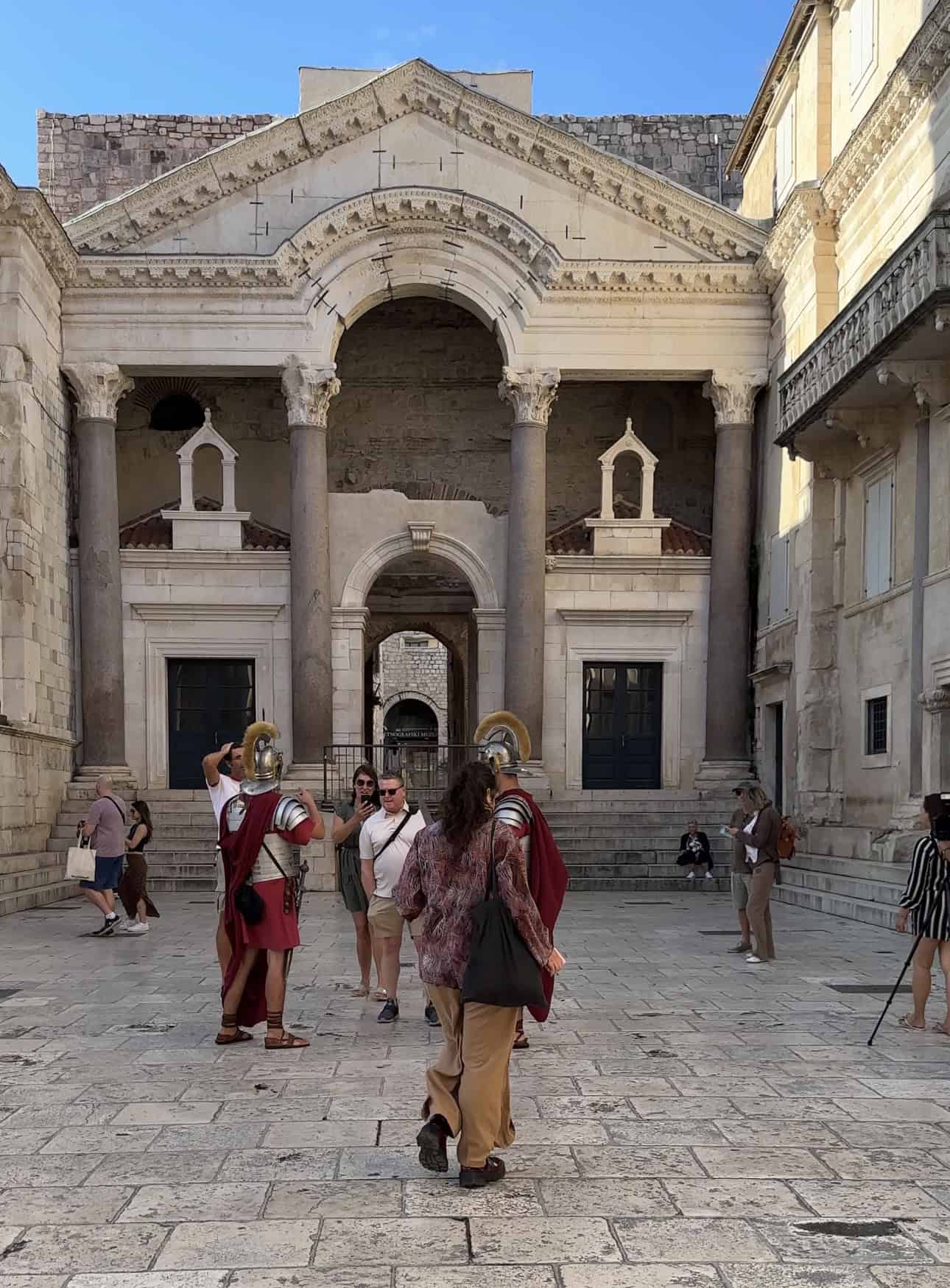
Start in the Peristyle Square, the ceremonial heart of the palace. Stand beneath the original Roman columns and look up at the Cathedral of Saint Domnius — originally Diocletian’s mausoleum
Peristyle Square (Free)
This is the ceremonial heart of the palace. Massive Roman columns still stand where they were placed centuries ago. Look up at the Cathedral tower rising from what was once the emperor’s mausoleum.
Pause here. Let yourself take it in.
You’re not just sightseeing — you’re standing where Roman soldiers once stood.
The Cathedral of Saint Domnius (Optional Interior Visit)
If energy allows, step inside.
- Bell tower climb is separate (~€7)
- Entry: ~€7–€10 depending on combination ticket
- Includes access to the cathedral interior
Inside, you’ll see a remarkable historical contradiction: the mausoleum of a Roman emperor who persecuted Christians later became a Christian cathedral.
The Bell Tower climb is narrow and steep, but the reward is worth it. From the top, you’ll see:
- Terracotta rooftops
- The harbor
- Islands in the distance
If you’re tired from travel, you can save the interior visits for tomorrow.
Palace Basement Substructures (Optional Today)
- Entry: ~€6–€8
These underground chambers are some of the best-preserved Roman substructures in the world. They show the palace’s original engineering and layout.
If you’re jetlagged, save this for Day 2. But if you have the energy, they’re incredibly atmospheric — cool stone halls beneath the living city above.
Late Afternoon: Coffee on the Riva
Now shift into Dalmatian rhythm.
Walk out to the Riva promenade, Split’s palm-lined waterfront.
This is not a sightseeing stop. It’s a lifestyle lesson.
Order:
- Espresso (€2–€3)
- Aperol spritz (€8–€12)
- Or local Croatian wine (€6–€10 per glass)
Sit. Watch ferries glide in and out. Listen to conversations around you.
One of the things I’ve learned from returning to Croatia year after year is that the coast teaches you to slow down. If you try to rush it, you miss it.
The Riva at golden hour — when the light softens and the stone glows — is when Split feels most alive.
Evening: Dinner — Your First Dalmatian Meal
Your first dinner sets the tone for the week.
What to Try in Split
If there’s one dish you must order here:
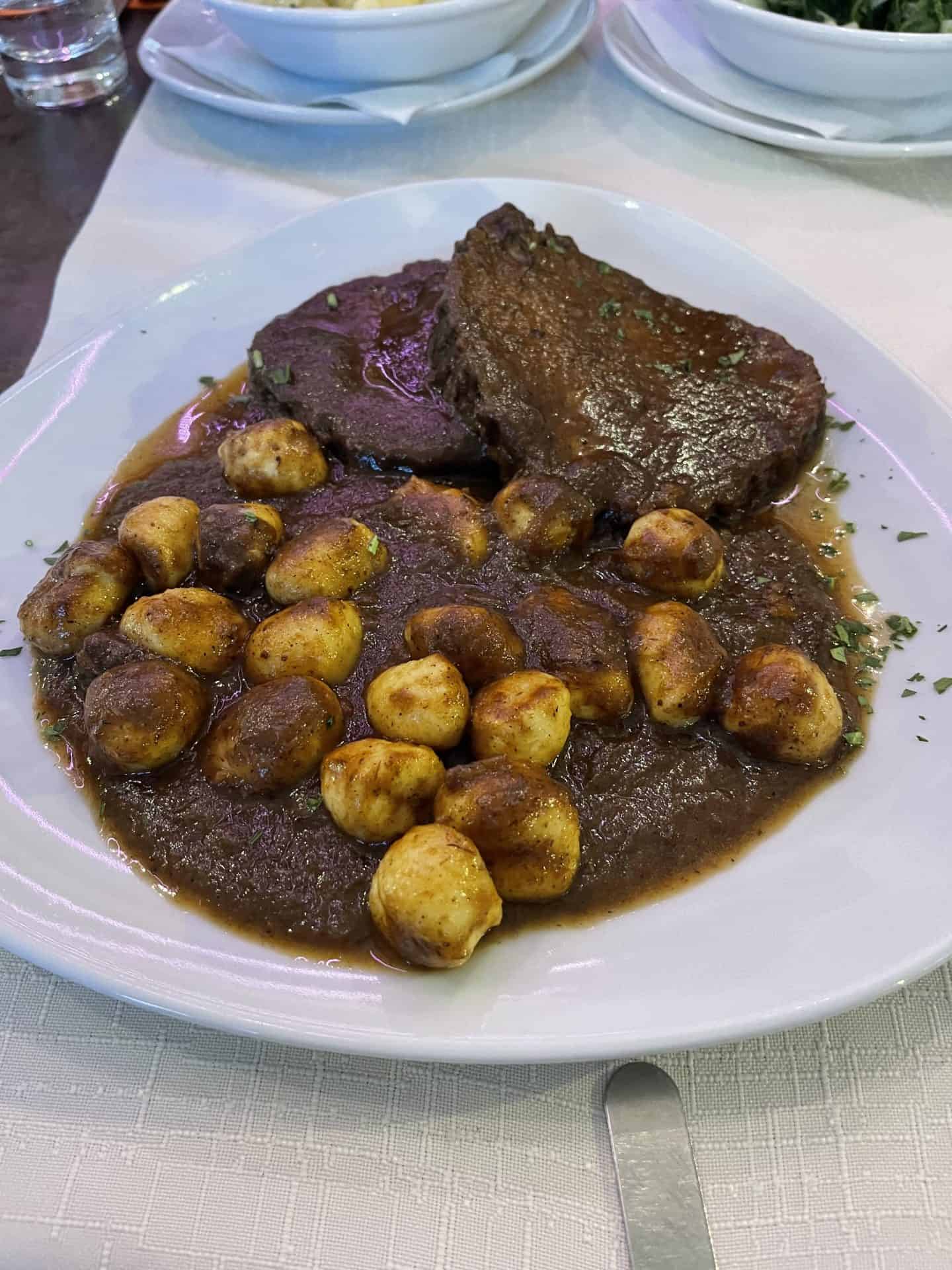
Pašticada
This is Dalmatia’s signature slow-cooked beef dish, marinated in wine and spices, simmered for hours, and traditionally served with gnocchi. It’s rich, comforting, and deeply regional.
Other local favorites:
- Fresh grilled sea bass
- Soparnik (Swiss chard pie)
- Black risotto (crni rižot)
Day 2 – One Week in Croatia Itinerary: Marjan Hill, Beaches & Split’s Local Side
Climb Marjan Hill for Perspective
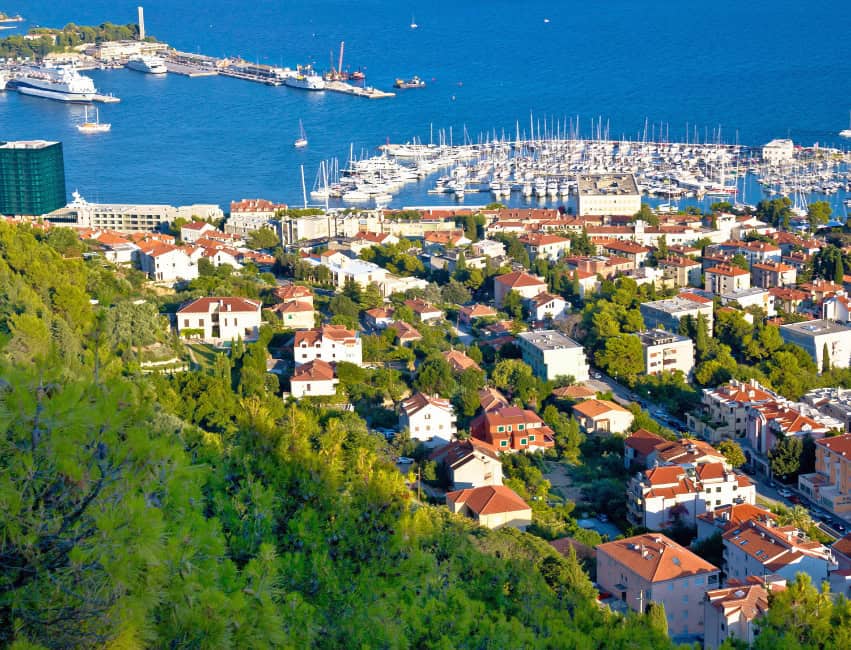
Start your morning climbing Marjan Hill, Split’s green escape.
The walk to the main viewpoint takes about 20–30 minutes. There is no entry fee. From the top, you see the red rooftops of Split framed by islands in the distance.
It helps you understand the geography — why Split became important, why Diocletian chose this location, and how the Adriatic shapes daily life.
Visit the Green Market (Pazar)
Just outside the palace walls sits Split’s daily market.
There’s no entry fee — just wander.

This is where locals buy:
- Fresh figs (seasonal)
- Olive oil
- Lavender
- Local cheeses
- Prosciutto (pršut)
It’s not staged for tourists. It’s practical and alive. If you want to understand Croatian food culture, markets like this are where it begins. Some of my favourite Croatian souvenirs to bring home are Croatian olive oil, lavendar and cheese!
Swim in the Adriatic

Restaurant Recommendations in Split
Here are strong, reliable options — a mix of traditional and modern:
Konoba Fetivi ($$)
Authentic Dalmatian seafood and pašticada. Expect €25–€40 per person.
Bokeria Kitchen & Wine ($$$)
Modern Mediterranean plates, excellent wine list. €40–€70+ per person.
Villa Spiza ($$$)
Small, intimate, chef-driven menu. Reservations recommended.
St. Burek ($)
Quick, casual, and local. Burek pastries €4–€6. Perfect for lunch or late-night snack.
🛎️ Book You Hotel Early as they sell out quickly!
Where to Stay in Split
Location matters in Split. Stay within walking distance of Diocletian’s Palace to avoid taxis and maximize evenings.
Cornaro Hotel
Modern four-star hotel just outside the palace walls. Known for its rooftop terrace with panoramic views. Ideal if you want comfort and convenience. Check availability here.
Heritage Hotel Antique Split
Boutique property located inside Diocletian’s Palace itself. You are literally sleeping within Roman walls. Intimate and atmospheric. Check pricing here.
Hotel Park Split
Elegant, historic hotel near Bačvice Beach. Slightly removed from the palace but quieter and refined. Make sure to book early.
Tip: Book at least 1–2 months in advance for summer travel.
By the end of Day 2, you’ve experienced:
- Roman architecture
- Local daily life
- Adriatic swimming
- Traditional Dalmatian cuisine
Now the pace shifts.
Tomorrow, you leave the mainland and sail toward island life.
Day 3: 7 Days in Croatia -Ferry from Split to Hvar — Island Arrival & Fortress Sunset
Take a morning catamaran ferry from Split to Hvar Town.
No Croatia 7 day itinerary feels complete without at least one island.
The morning ferry from Split to Hvar is one of those transitions that feels cinematic without trying to be.
I always recommend booking a passenger catamaran, not the car ferry. The catamaran goes directly to Hvar Town and takes about 1 to 2 hours depending on the route. Tickets typically range from €20–€30 per person, with prices higher in July and August.

Onboard, you’ll find air-conditioned indoor seating, restrooms, and usually a small snack counter selling drinks and packaged snacks. Seating is open, so if you want a view, arrive 20–30 minutes early.
As the ferry leaves Split, the city slowly recedes behind you. Diocletian’s Palace becomes smaller, the harbor opens up, and you begin to pass scattered islands floating across the Adriatic.
Sit on the right-hand side when departing Split if you can — the views are beautiful. You’ll see small rocky islets and the deep blue that defines this coastline. The water here is darker than you might expect — rich, almost sapphire.
It’s a quiet ride. Most people either nap, take photos, or simply stare out the window. It’s one of those rare travel moments where there’s nothing to “do,” and that’s exactly the point.
Arrive in Hvar Town, check into your accommodation, and explore the harbor area.
🤩 Make sure to Book Your Ferry Tickets Early
Arriving in Hvar Town
The approach into Hvar is unforgettable.
The harbor appears first — lined with sailboats and sleek yachts. Behind it, stone buildings climb gently up the hillside, and above everything sits the Fortica Fortress watching over the town.

The ferry docks directly in the center. No transfers. No buses. You step off the boat and you’re already in it.
Hvar Town is compact. Most accommodations are within a 10–15 minute walk of the port, though some hillside properties require a short uphill walk.
The first thing you’ll notice is the light.
Hvar feels brighter than Split. The stone is lighter. The sky feels wider. The air smells faintly of salt and pine.
It feels like you’ve arrived somewhere distinctly Mediterranean.
Afternoon: Exploring Hvar Town
After checking in and dropping your bags, head straight into the old town.
At the heart of Hvar is St. Stephen’s Square — one of the largest public squares in Dalmatia. It opens directly toward the harbor, creating a sense of space and airiness that feels different from Split’s tighter palace corridors.
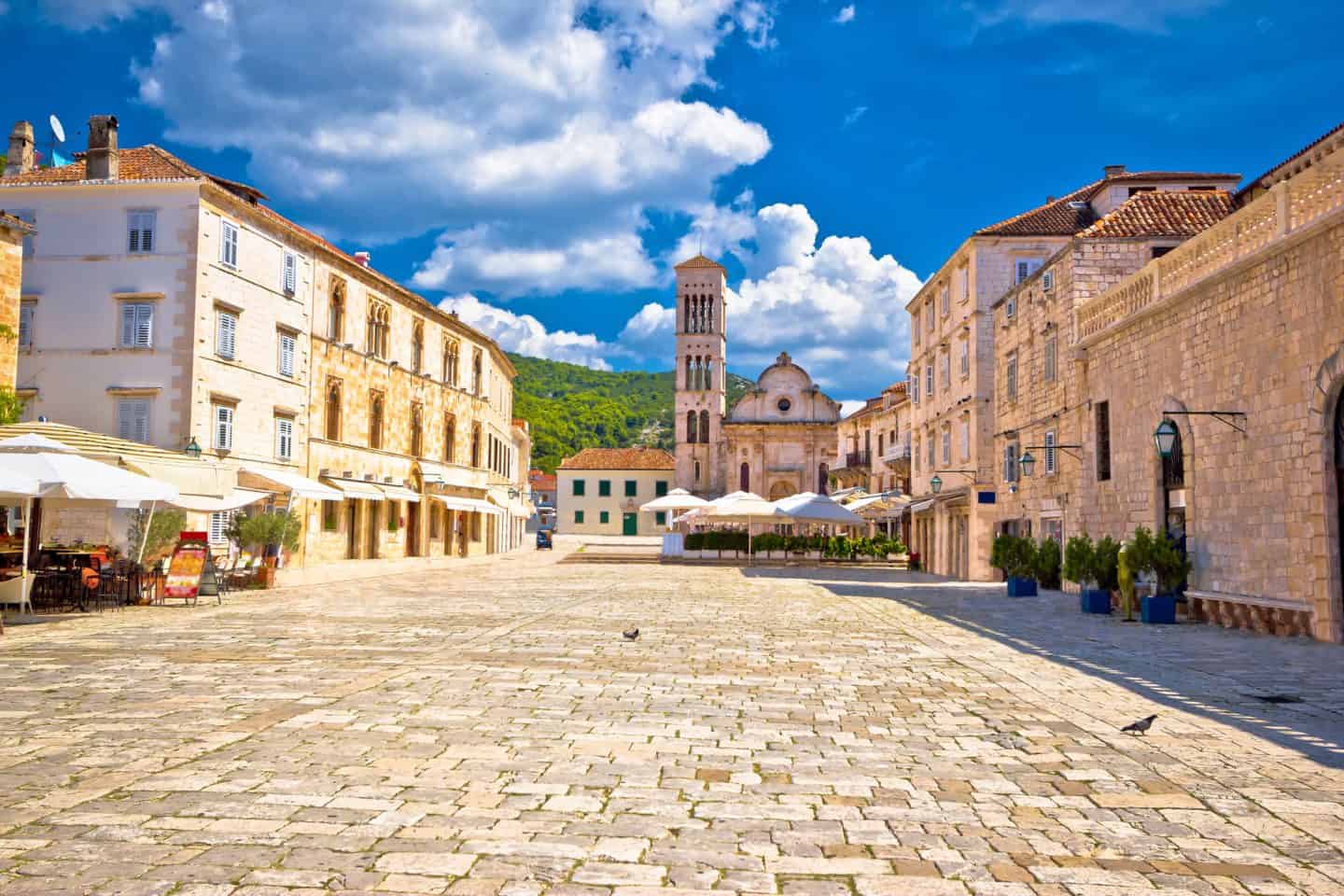
At one end stands the Cathedral of St. Stephen (optional entry ~€5–€7). Even if you don’t go inside, pause in the square. This is where island life gathers in the evenings.
From here, wander without a strict plan.
Hvar’s side streets are lined with:
- Small wine bars
- Art galleries
- Stone staircases that wind upward
- Bougainvillea spilling over balconies
The architecture reflects centuries of Venetian influence — elegant, balanced, and distinctly coastal.
This isn’t a city built for speed. It’s built for lingering.
🤩 Read next: The Best Things to Do in Hvar
Late Afternoon: Climb to Fortica Fortress (Španjola)
If there’s one non-negotiable activity on Day 3, it’s the climb to Fortica Fortress.
Entry is approximately €10.
The walk takes about 20–25 minutes uphill from town. It’s steep but manageable. Wear proper shoes — the stone can be slippery in places.
As you climb, the view gradually opens behind you. And when you reach the top, everything makes sense.
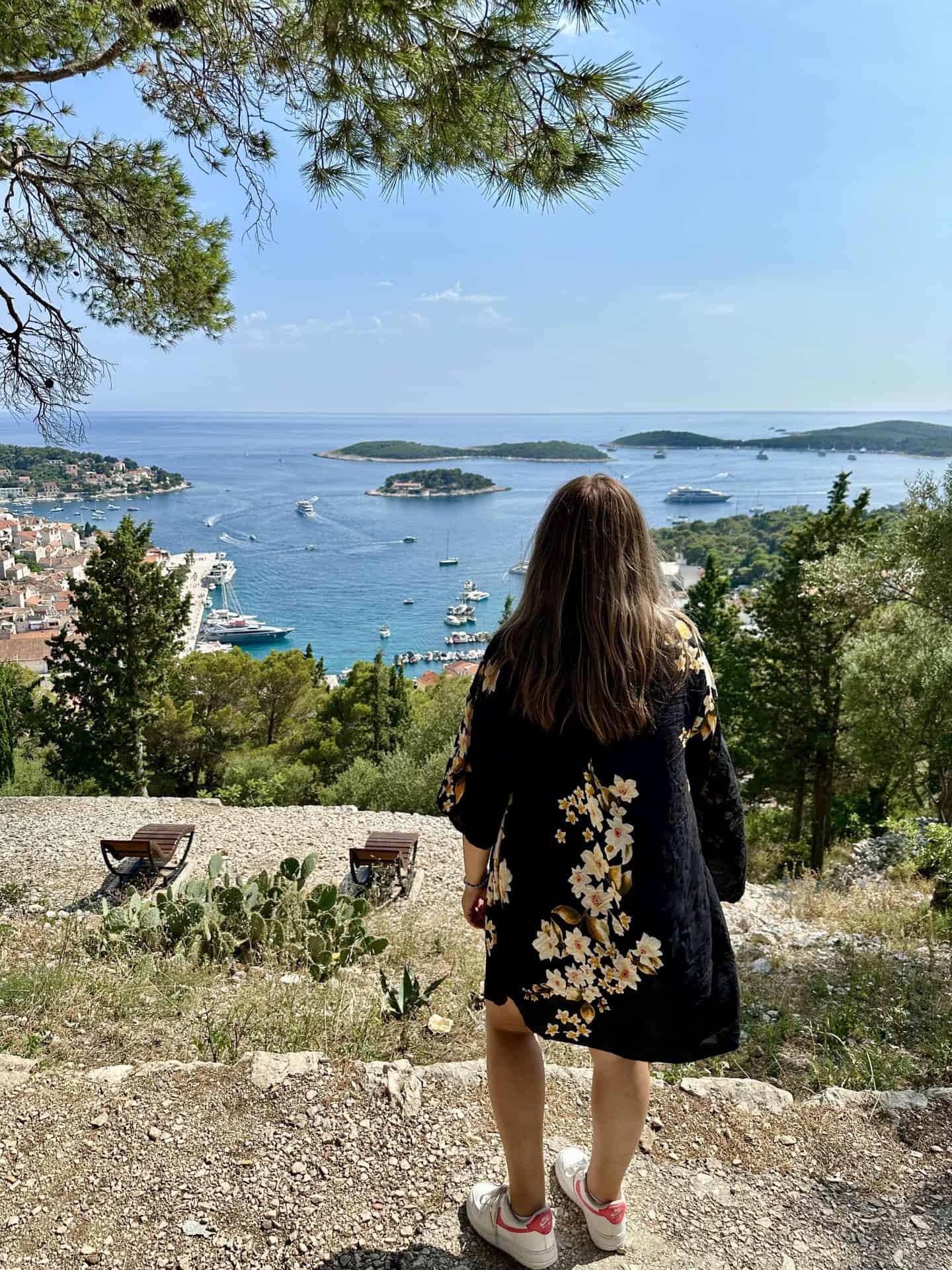
Below you:
- Hvar Town’s terracotta rooftops
- The marina dotted with boats
- The Pakleni Islands scattered across turquoise water
This view is one of the most iconic in Croatia.
Fortica was built for protection — Hvar was strategically important during Venetian rule. Standing there, you understand why. The islands create natural defense. The sea stretches open and visible in every direction.
Try to time your visit about an hour before sunset. The golden light softens the stone and turns the water almost electric.
It’s one of those moments where you stop talking.
🤩 Book my favourita Pakleni Islands Sail Day With Brunch
Day 4: Boat Day Pakleni Islands
Hvar is beautiful from above — from Fortica, from the harbor — but you don’t fully understand it until you’re on the water.
The Pakleni Islands sit just off Hvar Town, a scattered archipelago of small wooded islands and hidden coves. From the fortress they look decorative. Up close, they’re wild, intimate, and impossibly clear.

Morning: Getting Out on the Water
You have three main options:
1. Water Taxi from Hvar to the Pakleni Islands
Right along the main harbor promenade in Hvar Town. You’ll see small wooden boats lined up with signs listing destinations like:
- Palmizana
- Ždrilca
- Mlini Beach
You don’t need to pre-book. You simply walk up, tell them your destination, and pay onboard. Typically €7–€10 each way per person. Boats run every 20–30 minutes in high season (June–September).
If you want something relaxed and swim-focused, a half-day small-group tour to the Pakleni Islands is perfect.
Most tours include:
- Multiple swim stops
- Snorkeling time
- Small hidden coves
- 4–5 hours total on the water
These are ideal if you don’t want a full 8-hour commitment. Check availability for your dates.
3. Full-Day Blue Cave, Green Cave & Pakleni Islands Tour
If you want something more dramatic and varied, the full-day excursion is a bigger adventure.
These tours typically include:
- Blue Cave (on Biševo Island)
- Green Cave
- Stiniva Cove (on Vis Island)
- Pakleni Islands swim stop
- Scenic speedboat ride across open sea
It’s a long day — usually 8–10 hours.
You’ll cover serious distance and see some of Croatia’s most famous natural sights.
Usually €70–€120 per person. Check for availability.
What to Bring:
- Sunscreen (strong UV exposure)
- Hat
- Towel
- Cash for beach restaurants
- Water
What Makes the Pakleni Islands Special
The Adriatic here shifts color constantly — deep navy in open stretches, then bright turquoise in shallow coves.

You’ll anchor near:
- Hidden pebble beaches
- Small wooden docks
- Secluded swimming areas
The water clarity is extraordinary. You can see straight to the bottom even in several meters of depth.
Swimming here feels almost weightless — saltier than many Mediterranean areas, making floating effortless.
This is the version of Croatia that stays in your memory long after you leave.
🤩 One of the top rated Blue Cave & Green Cave Tours
Midday: Lunch on the Islands
Many boat itineraries stop at small island restaurants built directly on the water.

Expect simple menus:
- Grilled fish
- Octopus salad
- Fresh bread and olive oil
- Local white wine
Lunch ranges €30–€50 per person depending on what you order.
It’s unpretentious and beautiful — wooden tables, sea at your feet, boats drifting nearby.
Where to Eat in Hvar
Hvar’s dining scene blends island seafood with polished coastal presentation. Reservations are highly recommended in summer.

Dalmatino ($$$) is one of the most reliable upscale options in Hvar Town. Known for tuna tartare, fresh grilled fish, and attentive service, it’s a safe choice for a memorable dinner. Expect €45–€70+ per person.
Giaxa ($$$) offers a more traditional, intimate setting inside a historic stone building. Order peka in advance or try their lamb dishes paired with local wine. Expect €40–€65 per person.
Alga ($$$) has some of the best sunset views in Hvar. Located along the waterfront, it’s ideal for seafood pasta or grilled sea bass while watching the sun drop over the Pakleni Islands. Expect €45–€75 per person.
Fig Hvar ($$) is more casual and great for lunch or a relaxed dinner, with Mediterranean-inspired dishes. Expect €25–€40 per person.
If you try one regional dish in Hvar, make it gregada, the island’s traditional fish stew cooked simply with olive oil and potatoes.
Where to Stay in Hvar
Staying within walking distance of Hvar Town harbor makes your stay easier, especially at night. Hillside properties offer views but require uphill walks.

Adriana Hvar Spa Hotel
Modern boutique hotel overlooking the marina with a rooftop pool and central location. Ideal for couples who want walkability and comfort.
👉 Great option if you want stylish amenities steps from restaurants and the ferry. Check availability here.
Amfora Hvar Grand Beach Resort
Larger resort-style property with a dramatic pool area and easy sea access. A short walk to town.
👉 Best for travelers who want resort energy with town access. I would recommend booking early as the prices tend to go up and the hotel books up quickly. Check for availability.
Hotel Moeesy
Smaller, design-forward boutique stay with a quieter atmosphere. Walkable to the harbor.
👉 Ideal if you prefer something refined and less crowded. Check your dates here.
Rental & Apartment Recommendations in Hvar
If you prefer more space, privacy, or are traveling with family, apartments and villas are very popular in Hvar.
Successus Old Town House
Charming stone house rental inside Hvar Town with traditional character and modern interiors.
👉 Perfect if you want to stay in the heart of town with local charm. Check your dates here.
Villa Nora Hvar
Small heritage-style property near the main square offering apartment-style rooms with more space.
👉 Great for travelers who want boutique feel with extra room. Check rates & availability.
Apartments & Rooms Kampanel
Affordable, centrally located apartments within walking distance of the harbor.
👉 Ideal for budget-conscious travelers who still want a central location. Check availability.
Hvar fills quickly in peak season, especially July and August.
🤩 Booking 1–3 months in advance is strongly recommended.
Day 5: Ferry from Hvar to Dubrovnik & First Evening in the Old Town
Leaving Hvar feels different than leaving Split.
You’ve spent two days surrounded by water, light, and open horizon. Dubrovnik is still coastal — but it carries weight. History. Power. Drama.

Morning: Ferry from Hvar to Dubrovnik
The catamaran from Hvar to Dubrovnik takes approximately 3–4 hours depending on the operator and stops along the way. Tickets typically range from €40–€55 per person, with higher prices in peak summer.
This is again a passenger catamaran — no cars — and it docks directly into Dubrovnik’s Gruž Port.
Onboard you’ll find:
- Indoor air-conditioned seating
- Restrooms
- Basic snack and drink service
Arrive at least 30 minutes early during summer, especially July and August.
As the ferry leaves Hvar, the Pakleni Islands fade into the distance and the Adriatic opens wide again. The journey is longer than Split to Hvar, but it’s calm and scenic. You’ll pass stretches of untouched coastline and small islands that feel almost uninhabited.
About 30–45 minutes before arrival, the landscape begins to change.
The cliffs become steeper. The coastline feels more fortified. You start to sense you’re approaching something historically significant.
🤩 Book Your Ferry Tickets Ahead of Time!
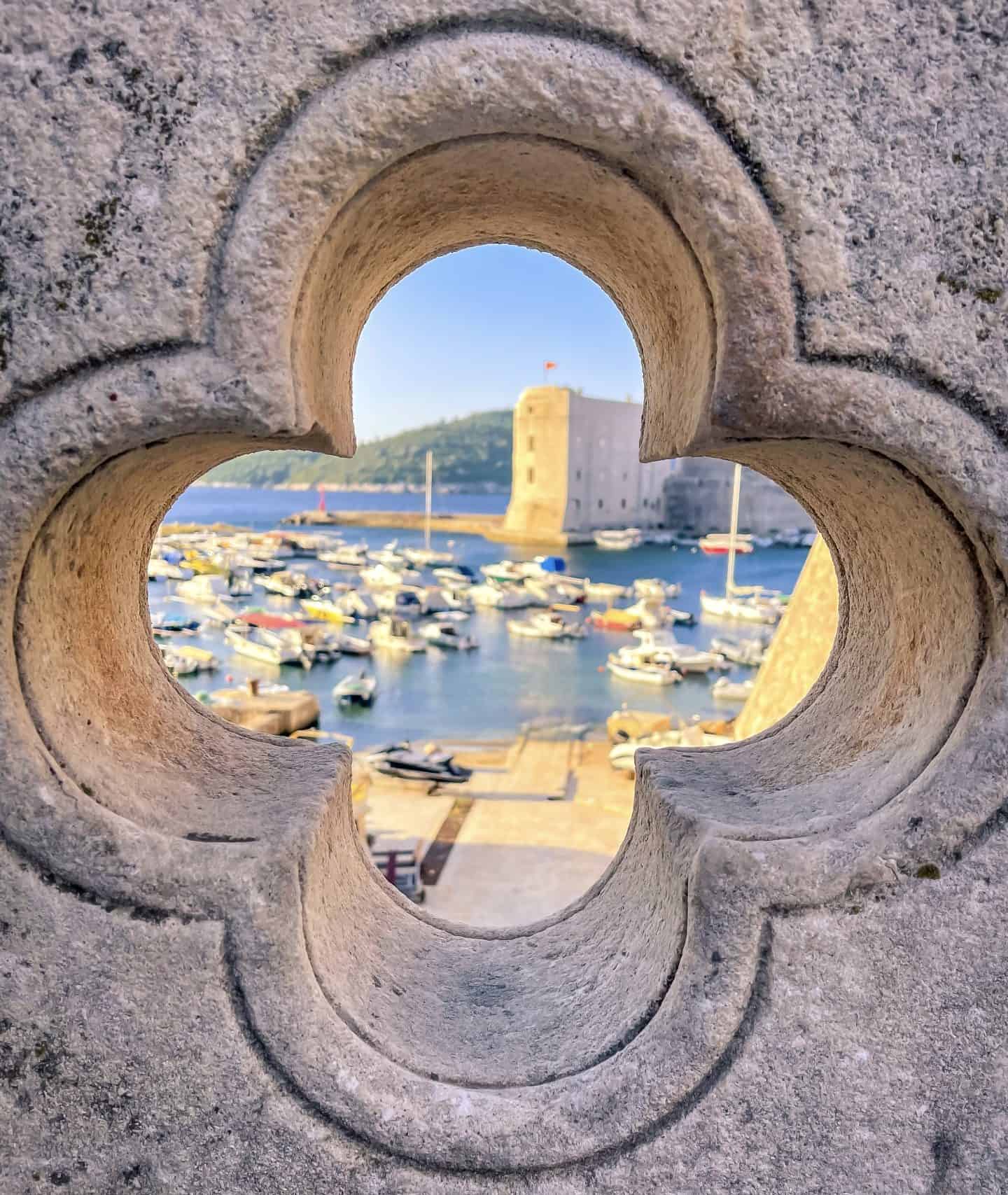
Arrival in Dubrovnik
The ferry arrives in Gruž Port, which is about 10–15 minutes by taxi or bus from the Old Town.
Taxi to Old Town: ~€15–€20
Local bus: ~€2–€3 per person
As you approach the Old Town by road, the first glimpse of Dubrovnik’s walls is striking. Massive limestone fortifications rise directly from the sea. Unlike Split or Hvar, Dubrovnik feels intentionally imposing.
Drop your bags at your hotel and head out immediately. Dubrovnik is best experienced in the late afternoon and evening, after cruise visitors leave.
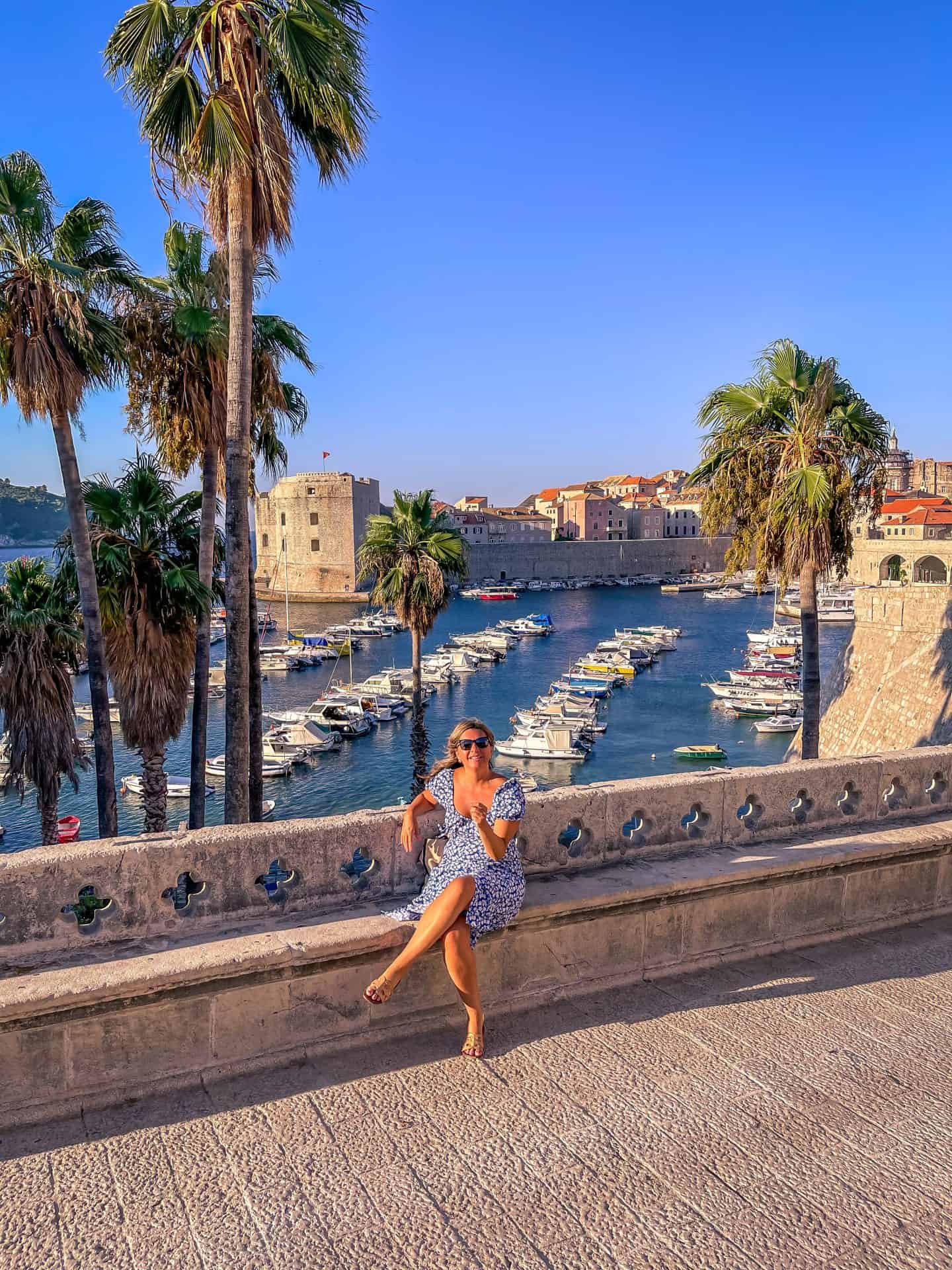
Late Afternoon: First Walk Through Dubrovnik’s Old Town
Enter through Pile Gate.
The stone streets of Dubrovnik are smoother, more polished than Split. The limestone reflects light beautifully, especially near sunset.
Walk slowly down Stradun — the main street that cuts through the Old Town.
There’s no entry fee to explore the Old Town itself. Just walk. Look up at:
- Symmetrical baroque façades
- Shuttered windows
- Narrow alleyways climbing steep staircases
Dubrovnik feels different. More theatrical. More preserved.
This city was once the independent Republic of Ragusa — a powerful maritime state that rivaled Venice in trade and diplomacy. The architecture reflects wealth and strategic strength.
Early Evening: Jesuit Stairs & Hidden Corners
Climb the Jesuit Stairs for a quieter perspective. From above, you see the red rooftops spilling toward the Adriatic.
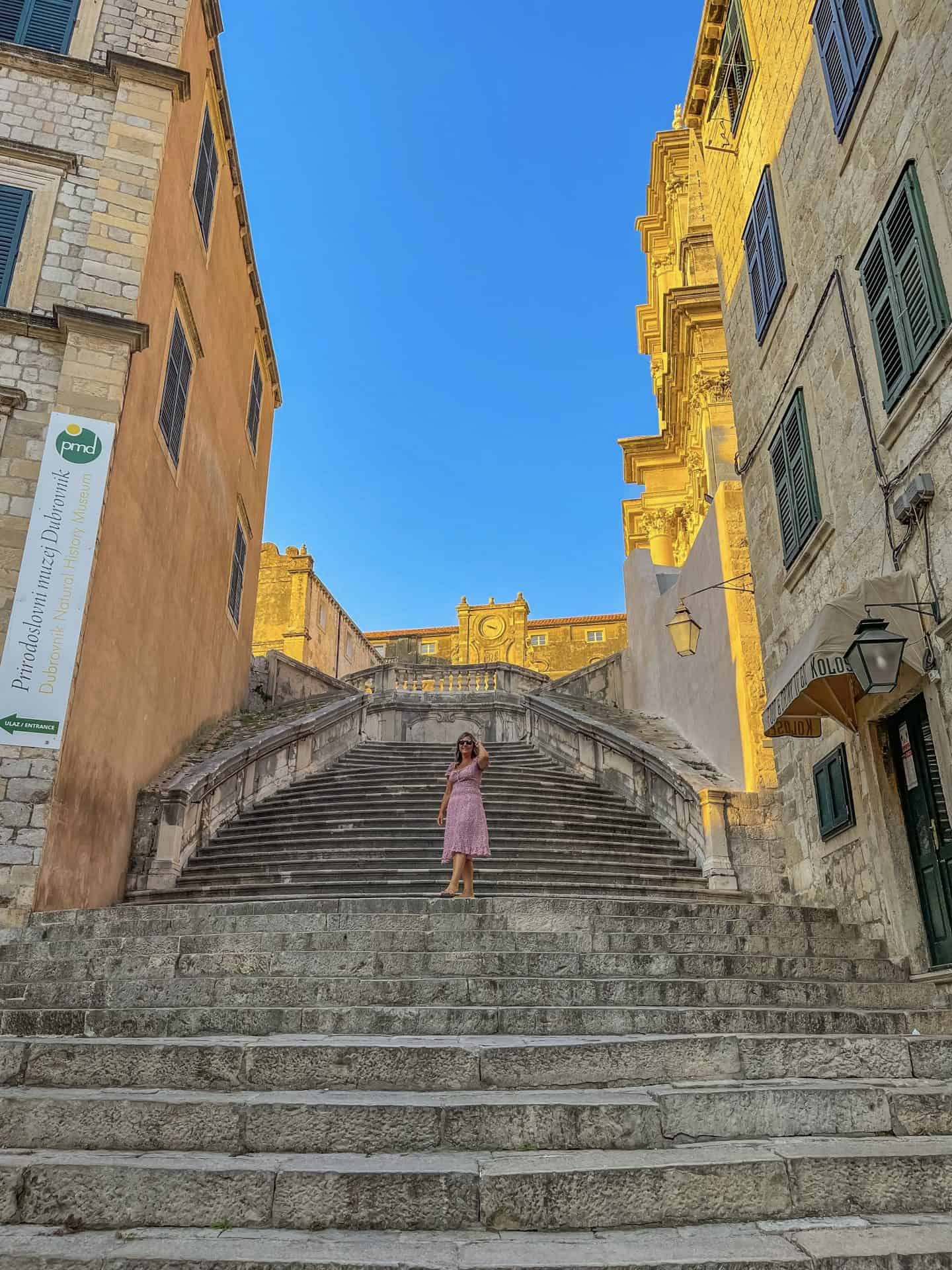
Wander into smaller side streets away from Stradun. Dubrovnik rewards detours.
If you want a pre-dinner drink, head to Buza bar just outside the walls. Sitting against the stone with open sea below is one of the simplest and most memorable experiences in Dubrovnik.
Drinks typically range €8–€14.
Dinner in Dubrovnik
Dubrovnik’s cuisine blends Dalmatian seafood with stronger historical influences from the south.
If there’s one dish to try here, make it:
Šporki makaruli — traditional Dubrovnik pasta with slow-cooked meat sauce.
Dinner pricing in Dubrovnik tends to be slightly higher than Split or Hvar.
Expect:
- €30–€50 per person at mid-range restaurants
- €60–€90+ at higher-end waterfront locations
Choose something inside the walls for your first evening. Walking back through illuminated stone streets after dinner is part of the experience.
Day 6: Dubrovnik City Walls, Mount Srđ & Adriatic Views
This city was not built casually. It was engineered for survival, trade, diplomacy, and independence. Walking its walls and climbing above it reveals why it became one of the most powerful maritime republics in the Adriatic.
Start early. Dubrovnik gets hot and crowded in summer.
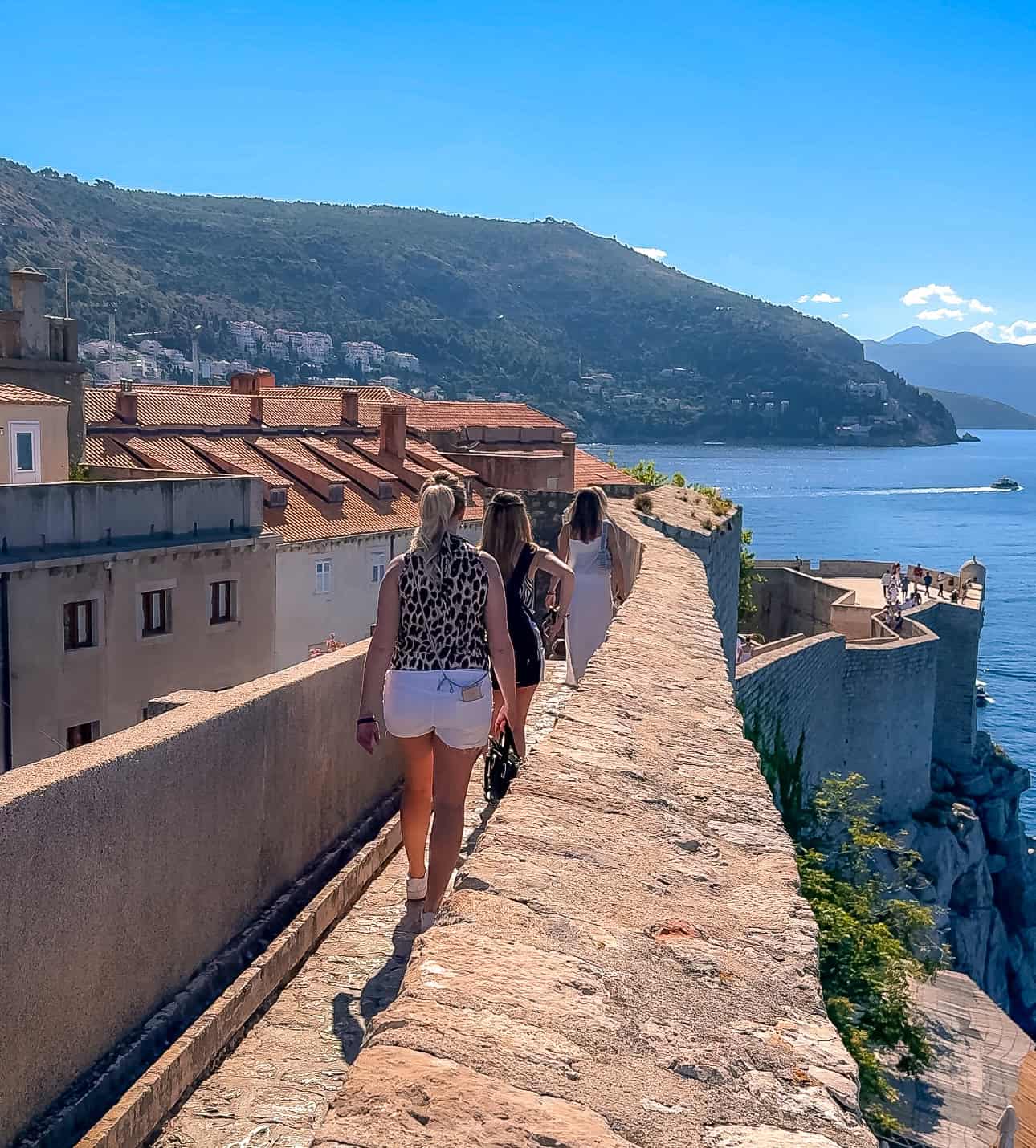
Morning: Walk the Dubrovnik City Walls
This is the single most important experience in Dubrovnik.
Entry fee: approximately €35 per person (includes Lovrijenac Fortress) or buy the Dubrovnik City Pass if you plan on visiting museums
Time needed: 1.5–2 hours
Best time: right at opening (usually 8:00 AM in summer)
The walls stretch roughly 2 kilometers around the entire Old Town. They were built between the 12th and 17th centuries and remain among the most intact medieval fortification systems in Europe.
As you climb the first set of steps near Pile Gate, you immediately see the contrast:
On one side:
- Terracotta rooftops
- Church domes
- Narrow limestone streets
On the other:
- The Adriatic, endless and blue
- Sheer drops to the sea
The walls are not flat. You’ll climb and descend multiple staircases. Wear comfortable shoes and bring water. There is minimal shade.
Along the route, you’ll pass:
- Defensive towers
- Cannon positions
- Fort Bokar
- Views of Lokrum Island in the distance
At certain points, the walls rise nearly 25 meters above the sea. Standing there, you understand Dubrovnik’s defensive brilliance. The city was small but nearly impenetrable.
Take your time. This is not a rushed activity.

Optional Add-On: Lovrijenac Fortress
Included in the city walls ticket.
Located just outside the main walls, this fortress sits dramatically on a cliff 37 meters above sea level.
It was crucial to Dubrovnik’s defense and offers one of the best panoramic views back toward the city walls themselves.
If you’re interested in history, this stop is worth it. If you’re fatigued, you can skip it — but the perspective is powerful.
Midday: Cable Car to Mount Srđ & Lunch at Panorama
After walking the city walls in the morning, the best next step is to rise above Dubrovnik completely.
Instead of staying within the Old Town for lunch, take the Dubrovnik Cable Car up Mount Srđ. It’s a short four-minute ride, but the emotional shift is significant.

Round-trip ticket: approximately €27 per person.
As the cabin ascends, the Old Town slowly shrinks beneath you. The walls form a perfect oval, the red rooftops tighten into symmetry, and the Adriatic stretches endlessly beyond. From this height, Dubrovnik looks both fragile and impossibly strong at the same time.
When you step out at the summit, pause before walking anywhere. Take in the scale:
- The full defensive wall system wrapping the city
- Lokrum Island directly offshore
- The coastline bending north and south
- The Adriatic fading into a hazy horizon
This is the perspective that explains Dubrovnik’s power. The city was small, but its positioning made it formidable.
Lunch at Panorama Restaurant
At the top of Mount Srđ sits Panorama Restaurant, one of the most iconic dining views in Croatia.
This is not a place you decide on casually.

You must reserve well in advance — especially for summer travel. Tables book out days or even weeks ahead in July and August. If you want a prime view table, reserve as early as possible.
Panorama is known for its setting first, but the food is solid and well-executed Mediterranean cuisine.
Expect:
- €25–€40 per person for lighter lunch options
- €40–€60+ per person if ordering full mains and wine
What to consider ordering:
- Fresh grilled sea bass
- Seafood risotto
- Adriatic shrimp dishes
- Local Croatian white wine
The real reason to dine here is the uninterrupted, sweeping view over Dubrovnik and the sea. Sitting above the Old Town after walking its walls gives you layered perspective — you’ve experienced it from within, from atop its defenses, and now from above its strategic vantage point.
From an experiential standpoint, this lunch isn’t just about food. It creates a narrative arc to your Dubrovnik day.
You walked the walls to understand its defense.
You rose above it to understand its geography.
You sit at Panorama to understand its scale.
Allow yourself time here. This isn’t a rushed meal.
Optional: Homeland War Museum (After Lunch)
At the summit of Mount Srđ is the Homeland War Museum (entry approximately €5–€10).
If you want deeper historical context, especially about the 1991–1992 Siege of Dubrovnik, this museum adds important modern perspective. It’s compact but impactful.
Practical Tips for This Midday Plan
- Book Panorama reservations as early as possible.
- Arrive 10–15 minutes before your reservation to secure a good viewing position.
- Bring water and sunscreen — shade is limited on the viewing terrace.
- If cable car lines are long in peak season, consider buying tickets online in advance.
Late Afternoon: Beach Option — Banje or Sveti Jakov?
After descending from Mount Srđ and returning from Panorama, the best way to reset is by the water. Dubrovnik’s beaches are not long sandy stretches — they’re intimate, pebbled coves framed by stone and sea.
You have two excellent options depending on the kind of atmosphere you prefer.
Option 1: Banje Beach — Iconic & Close to Old Town
If convenience matters most, Banje Beach is your easiest choice.
Located just outside Ploče Gate, it’s only a 5–10 minute walk from the Old Town. It’s Dubrovnik’s most famous beach, largely because of its view: from the water, you look directly at the Old Town walls rising from the sea.

It’s dramatic and photogenic.
What to expect:
- Pebble beach (water shoes recommended)
- Clear, calm Adriatic water
- Lively atmosphere
- Beach club section with music in peak season
Sunbeds typically range from €30–€50 per day in high season, especially in the organized beach club area. Drinks run around €8–€15 depending on the venue.
Banje is more social and energetic than other nearby beaches. It can feel busy during peak summer months, but the location is unbeatable.
Choose Banje if:
- You want convenience.
- You prefer a lively beach club atmosphere.
- You want the classic Dubrovnik photo backdrop.
Option 2: Sveti Jakov — Quieter & More Scenic
If you’re looking for something calmer and slightly removed from the crowds, Sveti Jakov is the better choice.
Located about a 20–25 minute walk from the Old Town (or a short taxi ride of €10–€15), it requires descending a series of stone steps — but the reward is worth it.

From the beach, you see Dubrovnik’s Old Town across the water from a distance, framed by cliffs and open sea.
What to expect:
- Pebble beach (water shoes strongly recommended)
- Deeper water entry
- Fewer crowds
- More relaxed atmosphere
Sunbeds usually range from €20–€30 depending on season and location. There’s a small beach bar for drinks and light snacks.
Sveti Jakov feels less commercial and more spacious. In the late afternoon, when the light softens and the cruise crowds are gone, it becomes especially beautiful.
Choose Sveti Jakov if:
- You prefer quieter settings.
- You want fewer crowds.
- You enjoy a slightly more natural beach experience.
Day 7: A Slow Goodbye to Dubrovnik
After a week traveling through Croatia — from Roman palaces in Split to island sunsets in Hvar and finally the fortified elegance of Dubrovnik — your final morning shouldn’t feel like a checklist.
As someone who has traveled Croatia for decades and understands how quickly these historic cities can feel crowded and overwhelming by midday, I always recommend structuring departure mornings around quiet. Dubrovnik, in particular, reveals its true character before the cruise ships dock and before the day tours roll in.
Early Morning in the Old Town
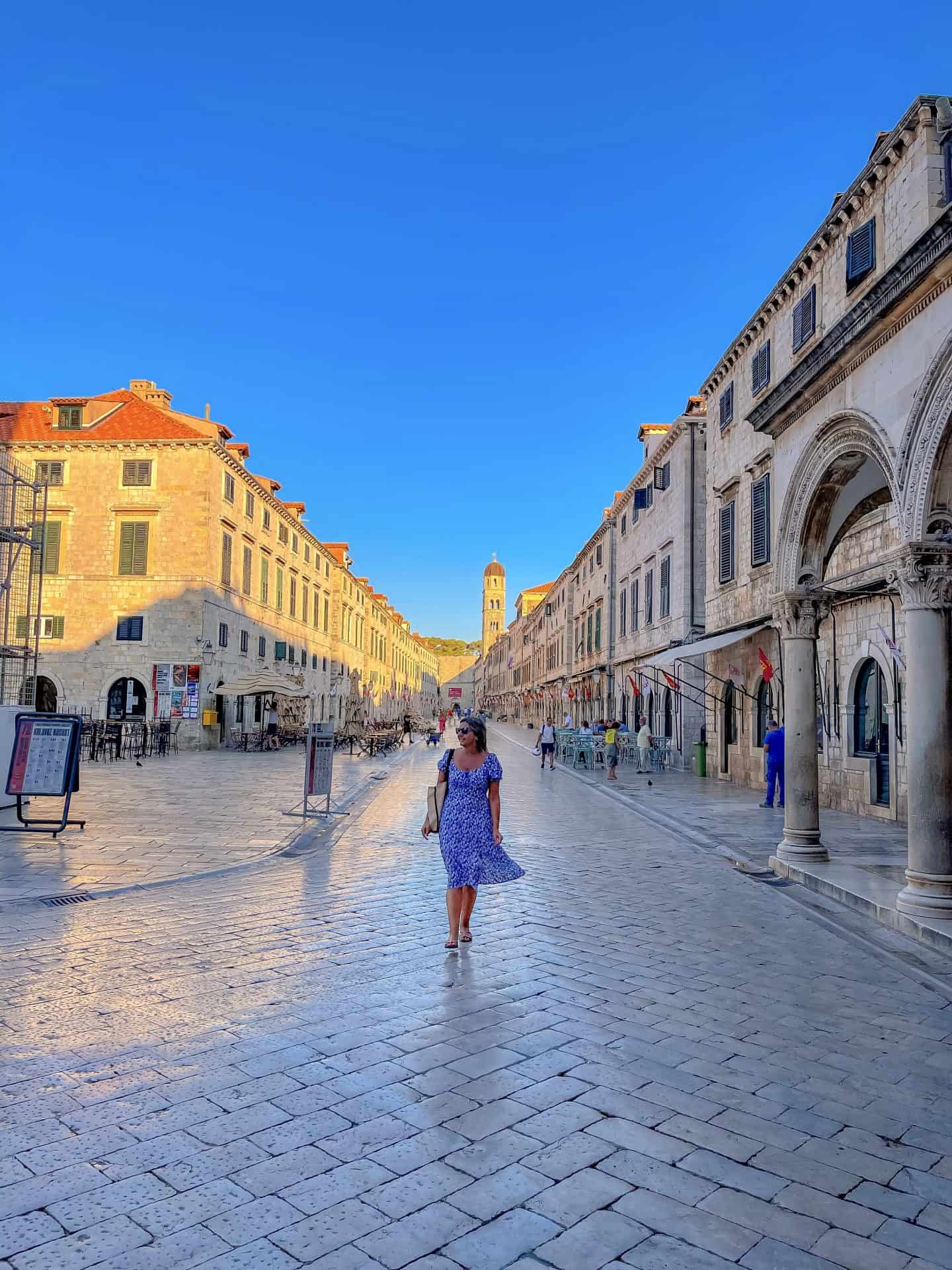
Wake early — ideally before 8:00 AM — and step into the Old Town one last time. Exploring Dubrovnik early is the best time to take photos. The lighting is great and no crowds!
Without the crowds, Stradun feels almost ceremonial. The limestone street, polished smooth from centuries of footsteps, reflects the morning light in soft silver tones. The buildings appear taller, more elegant, less theatrical.
This is when Dubrovnik feels lived in rather than visited.
Walk slowly. Notice the Gothic and Renaissance details you may have rushed past earlier in the week. Pause in Gundulić Square before the market sets up. Listen to the quiet echo of your steps against stone.
If you missed it earlier, this is an ideal time to visit the Rector’s Palace (entry approximately €15). Once the administrative heart of the Republic of Ragusa, it offers a deeper understanding of how this small maritime republic governed itself with remarkable diplomacy and independence for centuries. The exhibits are compact but meaningful, adding intellectual context to the walls you walked and the city you explored.
There is something grounding about learning how Dubrovnik sustained itself long before tourism ever existed.
Coffee, Breakfast, and Reflection
Before heading to the airport, sit down somewhere slightly removed from the main flow of Stradun — one of the quieter side streets offers a more intimate atmosphere.
Order a simple espresso (typically €2–€3) and a pastry or light breakfast (€5–€15 depending on your choice). Don’t rush through it.

This final pause matters.
Croatian coastal culture revolves around coffee — not hurried takeaway cups, but intentional sitting. It’s part of the rhythm of life here. Participating in that rhythm, even briefly, connects you to the place beyond sightseeing.
After a week of movement — ferries, historic sites, island swims — this moment of stillness helps close the experience properly.
One Last View of the Adriatic One-Week in Croatia
If time allows before departure, walk toward the harbor or along the edge near Ploče Gate for one final look at the sea.
The Adriatic in the morning has a different personality than it does in the afternoon. It’s calmer, glassier, quieter. Fishing boats begin their routes. The light sits low against the city walls.
Departure Logistics from Dubrovnik
Dubrovnik Airport (DBV) is located approximately 20–25 minutes from the Old Town, depending on traffic.
A taxi typically costs between €30–€40. During peak summer months, I recommend booking your transfer in advance or asking your accommodation to arrange one the night before.
There is also an airport shuttle bus departing from near Pile Gate, generally costing €8–€10 per person. It aligns with major flight schedules and is a reliable budget-friendly option.
In summer, allow extra buffer time for traffic, especially between 9:00–11:00 AM when cruise passengers and day tours are also moving.
For international flights, plan to arrive at the airport at least three hours before departure.
Where to Stay in Dubrovnik
Dubrovnik accommodations fall into two categories: staying inside the Old Town walls for atmosphere, or just outside for easier access and better value. For a 7 days in Croatia itinerary, I typically recommend staying just outside the gates — you get the romance without dragging luggage over polished limestone steps.
Hotel Excelsior Dubrovnik
If you want classic Adriatic elegance, Hotel Excelsior delivers it. Located just steps from Ploče Gate, this waterfront hotel offers sweeping views of Dubrovnik’s Old Town and Lokrum Island. Rooms feel refined and airy, and the property includes a private beach platform, spa, and multiple sea-view dining terraces.
Perfect for couples or anyone wanting a seamless luxury experience within walking distance of everything. Check for the best rate here.
Hilton Imperial Dubrovnik
Located just outside Pile Gate, the Hilton Imperial blends 19th-century grandeur with modern comfort. The advantage here is space — rooms are larger than most within the Old Town, and you avoid the staircases and crowds when arriving with luggage.
You’re steps from the entrance to the Old Town but sleep in a quieter setting. There’s also an indoor pool and wellness area, which can feel like a welcome retreat after long days exploring.
This is a strong choice for first-time travelers who want convenience without sacrificing comfort. Check your dates here.
Vacation Rentals in Dubrovnik
If you prefer more space or a kitchen setup, Dubrovnik has excellent boutique apartment options.
Scalini Palace
Located inside the Old Town, Scalini Palace offers beautifully restored stone apartments with modern interiors. You get the charm of sleeping within the walls, but with updated bathrooms and small kitchenettes.
It feels intimate and authentic — ideal for couples who want to immerse themselves in Dubrovnik’s atmosphere without committing to a large hotel. Check availability here.
Villa Leoni
Just outside Ploče Gate, Villa Leoni offers contemporary apartments, some with private balconies and sea views. The location is ideal — close enough to walk into the Old Town, but slightly removed from the busiest streets.
This is a smart option for families or travelers staying longer who want flexibility and more room to spread out. Check for the best rates here.
🛎️ Trust me – Book your accommodations ahead of time as they sell out quickly and get more expensive.
Where to Eat in Dubrovnik
Dubrovnik’s cuisine reflects centuries of maritime trade and Mediterranean influence. Expect handmade pasta, slow-cooked meats, fresh seafood, and simple but beautifully executed dishes. If you enjoy fine dining, there are many Michelin Star restaurants in Croatia.
Here are reliable, high-quality options worth building into your itinerary.
Taj Mahal
Despite its name, Taj Mahal serves traditional Bosnian cuisine — and it’s one of the most beloved restaurants in Dubrovnik.
Expect to spend around €20–€35 per person.
Reservations are essential in summer — this place fills quickly.
Arsenal Restaurant
Located directly on the harbor, Arsenal occupies a former 16th-century shipyard, giving the space historical character and waterfront elegance. Dining here feels elevated but relaxed, making it perfect for a final night in Dubrovnik.
The menu focuses on Dalmatian seafood — grilled fish, shellfish, risotto — alongside local wines.
Expect €35–€60 per person depending on your selections.
Panorama Restaurant
Panorama is less about the room and more about the view. Located atop Mount Srđ, it offers one of the most iconic dining panoramas in Croatia.
The menu features Mediterranean staples — grilled fish, seafood risotto, salads — but the real draw is the sweeping view over Dubrovnik’s red rooftops and the Adriatic beyond.
Expect €40–€70 per person. Reservations must be made well in advance, especially for sunset tables.
What to Try in Dubrovnik
When dining in Dubrovnik, look for dishes that reflect its Republic of Ragusa heritage:
- Sporki makaruli — slow-cooked beef ragù over handmade pasta
Black risotto — cuttlefish ink risotto
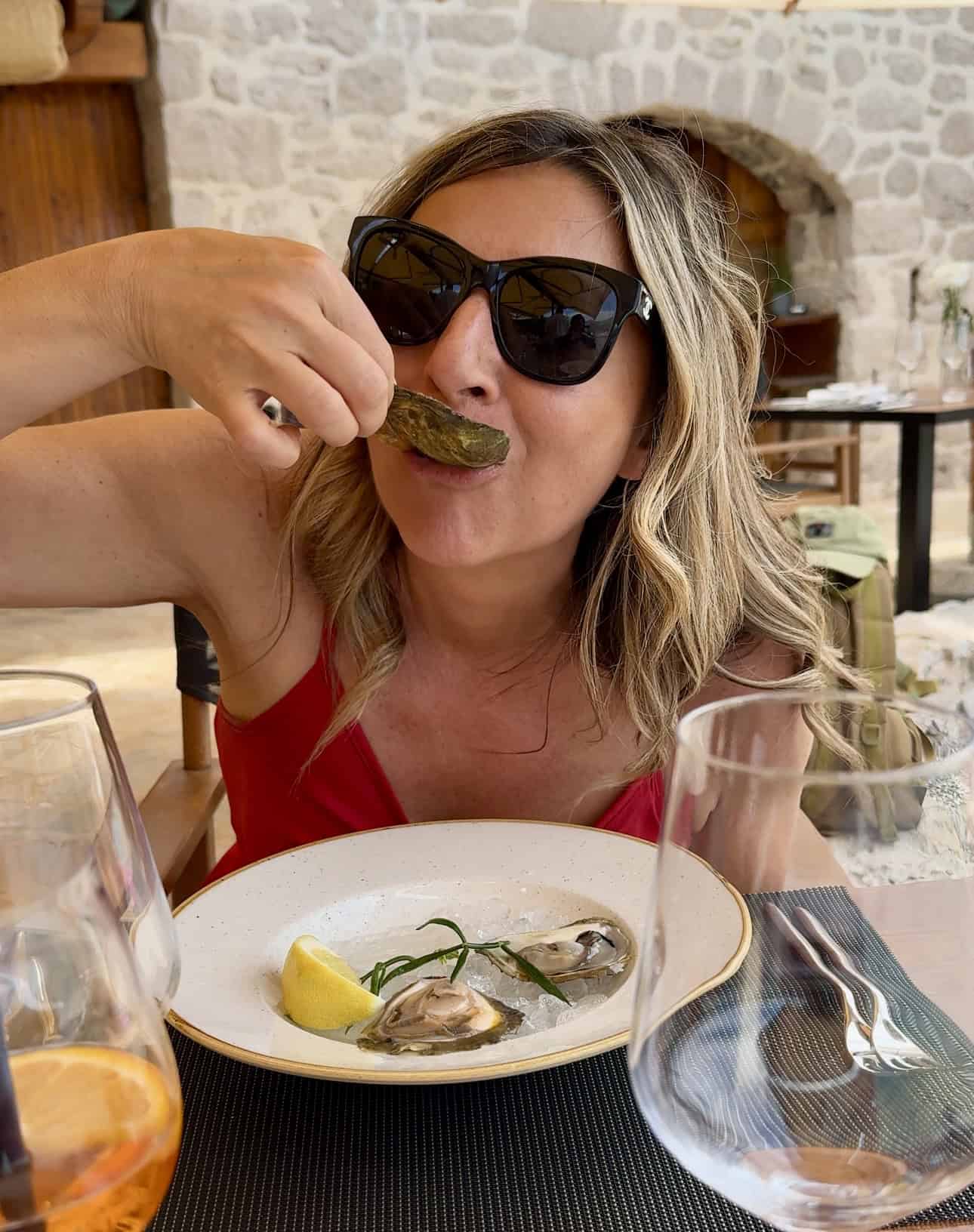
Fresh Adriatic sea bass or grilled calamari - Mali Ston Oysters – They are traditionally served raw with just lemon — simple, fresh, and unadorned.
Rozata — Dubrovnik’s version of crème caramel
Food here isn’t flashy — it’s rooted in tradition and maritime history.
Best Time to Visit Croatia in One Week
Having traveled Croatia in both peak summer and shoulder season, I can confidently say: there is no bad time — but there is a best time depending on your travel style.

Summer (June–August) – Lively, Vibrant, Iconic
If you love energy, swimming daily, and long golden evenings, summer is magical.
- Sea temperature: Warm enough for daily swimming
- Ferry routes: Most frequent and reliable
- Atmosphere: Lively, social, vibrant
- Drawback: Higher prices and larger crowds, especially in Dubrovnik
For first-time visitors doing a 7 days in Croatia itinerary along the coast (Split → Hvar → Dubrovnik), summer makes logistics easier and guarantees the full Adriatic experience.
Just book accommodations and ferries early — especially in July and August.
September – Balanced & Beautiful
September is personally one of my favorite months.
The sea is still warm from summer, but cruise traffic slows. Dubrovnik feels more breathable. Restaurant reservations are easier.
- Sea temperature: Still excellent for swimming
- Fewer crowds
- Slightly better pricing
- Softer light for photography
If you want a quieter version of this itinerary without sacrificing weather, early to mid-September is ideal.
May & October – Shoulder Season Calm
These months are great for sightseeing-focused travelers.
- Fewer tourists
- Lower accommodation rates
- Mild temperatures
However, some island tours and beach clubs reduce operations, and ferry schedules are less frequent.
For this specific 7-day coastal itinerary, June or September offer the best balance of weather and logistics.
Practical Tips for One Week in Croatia

Book Early in Summer
If traveling June–August:
- Reserve accommodations 2–3 months ahead.
- Book ferry tickets a few days in advance (especially Split–Hvar).
- Make dinner reservations for Taj Mahal, Panorama, and top Hvar restaurants well ahead of time.
Pack Smart for 7 Days in Croatia
Bring:
- Comfortable walking shoes (Old Town streets are polished stone) – ladies, trust me on this one. I always bring high heels and never wear them – it’s not pratical!
- Water shoes for pebble beaches – you will need these.
- Light layers for evenings
- Sunscreen — the Adriatic sun is strong
Ferry Tips
Passenger catamarans are the most efficient way to travel between Split, Hvar, and Dubrovnik. They go directly into Hvar Town, unlike car ferries that dock elsewhere on the island.
Arrive 30 minutes before departure in peak season. Seats are typically open seating.
FAQs for a 7 Days in Croatia Itinerary

Is 7 days enough for Croatia?
Yes — if you focus on one region.
Croatia has over 1,000 islands and a long coastline, so trying to “see it all” in one week is unrealistic. This Split → Hvar → Dubrovnik route covers Roman history, island life, and Dubrovnik’s iconic Old Town — making it a well-balanced first-time Croatia itinerary.
Do I need a car for this itinerary?
No.
For this route, ferries and catamarans are the best way to travel between Split, Hvar, and Dubrovnik. Parking in Dubrovnik and Split is limited and expensive, and driving on islands like Hvar can be stressful in peak season.
Using passenger catamarans (like Krilo or Jadrolinija routes) is easier and more efficient.
How much does a 7-day Croatia trip cost?
Costs vary depending on accommodation level and season, but here’s a general estimate per person:
Mid-range hotels: €150–€350 per night
Meals: €25–€60 per person depending on restaurant choice
Ferry transfers: €25–€50 per route
Attractions & tours: €20–€80 depending on activities
For a balanced mid-range 1 week in Croatia, expect approximately €1,500–€2,500 per person excluding flights.
Is Croatia expensive?
Croatia is more affordable than Italy or France’s coast, but it is no longer a “budget” destination — especially in Dubrovnik during peak summer.
Island dining and beachfront accommodations carry premium pricing, but you can balance costs by mixing casual meals (like burek or pizza) with one or two special dinners.
Is Croatia safe?
Yes, Croatia is safe.
Croatia is considered one of the safest countries in Europe for travelers. Violent crime is rare, and walking at night in Split, Hvar, or Dubrovnik generally feels safe.
As always, use normal travel precautions in busy tourist areas.
Can I swim everywhere?
Croatia’s coastline is mostly pebble or rock, not sand. Water shoes are highly recommended.
The Adriatic is exceptionally clean and clear, especially around Hvar and Dubrovnik. Summer sea temperatures range from 22–26°C (72–79°F).
🚣 If you love being on the water then try the Dubrovnik Sea Kayaking & Snorkelling
Croatia Has a Way of Staying With You
One-week in Croatia will go by faster than you expect.
If you’re anything like me, the hardest part of this itinerary isn’t the walking, the ferries, or even the summer heat.
It’s leaving.
You’ll swim in water so clear it barely looks real. You’ll wander through stone streets older than most countries. You’ll sit at dinners that stretch long past sunset because no one is in a rush to leave.
And if you’re anything like me, you’ll feel something deeper than just “I had a good vacation.”
Croatia has a way of staying with you.
Maybe it’s the rhythm of the coast. Maybe it’s the history layered into every wall. Maybe it’s the way life slows down in the evenings and reminds you that not everything needs to be hurried.
This 7 days Croatia itinerary is just the beginning.
You’ll leave having seen Split, Hvar, and Dubrovnik — but you’ll also leave knowing there’s more. More islands. More quiet coves. More towns tucked along the coast waiting for you.
And that’s the magic of it.
Croatia isn’t a place you check off a list.
It’s a place you return to.
If this is your first time visiting, I hope it becomes somewhere you come back to again and again — just like I have my entire life.
Read More About Croatia:
If you loved this 7 days in Croatia itinerary, you’ll find even more travel guidance, tips, and inspiration in the Croatia Travel Guide on Diana’s Healthy Living. Here are some posts worth exploring next:
Continue planning your Croatian adventure with these helpful articles:
- Is the Dubrovnik City Pass Worth it? — Practical tips for first-timers
- Best Croatian Islands to Visit — A deeper dive into island options beyond Hvar, including Korčula, Brač, and more.
- Dubrovnik City Guide: What to See + Hidden Gems — The best things to do in Dubrovnik beyond the walls — from secret strolls to local eateries.
- Croatian Food Guide: Must-Try Dishes — A comprehensive overview of Dalmatian and Croatian cuisine you’ll encounter throughout your trip.