Canada is one of the most diverse and breathtaking countries in the world, stretching across six time zones and three oceans. It’s a land of dramatic contrasts—towering mountains and vast prairies, thundering waterfalls and frozen tundra, bustling cities and quiet fishing villages. With such diversity, it’s no surprise that Canada is home to some of the most iconic landmarks on Earth.
While there are countless attractions from coast to coast, this list highlights the Top 15 Canadian Landmarks—the ones every visitor should experience at least once in their lifetime. From natural wonders like Niagara Falls and the Northern Lights to historic gems like Old Québec, these are the destinations that capture the essence of Canada.
Canadian Landmarks You Must Visit
Table of Contents
One of the most fun and basic facts about Canada is that if you combine every other country’s amount of lakes, it will still have more lakes than that! Yup. That’s a lot of gorgeousness all wrapped up in one stunning place, my hometown, Canada.

1. Banff National Park (Alberta)
Banff National Park, is often the first place that comes to mind when people think of the Canadian Rockies—and for good reason. Established in 1885, it’s not only Canada’s first national park but also a UNESCO World Heritage Site, drawing millions of visitors each year. Covering more than 6,600 square kilometers, Banff is a playground of towering peaks, alpine meadows, glaciers, and pristine lakes.
During the warmer months, Banff is a paradise for outdoor enthusiasts. Hike the Plain of Six Glaciers Trail, paddle across turquoise lakes, or take the Banff Gondola to the summit of Sulphur Mountain for panoramic views. Wildlife sightings are common—keep your eyes open for elk, bighorn sheep, and even grizzly bears. In the winter, Banff transforms into a snowy wonderland, with ski resorts like Sunshine Village and Lake Louise offering world-class slopes.
The town of Banff itself is just as charming. Its streets are lined with cozy cafes, boutiques, and Canadian Rockies-inspired restaurants. And don’t miss the historic Banff Springs Hotel, nicknamed the “Castle in the Rockies.”
Why it’s iconic: Banff seamlessly blends jaw-dropping wilderness with accessibility, making it a true gateway to Canada’s natural wonders.
Travel tip: Visit in September for stunning fall colors, fewer crowds, and great hiking conditions.
PLANNING A TRIP TO ALBERTA? CHECK OUT THESE POSTS TO HELP YOU PLAN YOUR TRIP:
Four Day Jasper National Park Itinerary
Things to Do In Jasper National Park in the Summer
Top Things to do In Banff National Park in the Summer

2. Lake Louise (Alberta)
No visit to Banff is complete without experiencing Lake Louise, perhaps the most photographed lake in the world. Its vivid turquoise color—caused by rock flour carried from nearby glaciers—contrasts perfectly against rugged mountain peaks and dense evergreen forests.
Summer visitors can rent a bright red canoe to paddle across the mirror-like surface, with glaciers looming in the background. A popular trail leads to the Lake Agnes Tea House, a rustic cabin serving fresh-baked treats since 1905. For more adventurous hikers, the Plain of Six Glaciers trail offers unforgettable views of the valley.
In winter, Lake Louise freezes into one of the most magical skating rinks in the world, surrounded by snow-dusted peaks. The annual Ice Magic Festival transforms the area with stunning ice sculptures and a festive atmosphere.
Overlooking the lake is the Fairmont Château Lake Louise, a grand hotel that feels like something from a fairytale. Whether you stay there or not, it’s worth stepping inside for its views, architecture, and dining options.
Why it’s iconic: The combination of its unique color, mountain backdrop, and castle-like hotel makes Lake Louise a once-in-a-lifetime sight.
Travel tip: Sunrise is the best time for photography, as the lake is calm, light is soft, and crowds are minimal.

3. Moraine Lake (Alberta)
Set in the stunning Valley of the Ten Peaks, Moraine Lake is one of Canada’s most photographed natural wonders. Its vibrant, milky-blue waters are caused by glacial silt that refracts light, creating an otherworldly color that shifts throughout the day.
The Rockpile Trail offers the classic postcard view that once graced Canada’s $20 bill. From this vantage point, the contrast of turquoise waters against towering peaks is nothing short of breathtaking. Adventurers can also rent canoes or explore nearby hiking trails such as Larch Valley and Sentinel Pass, which are particularly dazzling in autumn when the larch trees glow golden.
Because of its beauty, Moraine Lake has become immensely popular. Parks Canada recently banned private vehicles to protect the fragile ecosystem, meaning shuttles or guided tours are now the only way to access it.
Why it’s iconic: Moraine Lake’s surreal color and mountain setting make it one of the most beautiful and recognizable lakes on Earth.
Travel tip: Go at sunrise to avoid crowds—early mornings are calm, peaceful, and incredibly photogenic.

4. Jasper National Park (Alberta)
The largest national park in the Canadian Rockies, Jasper spans 11,000 square kilometers of pristine wilderness. Compared to Banff, Jasper is wilder and less developed, offering a more rugged experience for those seeking true adventure.
The park’s highlight is Maligne Lake, home to the famous Spirit Island, one of Canada’s most iconic photo spots. Cruises on the lake allow visitors to soak in views of jagged peaks and turquoise waters. Jasper is also a designated Dark Sky Preserve, making it one of the best places in the world for stargazing.
Wildlife is abundant—elk, caribou, moose, and bears are often spotted along the roadside. In the winter, Marmot Basin offers fantastic skiing without the crowds. Year-round, natural hot springs, dramatic canyons, and glacier-fed rivers make Jasper a must-visit.
Why it’s iconic: Jasper blends raw wilderness with accessible adventures, offering a more off-the-beaten-path Rockies experience.
Travel tip: Visit in October during the Jasper Dark Sky Festival, when the Milky Way and constellations shine at their brightest.

5. Columbia Icefield & Athabasca Glacier (Alberta/British Columbia)
Located along the Icefields Parkway between Banff and Jasper, the Columbia Icefield is the largest ice mass in the Rocky Mountains. Covering nearly 325 square kilometers, it feeds six major glaciers, including the easily accessible Athabasca Glacier.
Visitors can step onto the glacier itself with guided walking tours or board the massive Ice Explorer vehicles that traverse the frozen surface. The nearby Glacier Skywalk—a glass-floored platform perched 280 meters above the Sunwapta Valley—offers jaw-dropping views for those brave enough to step out.
The Columbia Icefield is also a sobering reminder of climate change, as the Athabasca Glacier has been retreating at an alarming rate. Visiting now provides both an awe-inspiring and thought-provoking experience.
Why it’s iconic: Few places in the world allow you to walk on a glacier and witness the raw power of ancient ice.
Travel tip: Dress warmly—even in mid-summer, the glacier is chilly and winds can be strong. Waterproof shoes are highly recommended.
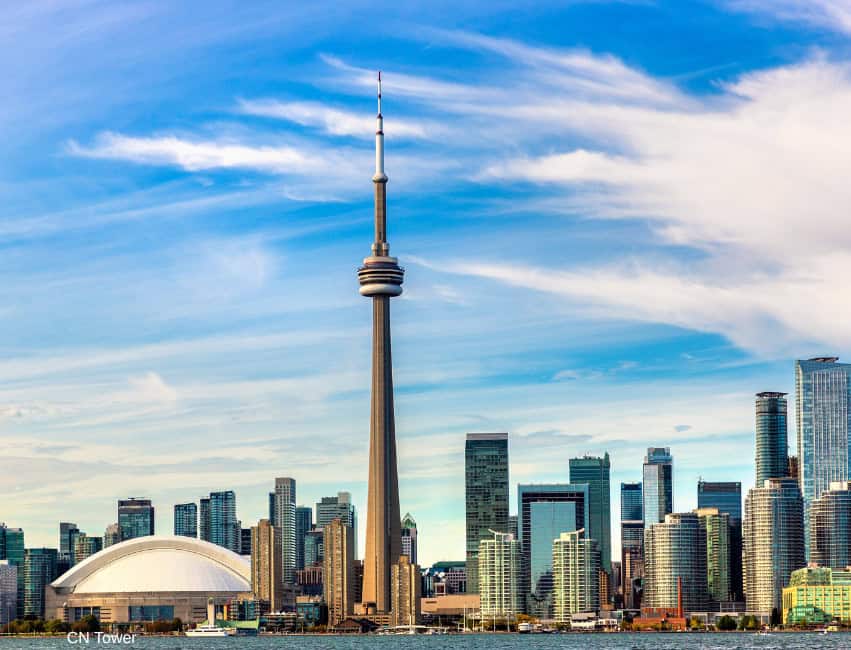
6. CN Tower (Toronto, Ontario)
The CN Tower dominates the Toronto skyline and is one of the most recognized structures in Canada. Standing at 553 meters (1,815 feet), it held the title of the world’s tallest freestanding structure for over three decades. Today, it remains a symbol of Canadian innovation and engineering excellence.
Visitors can ride a high-speed glass elevator to the observation deck for panoramic views of Toronto, Lake Ontario, and on a clear day—even as far as Niagara Falls and New York State. The Glass Floor is a thrilling experience for those brave enough to stand and look straight down 342 meters. For adrenaline seekers, the EdgeWalk allows you to walk hands-free along the outside ledge of the tower—making it one of the most unique urban adventures in the world.
At night, the CN Tower lights up in dazzling displays that reflect holidays, cultural events, and sports team victories. It’s both a beacon for locals and a must-see attraction for visitors.
Why it’s iconic: The CN Tower is Toronto’s crown jewel and a global architectural landmark.
Travel tip: For a memorable evening, book dinner at the revolving 360 Restaurant where you can enjoy fine dining while the city skyline slowly shifts around you.
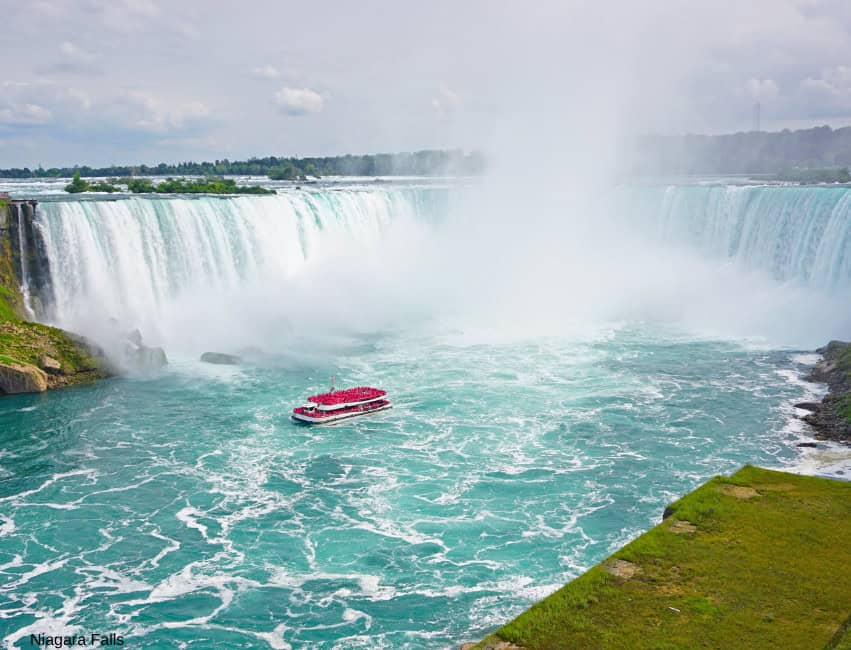
7. Niagara Falls (Ontario)
Few natural wonders are as famous as Niagara Falls, where the mighty Niagara River plunges dramatically between Canada and the U.S. The Canadian side, known as the Horseshoe Falls, is the most powerful and visually stunning of the three waterfalls.
One of the best ways to experience the falls is by boarding a boat cruise that takes you right to the base, where you’ll feel the thunderous spray and hear the roar of the water. For a different perspective, the Journey Behind the Falls tunnels allow visitors to stand directly behind the cascading curtain.
Niagara Falls is not just about the waterfalls—it’s also a vibrant destination filled with attractions, casinos, gardens, and wineries nearby. At night, the falls are illuminated with colorful lights, and during summer, fireworks often light up the sky.
Why it’s iconic: Niagara Falls is one of the world’s most awe-inspiring natural wonders, drawing millions of visitors each year.
Travel tip: Visit early in the morning or late evening to avoid heavy crowds. If possible, view the falls from both the Canadian and U.S. sides for a complete experience.

8. Parliament Hill (Ottawa, Ontario)
Located in the nation’s capital, Parliament Hill is the political heart of Canada. Overlooking the Ottawa River, the Gothic Revival architecture of the Parliament Buildings makes for a striking national landmark.
The centerpiece, the Peace Tower, rises 92 meters and houses the Memorial Chamber honoring Canadians who served in war. In summer, visitors can enjoy the daily Changing of the Guard Ceremony, which showcases Canada’s military traditions with precision and pageantry. At night, the Sound and Light Show projects a multimedia story onto the Parliament buildings, blending history, art, and culture in a spectacular display.
Guided tours of Parliament give visitors insight into Canadian democracy, history, and architecture. Even if you’re not into politics, the beauty of the buildings and surrounding grounds makes it worth a visit.
Why it’s iconic: Parliament Hill is a symbol of Canada’s government, democracy, and history.
Travel tip: Arrive early in the morning to secure a spot for free guided tours, and don’t miss the panoramic views of the Ottawa River from the back lawn.
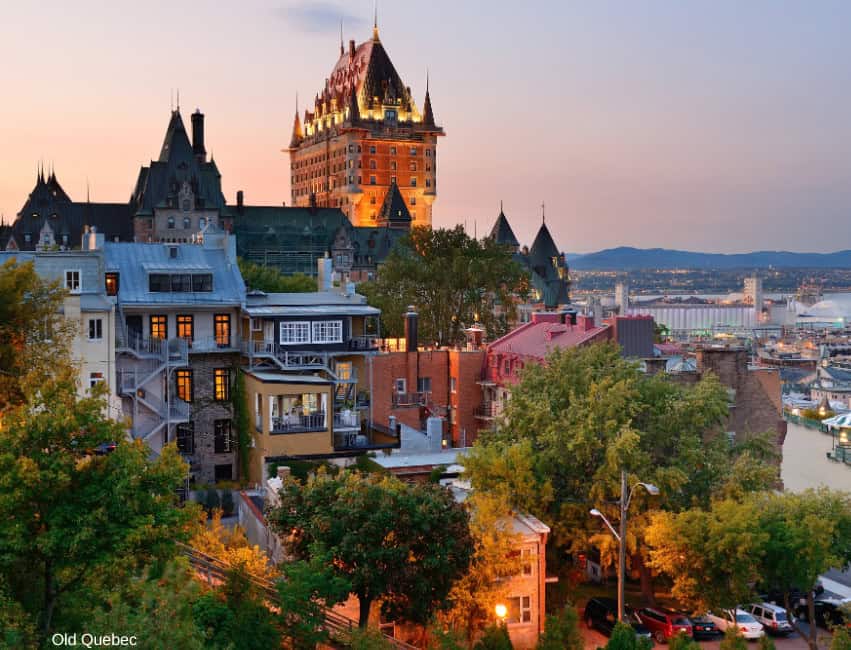
9. Old Québec (Québec City, Québec)
A UNESCO World Heritage Site, Old Québec is the only walled city north of Mexico and one of the most charming historic districts in North America. With cobblestone streets, stone buildings, and horse-drawn carriages, walking through Old Québec feels like stepping back in time.
The Château Frontenac, a castle-like hotel towering over the St. Lawrence River, is one of the most photographed hotels in the world. The Petit-Champlain District enchants visitors with its boutique shops, cafes, and street performers. History lovers can explore the Plains of Abraham, where pivotal battles were fought between the French and British.
In winter, Old Québec transforms into a magical wonderland, complete with festive markets, ice sculptures, and snow-covered streets. The annual Québec Winter Carnival is the largest and most famous winter festival in the world.
Why it’s iconic: Old Québec is a living museum of history, culture, and architecture—offering European charm right in Canada.
Travel tip: Wear comfortable shoes—this city is best explored on foot, and the steep streets can be a workout!
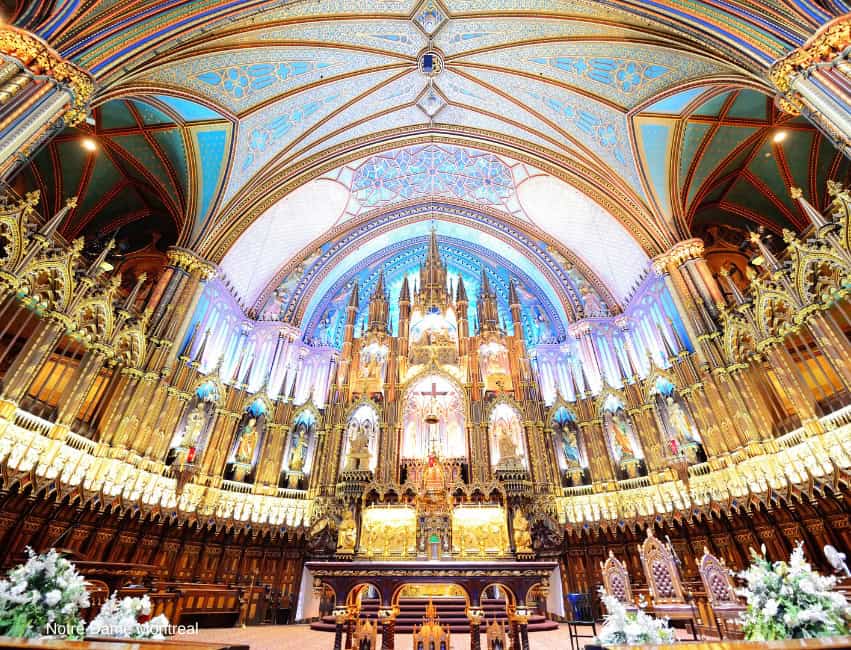
10. Notre-Dame Basilica (Montréal, Québec)
The Notre-Dame Basilica is Montréal’s most famous church and a masterpiece of Gothic Revival architecture. Built in 1829, its ornate interior features intricate wood carvings, vivid stained-glass windows, and a striking blue-and-gold ceiling that leaves visitors speechless.
The centerpiece of the basilica is its grand altar, illuminated in dramatic lighting. The church is also home to a 7,000-pipe organ that fills the space with resonant sound during concerts and services.
Beyond its religious significance, the basilica is a cultural hub. The AURA light show transforms the interior into a dazzling multimedia experience, blending history with breathtaking visuals and music. It’s a must-see even for those who don’t typically visit churches.
Why it’s iconic: Notre-Dame Basilica is not only a place of worship but also one of the most beautiful architectural treasures in Canada.
Travel tip: Attend an evening AURA show for a magical and unforgettable experience inside this historic landmark.
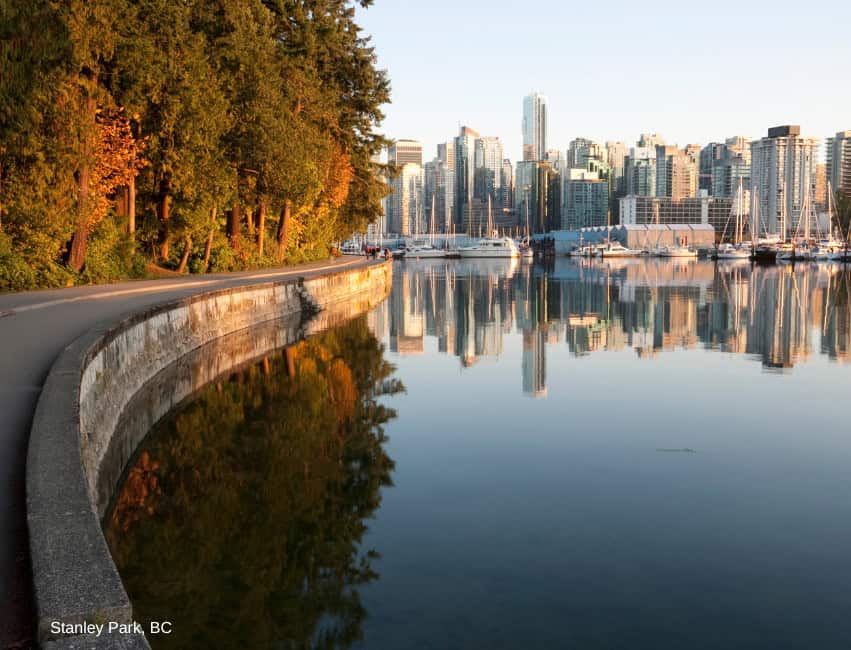
11. Stanley Park (Vancouver, British Columbia)
Spanning 405 hectares, Stanley Park is one of the largest and most beloved urban parks in North America. Surrounded by Vancouver’s bustling downtown and the Pacific Ocean, it’s a natural oasis filled with towering cedar, fir, and hemlock trees.
The park’s highlight is the Seawall, a 9-kilometer waterfront path perfect for walking, cycling, or rollerblading. Along the way, you’ll enjoy stunning views of the mountains, ocean, and city skyline. Other attractions include the Vancouver Aquarium, the famous Totem Poles at Brockton Point, and lush gardens that bloom beautifully in spring and summer.
In every season, Stanley Park offers something different. Autumn paints the trails with vibrant colors, while winter adds a quiet, misty atmosphere. It’s not just a park—it’s part of Vancouver’s cultural identity and a daily escape for both locals and visitors.
Why it’s iconic: Stanley Park blends wilderness and urban life seamlessly, showcasing Vancouver’s natural beauty.
Travel tip: Rent a bike to circle the Seawall—it’s the best way to experience the park in just a couple of hours.
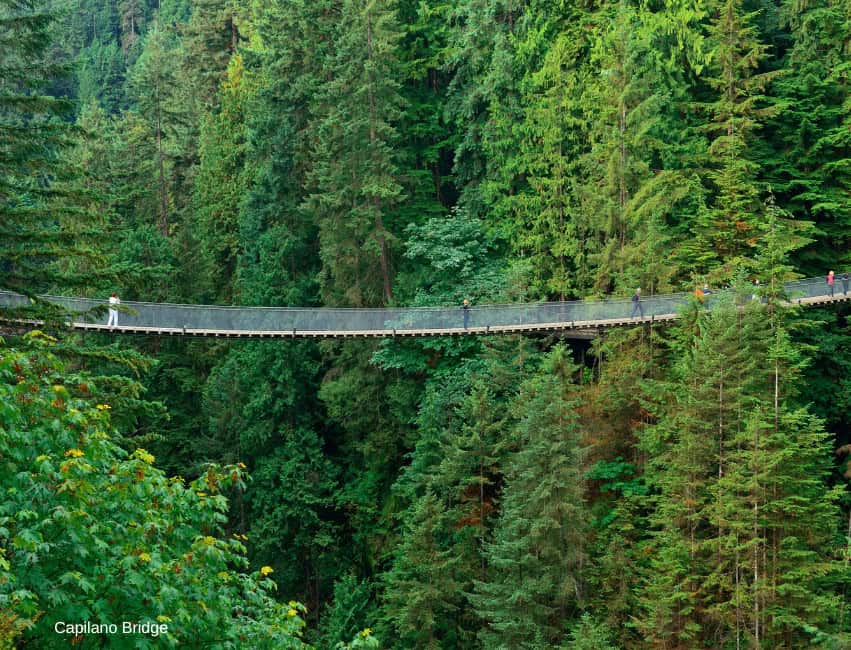
12. Capilano Suspension Bridge (North Vancouver, British Columbia)
The Capilano Suspension Bridge is a thrilling landmark set among the temperate rainforest just outside Vancouver. Originally built in 1889, the bridge stretches 137 meters across and sways 70 meters above the Capilano River. Crossing it is both exhilarating and breathtaking, with lush forest views on either side.
Beyond the main bridge, the Cliffwalk clings to the granite cliffs, while the Treetops Adventure offers a series of smaller suspension bridges strung between ancient Douglas firs. Together, these experiences give visitors a unique perspective of British Columbia’s rainforest ecosystem.
During the holidays, the park is transformed into Canyon Lights, with thousands of twinkling lights illuminating the bridges, trees, and forest trails—making it one of the most magical seasonal attractions in Canada.
Why it’s iconic: Capilano is not just a bridge—it’s an adventure that immerses you in the wild beauty of the Pacific Northwest.
Travel tip: Visit early or late in the day to avoid peak crowds, especially during summer.

13. Butchart Gardens (Brentwood Bay, British Columbia)
Located on Vancouver Island, Butchart Gardens is one of the most beautiful botanical gardens in the world. What began as a limestone quarry over 100 years ago has blossomed into a 55-acre floral paradise that attracts more than a million visitors annually.
The gardens are divided into distinct sections, including the breathtaking Sunken Garden, the vibrant Rose Garden, the serene Japanese Garden, and the Mediterranean-inspired Italian Garden. Each season offers a different spectacle—spring tulips, summer roses, autumn foliage, and winter holiday lights.
In addition to the gardens, visitors can enjoy live concerts, afternoon tea in the historic dining room, and evening illuminations in the summer.
Why it’s iconic: Butchart Gardens is a masterpiece of landscaping and horticulture, symbolizing the beauty of human creativity blending with nature.
Travel tip: Plan to spend at least half a day here, especially if visiting in peak bloom seasons (late spring through early fall).

14. Peggy’s Cove & Lighthouse (Nova Scotia)
On the rocky shores of Nova Scotia lies Peggy’s Cove, one of Canada’s most photographed fishing villages. The star attraction is the Peggy’s Point Lighthouse, perched dramatically on wave-worn granite rocks overlooking the Atlantic Ocean.
The lighthouse, built in 1915, is one of the most iconic symbols of maritime Canada. Around it, the small fishing community features colorful houses, lobster traps, and boats that reflect the region’s deep-rooted connection to the sea.
The rugged coastline is equally captivating, with waves crashing against the granite and seagulls soaring overhead. It’s a place of simple beauty and raw Atlantic charm. Visitors should exercise caution, however, as the black rocks near the water can be slippery and dangerous.
Why it’s iconic: Peggy’s Cove captures the essence of coastal Nova Scotia—picturesque, historic, and authentically maritime.
Travel tip: Arrive at sunrise or sunset for the most beautiful light and fewer tourists.
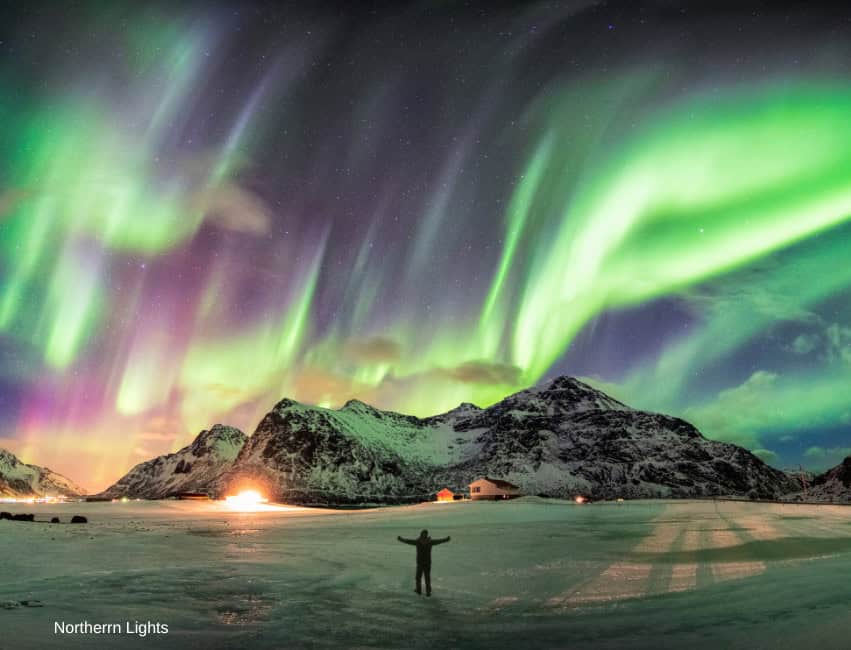
15. Northern Lights (Aurora Borealis)
Few natural phenomena are as awe-inspiring as the Northern Lights, also known as the aurora borealis. Canada, with its vast northern landscapes, is one of the best places in the world to witness this dazzling light show.
The auroras are most commonly seen in the Yukon, Northwest Territories, and Nunavut, but they can also be spotted in parts of Manitoba (Churchill), northern Alberta, and even occasionally in British Columbia and Ontario during strong solar activity.
The dancing lights of green, purple, pink, and blue ripple across the night sky, creating a magical spectacle that has inspired Indigenous legends for centuries. Viewing them requires patience and luck—clear, dark skies and solar activity are essential—but when conditions align, the experience is unforgettable.
Why it’s iconic: The Northern Lights are a bucket-list natural wonder, turning Canada’s skies into a cosmic masterpiece.
Travel tip: Visit between late August and April, when nights are long and dark. Book a guided aurora tour for the best chance of sightings.

Practical Travel Tips for Visiting Canadian Landmarks
- Plan Ahead for Popular Spots: Landmarks like Moraine Lake, Lake Louise, and Niagara Falls attract massive crowds, especially in summer. Book shuttles, tours, or accommodations well in advance at these busy Canadian landmarks.
- Dress for the Weather: Canada’s climate varies drastically. Even in summer, mountain areas like Banff or Jasper can be chilly at night. Layering is key.
- Accessibility: Many landmarks, such as the CN Tower and Butchart Gardens, are fully accessible. Others, like Peggy’s Cove or the Capilano Suspension Bridge, may be challenging for those with mobility issues.
- Transportation: Renting a car is the easiest way to explore national parks and remote areas. In cities, public transport or guided tours are great options.
- Respect Nature: Stay on marked trails, never feed wildlife, and follow Leave No Trace principles to help preserve Canada’s natural treasures.
- Costs: Many landmarks are free to admire (like Parliament Hill or Stanley Park), while others may require entrance fees or guided tours (Butchart Gardens, Capilano Bridge, Glacier Skywalk).
Indigenous Connections to Canadian Landmarks
Canada’s landmarks are not only natural and cultural wonders—they are also deeply tied to Indigenous histories, traditions, and stewardship. Recognizing these connections adds depth to any visit.
- Banff & Jasper National Parks: These lands have long been home to Indigenous peoples, including the Stoney Nakoda, Blackfoot, Tsuu T’ina, and Secwepemc Nations. Their histories and stories remain woven into the mountains.
- Lake Louise & Moraine Lake: Known to the Stoney Nakoda as the “Lake of the Little Fishes,” these lakes carry cultural and spiritual significance.
- Niagara Falls: The falls hold a sacred place in Haudenosaunee and Anishinaabe traditions, often seen as symbols of nature’s power and life force.
- Northern Lights (Aurora Borealis): Indigenous groups across the North have legends about the auroras. The Cree saw them as the spirits of ancestors dancing, while the Inuit believed they were the souls of animals guiding hunters.
- Stanley Park: The totem poles at Brockton Point are carved by Indigenous artists from British Columbia and represent ancestral stories and traditions.
👉 Travel respectfully: Learn about local Indigenous Nations when visiting these places. Consider joining Indigenous-led tours for authentic cultural insight.
Photography Tips for Capturing Canadian Landmarks
- Niagara Falls: For the best rainbows, visit in the afternoon when the sun is behind you. A wide-angle lens is ideal to capture the full curve of Horseshoe Falls. Don’t forget a lens cloth—mist is unavoidable!
- Lake Louise & Moraine Lake: Go at sunrise when the water is calmest and the light paints the peaks. A polarizing filter will help bring out the turquoise tones.
- Banff & Jasper National Parks: Wildlife photography is best in the early morning or evening when animals are most active. Always keep a safe distance—use zoom, not your feet.
- CN Tower (Toronto): Shoot from across Lake Ontario at sunset for a skyline view, or book a time slot just before dusk to capture both daylight and nighttime cityscapes from the observation deck.
- Old Québec & Notre-Dame Basilica: Wander the cobblestone streets in the golden hour (just before sunset) when warm light enhances the historic architecture. Inside the basilica, use a fast lens to capture detail without flash.
- Peggy’s Cove Lighthouse: Arrive at sunrise or sunset for dramatic light and fewer crowds. Use long exposure settings to smooth out the waves crashing on the rocks.
- Northern Lights: Use a tripod, wide-angle lens, and long exposure (10–20 seconds). Set ISO between 800–3200 depending on brightness. Remote or manual shutter release helps avoid blur.
👉 Pro Tip: Canada is vast, and conditions change quickly. Always carry extra batteries (the cold drains them fast), a microfiber cloth, and a waterproof bag for your gear when visiting these Canadian landmarks.

FAQs About Canadian Landmarks
Q: What is the most famous landmark in Canada?
A: Niagara Falls is arguably the most famous Canadian landmark, attracting millions of visitors from around the world each year.
Q: Can you see all 15 Canadian landmarks in one trip?
A: Not easily—Canada is vast! It’s best to focus on one region at a time, such as the Rockies, the West Coast, or Eastern Canada.
Q: Which Canadian landmarks are free to visit?
A: Many are free, including Parliament Hill, Stanley Park, Old Québec, and the views of Niagara Falls. Entry fees apply to gardens, bridges, or specific attractions.
Q: Where is the best place to see the Northern Lights in Canada?
A: Top spots include Yellowknife (Northwest Territories), Whitehorse (Yukon), and Churchill (Manitoba). Jasper National Park is also an excellent choice in the Rockies.
Q: What’s better to visit—Banff or Jasper?
A: Both are spectacular. Banff is more developed and iconic, with Lake Louise and Moraine Lake. Jasper is larger, wilder, and less crowded. Many visitors combine both via the Icefields Parkway.
Q: When is the best time to visit Canada’s landmarks?
A:
- Summer (June–September): Best for hiking, road trips, and gardens.
- Fall (September–October): Gorgeous foliage, fewer crowds.
- Winter (December–March): Perfect for skating, skiing, and seeing the Northern Lights.
- Spring (April–May): Gardens bloom, wildlife emerges, and crowds are still light.

Final Thoughts 15 Canadian Landmarks to Visit
From the roaring waters of Niagara Falls to the quiet magic of the Northern Lights, Canada’s most iconic landmarks showcase the country’s incredible diversity. Each destination tells a story—whether it’s the glacial origins of Lake Louise, the historic charm of Old Québec, or the adventurous spirit of the Cabot Trail.
Visiting all 15 Canadian lanmarks might take some time, but even experiencing just one or two will give you a glimpse of what makes Canada unforgettable. These places aren’t just beautiful backdrops for photos—they’re touchstones of Canadian identity, culture, and history.
Whether you’re planning your very first trip to Canada or are a Canadian rediscovering your own backyard, I hope this guide inspires your journey. Pack your camera, bring your sense of adventure, and get ready to fall in love with the landscapes, history, and spirit of Canada.
👉 Have you visited any of these Canadian landmarks? Which one is at the top of your Canadian bucket list? Share your thoughts in the comments—I’d love to hear your experiences!
Planning a trip to Canada? Check out these other blog posts to help you plan the ultimate trip:
- Things to Do In Jasper National Park in the Summer
- Four Day Jasper National Park Itinerary
- Top Things to Do at Banff National Park
- The Crimson Jasper
- Things to do in Lake Louise
- Must See Lakes in Banff National Park
- Stay at the Elk + Avenue Hotel
- Scenic Moraine Lake Hikes


