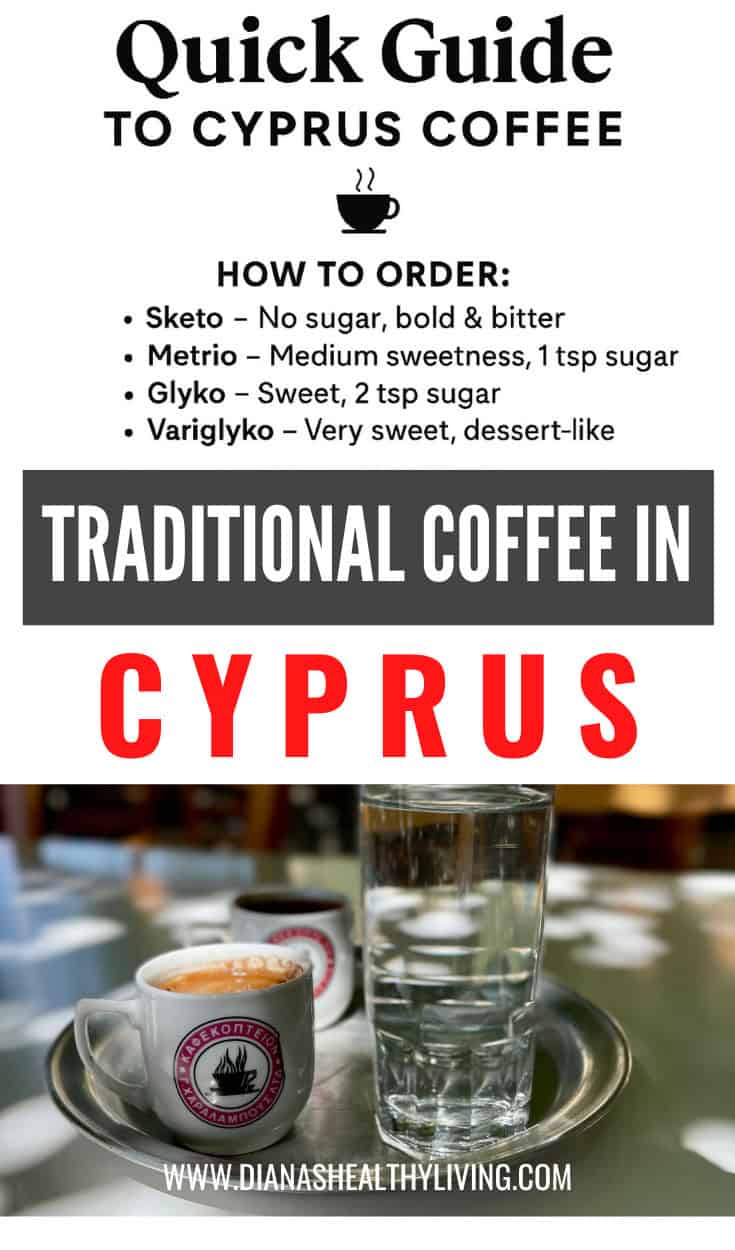
Cyprus is famous for its sunshine, sea, and history—but did you know it also has a centuries-old coffee tradition? Cyprus coffee is more than just a drink. It’s a Cypriot cultural ritual, enjoyed slowly in small cups, often shared with friends and family. If you’re visiting Cyprus or simply curious about Mediterranean coffee culture, here’s everything you need to know.

What Is Cyprus Coffee?
Table of Contents
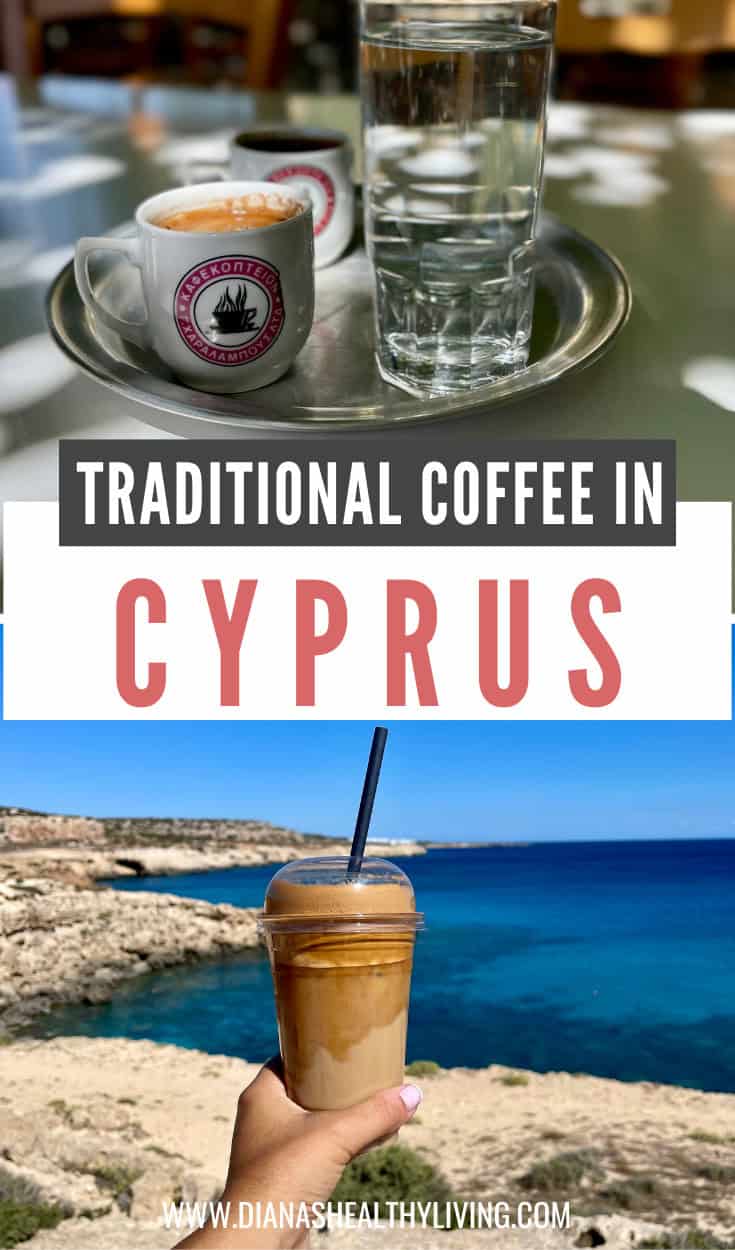
Cyprus coffee is a strong, unfiltered coffee served in a small demitasse cup. Similar to Greek and Turkish coffee, it is brewed in a special long-handled pot called a “mbriki” (also known as cezve in Turkish or briki in Greek). The coffee is made with finely ground beans and prepared over a low flame until a creamy foam—called the kaimaki—forms on top.
The drink is deeply rooted in Cypriot culture, often paired with conversation, backgammon, or simply a quiet moment of reflection.

The History of Cyprus Coffee
Coffee arrived in Cyprus during the Ottoman period in the 16th century, and over time it became an essential part of daily life. Today, Cyprus coffee represents the island’s unique blend of Greek, Turkish, and Middle Eastern influences. It’s a symbol of hospitality—offered to guests at home, at village coffeehouses (kafeneia), and even in business settings.
Cyprus coffee is more than a beverage—it’s a reflection of the island’s identity. For centuries, it has connected people across generations, bringing them together in homes, cafés, and village squares. The ritual of preparing and serving coffee is often seen as an act of respect and welcome. When you’re offered a cup, it’s a warm invitation to slow down and share a moment of connection.
 Fun fact: In 2011, Cyprus coffee was recognized as part of the island’s Intangible Cultural Heritage, underscoring its role in everyday life.
Also check out the top traditional Cypriot foods you should try.
How to Order Cyprus Coffee
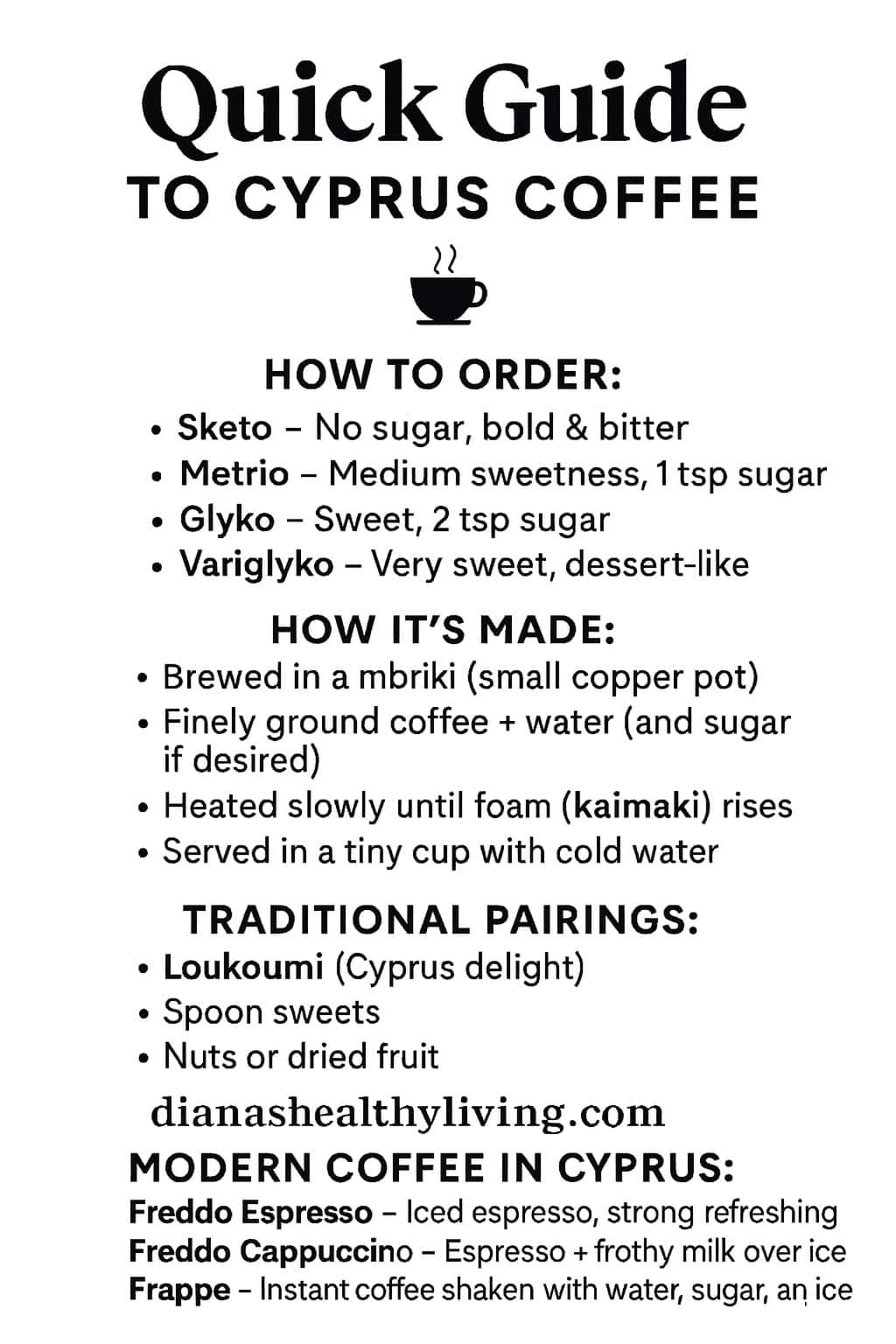
When ordering Cyprus coffee at a café, you’ll need to specify the level of sweetness. Here are the most common options:
- Sketo (Σκέτο) – No sugar, strong and bitter.
- Metrio (Μέτριο) – Medium sweetness, with one teaspoon of sugar.
- Glyko (Γλυκό) – Sweet, usually with two teaspoons of sugar.
- Variglyko – Very sweet, for those who like dessert-like coffee.
Locals often pair it with a glass of cold water to balance the strong flavor.
How Cyprus Coffee Is Made
The preparation of Cyprus coffee is an art. Here’s the traditional method:
- Measure the water using the small cup.
- Add finely ground coffee (and sugar, if desired) into the mbriki.
- Heat slowly over a gas flame or hot sand until the foam rises.
- Pour gently into the cup, making sure to preserve the kaimaki on top.
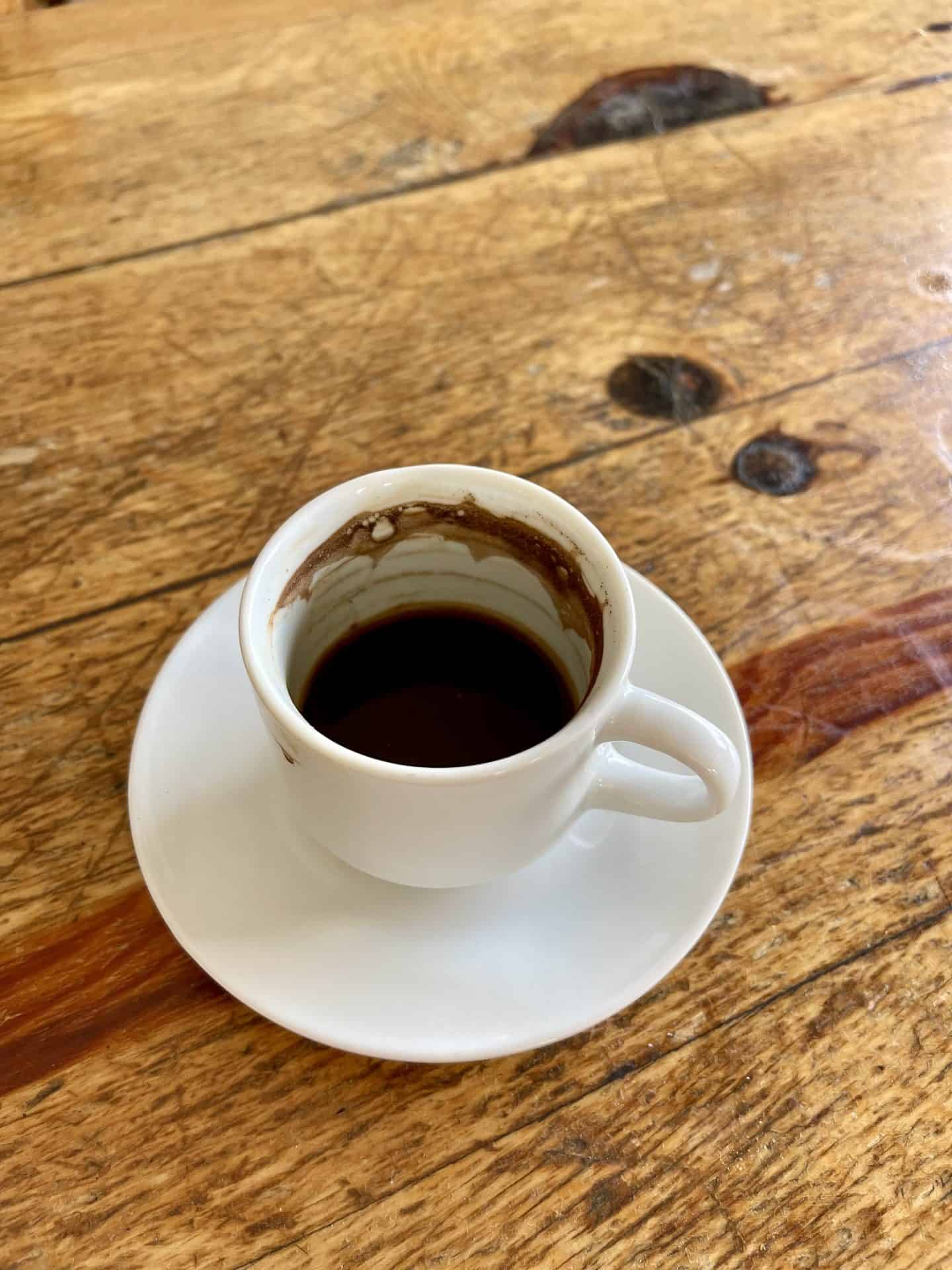
Unlike espresso, the grounds are not filtered out, so you should drink slowly and leave the thick sediment at the bottom of the cup.
The Ritual and Tradition
Cyprus coffee isn’t rushed. It’s enjoyed slowly, usually accompanied by small treats such as loukoumi (Cyprus delight), nuts, or spoon sweets. In villages, you’ll often see locals sipping coffee outside small kafeneia, catching up on news or playing tavli (backgammon).
In recent years, many younger Cypriots have rediscovered the beauty of this tradition, balancing it alongside modern coffee culture. From trendy espresso bars in the cities to timeless kafeneia in mountain villages, Cyprus coffee continues to thrive as a bridge between past and present.
There’s also the beloved tradition of coffee cup reading—once you finish your coffee, a fortune teller may “read” the patterns left in the grounds, offering insights into your future.
Health Benefits of Cyprus Coffee
Studies suggest that traditional coffee, like Cyprus coffee, may support heart health and longevity when consumed in moderation. Its high concentration of antioxidants and polyphenols can have positive effects on circulation and metabolism. No wonder many long-lived Cypriots swear by their daily tiny cup!
Modern Twists
While the traditional method remains popular, many cafés now offer modern takes on Cyprus coffee—served over ice, blended with milk, or incorporated into desserts. This fusion of old and new keeps the tradition alive for younger generations.

Modern Coffee Culture in Cyprus
While Cyprus coffee remains a beloved tradition, the island has also embraced modern coffee culture. Walk through any Cypriot city and you’ll see locals sipping freddo espresso or freddo cappuccino—icy versions of espresso that are especially refreshing in the Mediterranean heat. Cold coffees, frappés, and specialty lattes have become staples in coastal cafés and trendy coffee shops.
Younger generations often enjoy these modern drinks during the day, while still appreciating the slower ritual of traditional Cyprus coffee in the mornings or at family gatherings. This blend of old and new reflects Cyprus’s unique ability to honor heritage while embracing global coffee trends.
Where to Try Cyprus Coffee
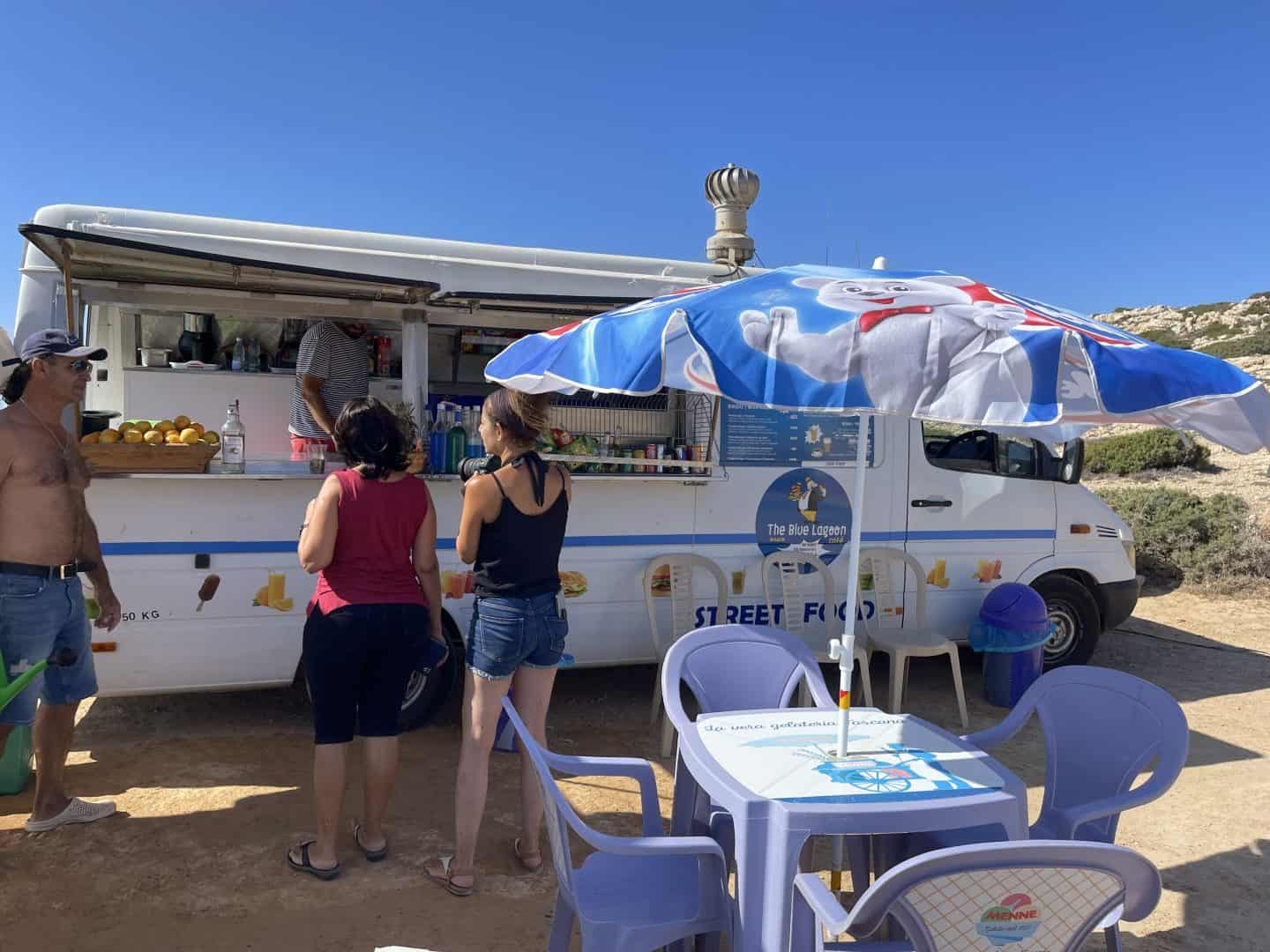
If you’re visiting Cyprus, you can enjoy authentic coffee almost everywhere, as there is no shortage of coffee shops —from modern cafés in Nicosia, Limassol, and Larnaca, to small village coffeehouses in the Troodos Mountains. For the most authentic experience, try it in a traditional kafeneio alongside locals.
Frequently Asked Questions about Cyprus Coffee
Is Cyprus coffee the same as Greek or Turkish coffee?
They are very similar in preparation and taste. The main difference lies in cultural identity—Cyprus proudly calls it “Cyprus coffee,” reflecting its national heritage.
What is kaimaki in Cyprus coffee?
Kaimaki is the thick, creamy foam on top of the coffee. It’s considered a sign of well-prepared coffee.
Can you make Cyprus coffee without a briki?
A traditional mbriki pot is best, but you can improvise with a small saucepan if needed—the key is slow brewing over low heat.
Why is Cyprus coffee served with water?
The strong flavor is balanced by cool water, which also cleanses the palate.
Do you drink the grounds?
No—sip slowly and leave the sediment at the bottom of the cup.
Is Cyprus coffee healthy?
Yes—in moderation. Studies show that unfiltered coffee like Cyprus coffee is rich in antioxidants and polyphenols, which may support heart health and longevity.
What beans are used for Cyprus coffee?
Traditionally, medium to dark roast Arabica beans are ground extra fine for Cyprus coffee, though blends with Robusta are also common for added strength.
When is Cyprus coffee usually enjoyed?
Anytime of the day—morning, after meals, or during social gatherings. It’s less about the caffeine and more about the ritual of slowing down and connecting with others.
Are you a cheese lover? Here is a guide to the most delicious Cypriot Cheeses.
Final Thoughts
Cyprus coffee is more than a drink—it’s a taste of Cypriot hospitality, history, and tradition. Whether you like it bitter or sweet, it’s the perfect way to slow down and savor life, island-style.
Next time you’re in Cyprus, don’t just order a cappuccino. Sit down, sip a cup of authentic Cyprus coffee, and experience one of the island’s most cherished traditions.