Are you dreaming of having Croatian Citizenship? For many people with Croatian roots, the dream of holding a Croatian passport isn’t just about travel perks — it’s about reconnecting with heritage, opening doors to the European Union, and creating opportunities for the next generation. The process, however, can feel overwhelming at first glance, with complex paperwork, language around apostilles and translations, and differing requirements depending on where you apply.
When I began my own journey, I quickly realized that navigating Croatian bureaucracy on my own would be nearly impossible. That’s when I turned to Gateway to Croatia, and it changed everything. They helped me track down my parents’ birth certificates, even my father’s death certificate, had everything translated and certified, and ensured that my application was flawless. Thanks to their expertise, I received my Croatian citizenship approval in just 10 months — an outcome I never could have achieved alone.
In this guide, I’ll walk you through every pathway to Croatian citizenship, the steps you need to take, the documents you’ll need, and the best tips to make your application successful.
Disclaimer:
This article is for informational purposes only and does not constitute legal advice. Always verify requirements with the Croatian Ministry of Interior (MUP) or your nearest Croatian consulate before applying.
My Personal Experience with Gateway to Croatia
Table of Contents
When I first began the process of applying for Croatian citizenship, I’ll admit I felt completely overwhelmed. Between finding old family records, figuring out translations, and navigating official Croatian paperwork, it seemed like a mountain to climb.
That’s when I reached out to Gateway to Croatia — and it turned out to be the best decision I made. They truly held my hand through every step of the journey.
They helped me locate my parents’ birth certificates and even my father’s death certificate directly from Croatia. They handled all the translations and certifications, double-checked that every document met official requirements, and made sure my entire application package was flawless before submission.
Thanks to their meticulous guidance, my citizenship was approved in just 10 months — which is incredibly fast for a process that often takes years.
If you’re considering applying for Croatian citizenship and want expert help to avoid mistakes or delays, I genuinely recommend working with Gateway to Croatia. Their care, attention to detail, and knowledge of the process made all the difference for me.
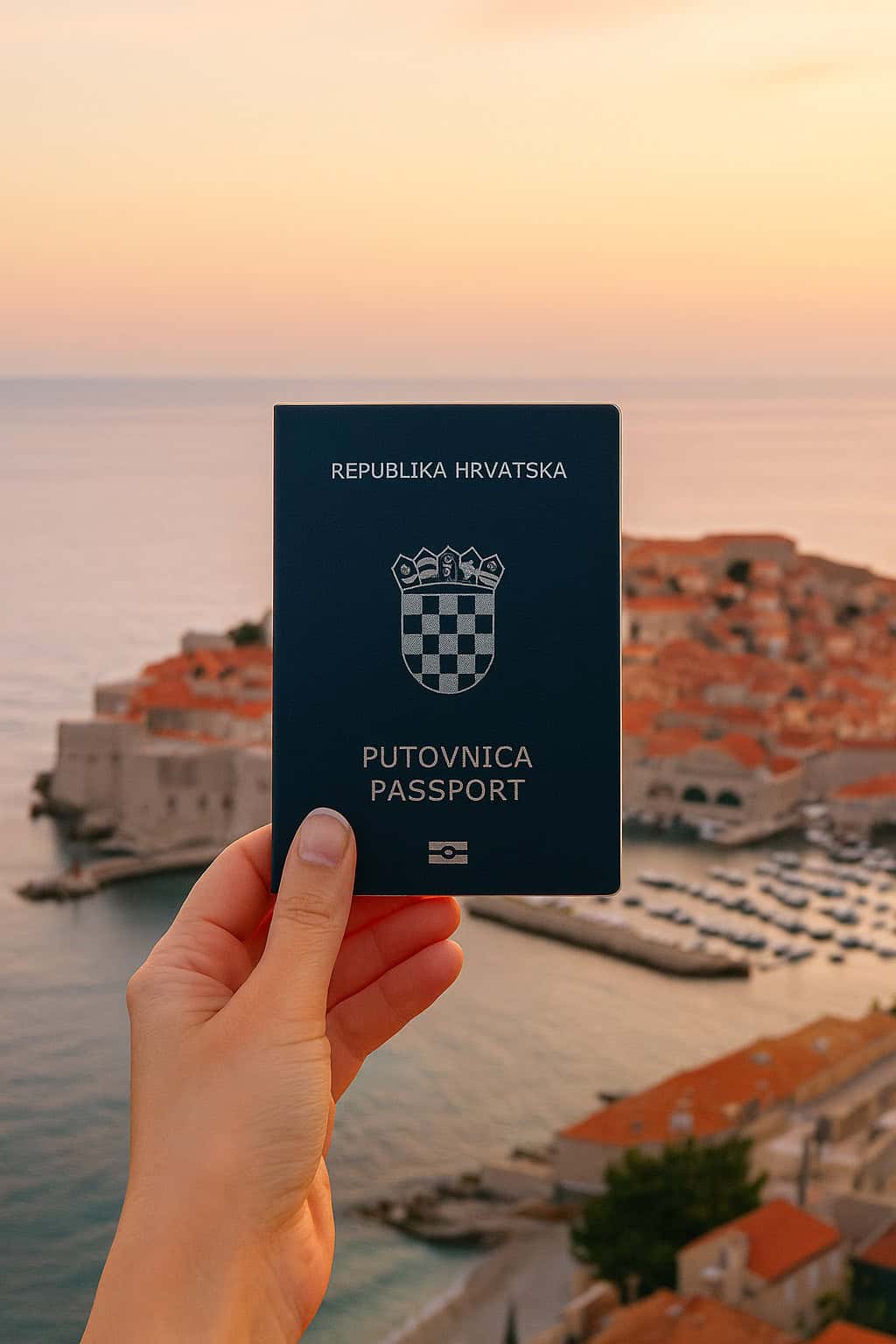
Why Consider Croatian Citizenship?
Becoming a Croatian citizen opens doors to life in the European Union, allowing you to:
- Live, work, or study anywhere in the EU
- Travel visa-free to over 180 countries
- Purchase property freely in Croatia
- Access top-tier healthcare and education
- Reconnect with your heritage and pass it on to your children
For many in the diaspora, it’s not just a passport — it’s a homecoming.
Citizenship by Birth or Descent (Origin)
If you have a Croatian parent or were born to one abroad, this is the most direct route to citizenship.
Who Qualifies
You can claim citizenship “by origin” if:
- Both parents were Croatian citizens at your birth,
- One parent was Croatian and you were born in Croatia, or
- You were born abroad to at least one Croatian parent and register before age 21.
If registration isn’t completed by age 21, the right lapses — and you’ll need to apply under another category.
Documents You’ll Need
- Your and your parents’ birth certificates
- Parents’ proof of Croatian citizenship
- Proof of your birth abroad
- Translations and apostilles for all non-Croatian documents
You can register your citizenship at any Croatian consulate abroad or at the Ministry of Interior if you’re already in Croatia.
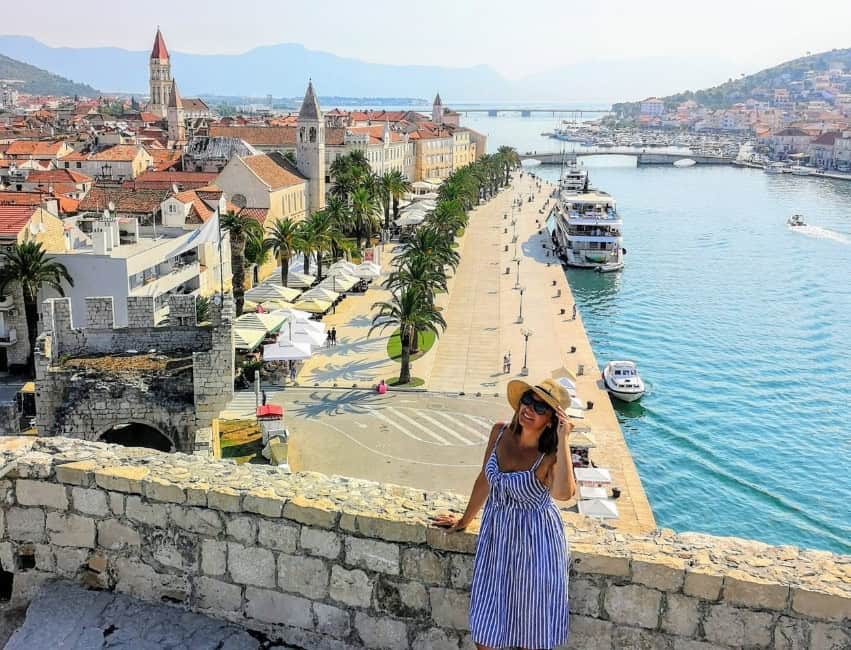
Croatian Citizenship by Descent (for Emigrants and Their Descendants)
This is the most common and often the easiest route for members of the Croatian diaspora — including descendants of Croatians who emigrated generations ago.
Who Qualifies
You may be eligible if:
- You have a Croatian ancestor (parent, grandparent, or further back), and
- That ancestor emigrated from Croatia, usually before 1991.
There’s no fixed generational limit, as long as you can document the lineage.
Why It’s So Popular
✅ You don’t have to live in Croatia
✅ No Croatian language test
✅ Dual citizenship allowed
✅ Recognition of heritage — even generations later
Step-by-Step Process
1. Trace your lineage
Start by identifying your Croatian ancestor. Obtain their birth certificate from a Croatian registry or archive, and gather marriage, death, and immigration records.
2. Gather required documents
- Ancestor’s Croatian birth and marriage certificates
- Birth and marriage certificates for each generation connecting you
- Your birth (and marriage) certificates
- Proof of emigration (e.g., naturalization or ship manifest)
- Criminal record certificate (usually valid for 6 months)
All foreign documents must be translated into Croatian by a certified translator and apostilled or legalized.
3. Submit your application
You can apply through your nearest Croatian consulate or in person in Croatia at the Ministry of the Interior (MUP).
4. Wait for processing
Most applications take 12 to 36 months, depending on complexity and consulate workload.
5. Receive your citizenship
Once approved, you’ll get your Domovnica (citizenship certificate), then you can apply for a Croatian passport and ID card.
Croatian Citizenship by Naturalization (Residency + Integration)
If you don’t have Croatian roots, you can still become a citizen through long-term residence and integration.
Requirements
To qualify, you must:
- Be at least 18 years old
- Have lived in Croatia legally for 8 consecutive years
- Hold permanent residence status
- Demonstrate knowledge of Croatian language and culture
- Have no criminal convictions
Steps to Apply
- Secure a residence permit (work, study, or family reunification)
- Maintain continuous residence for 8 years
- Pass a language and integration test
- Gather your documents (proof of residence, police clearances, ID, etc.)
- Submit your application to the Ministry of Interior
Note:
Some applicants (such as spouses of Croatian citizens) may not need to renounce their original citizenship, but others may be required to do so.
Croatian Citizenship by Marriage or Special Interest
While Croatia doesn’t automatically grant citizenship through marriage, being married to a Croatian can shorten the naturalization timeline.
Spouses of citizens — particularly those applying through ancestry — often receive exceptions from language and residence requirements.
Croatia may also grant citizenship for state interest or exceptional merit, such as contributions to science, culture, or national promotion.
Croatian Citizenship Reacquisition and Special Treaties
If you previously held Croatian citizenship and gave it up (for instance, to gain another nationality), you may be eligible to reacquire it under simplified terms.
Some people from the former Yugoslav republics also qualify through older legal provisions or treaties.
Croatian Dual Citizenship: Can You Keep Both?
Yes — Croatia generally allows dual citizenship, especially for those applying through descent or ancestry.
However, if you’re applying through naturalization, you may need to renounce your original citizenship, depending on both countries’ laws.
Always check with your home country’s embassy and the Croatian Ministry of Interior (MUP) to confirm.
How Long Does It Take to Get Croatian Citizenship?
| Route | Estimated Processing Time |
|---|---|
| By descent (diaspora) | 12–36 months |
| By birth/registration | 3–12 months |
| By naturalization | 24–48 months |
These are averages — each consulate or case may vary.

What Happens After Approval of Croatian Citizenship
Once your application is approved:
- You’ll receive your domovnica (citizenship certificate)
- You can apply for a Croatian passport and ID card
- You gain full EU rights — to live, work, and study anywhere in Europe
- You can own property in Croatia without restrictions
- You can pass citizenship on to your children
Tips for a Smooth Application of Your Croatian Citizenship
✅ Start gathering documents early — old records can take months to locate.
✅ Double-check spelling variations of family names in archives.
✅ Hire a certified translator familiar with legal Croatian.
✅ Keep every receipt, apostille, and copy organized.
✅ Be patient — Croatian bureaucracy moves slowly but steadily.
✅ Contact your nearest Croatian consulate before submitting; they often have local checklists or special rules.
How to Apply for a Croatian ID and Croatian Passport
Once your Croatian citizenship is approved, the next step is to get your official Croatian documents — your ID card (osobna iskaznica) and passport (putovnica).
These are your keys to fully enjoying your rights as a Croatian and EU citizen.
Step 1. Confirm Your Citizenship Documents
Before applying, make sure you have:
- Domovnica – proof of Croatian citizenship
- Croatian birth certificate (Rodni list)
- OIB (Personal Identification Number) – required for all official paperwork
You’ll typically receive these after your citizenship application is approved.
Step 2. Apply for Your Croatian ID Card (Osobna iskaznica)
Who Can Apply
- All Croatian citizens aged 16 and older (with residence in Croatia) must have an ID card.
- Croatians living abroad can also apply for a special ID card for citizens without residence in Croatia.
Where to Apply
- In Croatia: at your local MUP (Ministry of Interior) administrative police station
- Abroad: at your nearest Croatian embassy or consulate
Documents Required
- Croatian birth certificate
- Domovnica (citizenship certificate)
- OIB (personal ID number)
- Valid photo ID (foreign passport or old ID)
- Passport-sized photo (if not taken digitally)
- Payment receipt for administrative fees
Processing Time
- Standard: 2–3 weeks
- Express (Croatia only): 3–5 business days
Your Croatian ID card is valid for 10 years (or 5 years for minors).
Step 3. Apply for Your Croatian Passport (Putovnica)
Once you have your Domovnica and ID, you can apply for your Croatian passport — the document that officially confirms your EU citizenship and global travel rights.
Where to Apply
- In Croatia: at your local MUP office
- Abroad: at any Croatian consulate or embassy
Documents Required
- Domovnica
- Croatian birth certificate
- Croatian ID card (or OIB proof)
- Valid photo ID
- Passport photo (if required)
- Completed application + fee payment
Passport Fees
- Adults: approximately €48–€60
- Children: approximately €26–€35
- Express options (in Croatia only) are available for an additional fee.
Processing Time
- In Croatia: 7–15 days
- Abroad: 4–8 weeks, depending on the consulate
You’ll be notified when your passport is ready for pickup (in person only).
Step 4. Enjoy the Benefits of Your New Passport
With your Croatian passport in hand, you can:
- Live, work, and study anywhere in the EU
- Travel visa-free to over 180 countries
- Buy property in Croatia without restrictions
- Pass citizenship to your children
- Use EU citizen lanes when traveling
Quick Reference Summary For Citizenship Croatian
| Document | Where to Apply | Validity | Average Wait | Key Documents |
|---|---|---|---|---|
| ID Card (Osobna iskaznica) | MUP office in Croatia or consulate abroad | 10 years | 2–3 weeks | Domovnica, birth certificate, OIB |
| Passport (Putovnica) | MUP office or consulate abroad | 10 years | 2–8 weeks | Domovnica, birth certificate, ID/OIB |
Pro tip: Always keep digital and physical copies of your Domovnica, Rodni list, and OIB. You’ll need them for every future administrative process in Croatia — from opening a bank account to buying property or registering residence.
Benefits of Croatian Citizenship
- EU citizenship with full freedom of movement
- Visa-free access to 180+ countries
- The right to live, work, and study in 27 EU nations
- Property ownership and business opportunities in Croatia
- The ability to pass citizenship to your children
Common Mistakes to Avoid For Croatian Citizenship
- Submitting documents without apostilles or certified translations
- Using unofficial or expired certificates
- Missing the registration deadline (age 21 for those born abroad)
- Assuming “Yugoslav” automatically means Croatian
- Not verifying each consulate’s checklist before applying

About Gateway to Croatia — How They Can Help
If you’d rather have expert support rather than navigating the Croatian citizenship process alone, Gateway to Croatia is one service provider that specializes in assisting applicants from start to finish.
What they offer:
- They handle the citizenship-by-descent process for you — from researching eligibility to collecting required documents.
- Ordering and retrieving vital records from Croatia (birth, marriage, death certificates) on your behalf.
- Completing and submitting application forms, translations, and document legalization / apostille.
- Personalized guidance, case management, and communication with Croatian authorities.
- Confidential handling of your case, and support even if your ancestry is from former Yugoslavia territories (e.g., BIH, Slovenia)
Where they are based:
They’re based in Mississauga, Ontario, Canada, and work with clients worldwide — especially from Canada, the U.S., Australia, and South America.
Learn more or book a consultation at:
👉 www.gatewaytocroatia.com
Frequently Asked Questions About Croatian Citizenship
Can I have dual citizenship with Croatia?
Yes. Croatia allows dual or multiple citizenships, especially if you are applying through descent (ancestry).
If you’re applying through naturalization, you may need to renounce your current citizenship depending on both countries’ laws.
Always confirm with your home country’s embassy and the Croatian Ministry of Interior (MUP).
How long does it take to get Croatian citizenship?
Average processing times:
By descent: 12–36 months
By birth or registration: 3–12 months
By naturalization: 24–48 months
Applications processed in Croatia often move faster than those submitted through consulates abroad.
What documents are required for citizenship by descent?
You’ll typically need:
Your ancestor’s Croatian birth certificate
Marriage and death certificates for each generation
Your own birth and marriage certificates
Proof of emigration (old passports, immigration records, naturalization certificate)
Police clearance certificate (recent, usually under 6 months old)
All foreign documents must be translated into Croatian and apostilled or legalized.
Do I have to live in Croatia to apply?
No — if you’re applying through descent, you can apply from abroad at your nearest Croatian consulate.
Residency is required only for those applying through naturalization (after 8 years of continuous legal residence).
Do I have to speak Croatian?
By descent: No, there is no language requirement.
By naturalization: Yes, you must demonstrate basic knowledge of the Croatian language, culture, and Latin script.
Can my spouse apply with me?
Yes, your spouse can often apply under simplified conditions, especially if you gained citizenship by descent.
In some cases, the language and residence requirements are waived.
What’s a Domovnica and why is it important?
Your Domovnica is your Certificate of Croatian Citizenship.
It’s the key document proving your legal status as a Croatian citizen and is required for getting your ID card (osobna iskaznica) and passport (putovnica).
Can I apply for Croatian citizenship online?
Not yet. Applications must be submitted in person — either in Croatia or through a Croatian consulate or embassy abroad.
However, some forms and instructions are available online through the MUP website.
How can I find my ancestor’s Croatian birth records?
You can:
Contact the Croatian State Archives (Hrvatski Državni Arhiv)
Reach out to the local parish or municipality where your ancestor was born
Hire a genealogist or professional service (like Gateway to Croatia) to locate missing records
How much does it cost to apply?
Expect these approximate costs:
Citizenship application fee: €200–€400
Translations and apostilles: €100–€300
Passport and ID fees: €40–€60 each
Always confirm with your consulate — fees vary by country.
How do I get my OIB (Croatian Personal Identification Number)?
You can obtain an OIB by applying at:
Any Croatian tax office (Porezna uprava), or
Your local Croatian consulate abroad (you’ll need to show ID and fill out a request form).
You’ll need this number for nearly all official business in Croatia.
Can I lose Croatian citizenship?
Only if you formally renounce it or voluntarily give it up to obtain another nationality that requires renunciation.
Otherwise, Croatian citizenship is permanent and automatically passes to your children.
Where can I find official information?
You can always check the latest legal requirements here:
Ministry of Interior (MUP): https://mup.gov.hr
Ministry of Foreign and European Affairs (MVEP): https://mvep.gov.hr
Croatian Consulates Worldwide Directory: https://mvep.gov.hr/en/diplomatic-directory/117
Pro Tip for Croatian Citizenship
Before applying, contact your local Croatian consulate for the most up-to-date checklist — requirements can vary slightly depending on where you live.
Final Thoughts: Your Path to Croatian Citizenship
Gaining Croatian citizenship is more than just a legal process — it’s a bridge to your heritage, a connection to family history, and a gateway to new opportunities across Europe. Whether your path is through ancestry, marriage, or naturalization, the journey can feel complicated, but it is absolutely achievable with the right preparation and guidance.
I know this because I’ve gone through it myself. With the help of Gateway to Croatia, what once felt overwhelming became manageable, even exciting. From gathering old records to ensuring every document was translated and certified, they gave me the confidence that my application was complete and correct. The result? My Croatian citizenship was approved in just 10 months.
If you’re dreaming of holding a Croatian passport — of walking through Dubrovnik, Split, or Zagreb knowing you belong — now is the time to begin. Start by gathering your family records, reaching out to your nearest Croatian consulate, or getting professional support from experts like Gateway to Croatia.
🇭🇷 Your Croatian story is waiting. Take the first step today, and soon you may be holding your very own Croatian passport.
Heading to Croatia? Check out these other Croatia destination guides:
- Top Things to Do in Istria, Croatia
- Croatia Waterfalls
- Croatia National Parks
- Best Croatian Food You Must Try
- Top Things to Do in Rijeka, Croatia
- Discover the Best Things to Do in Hvar, Croatia
- Amazing Day Trips from Split, Croatia
- Best Day Trips from Dubrovnik, Croatia
- Game of Thrones Dubrovnik Tour