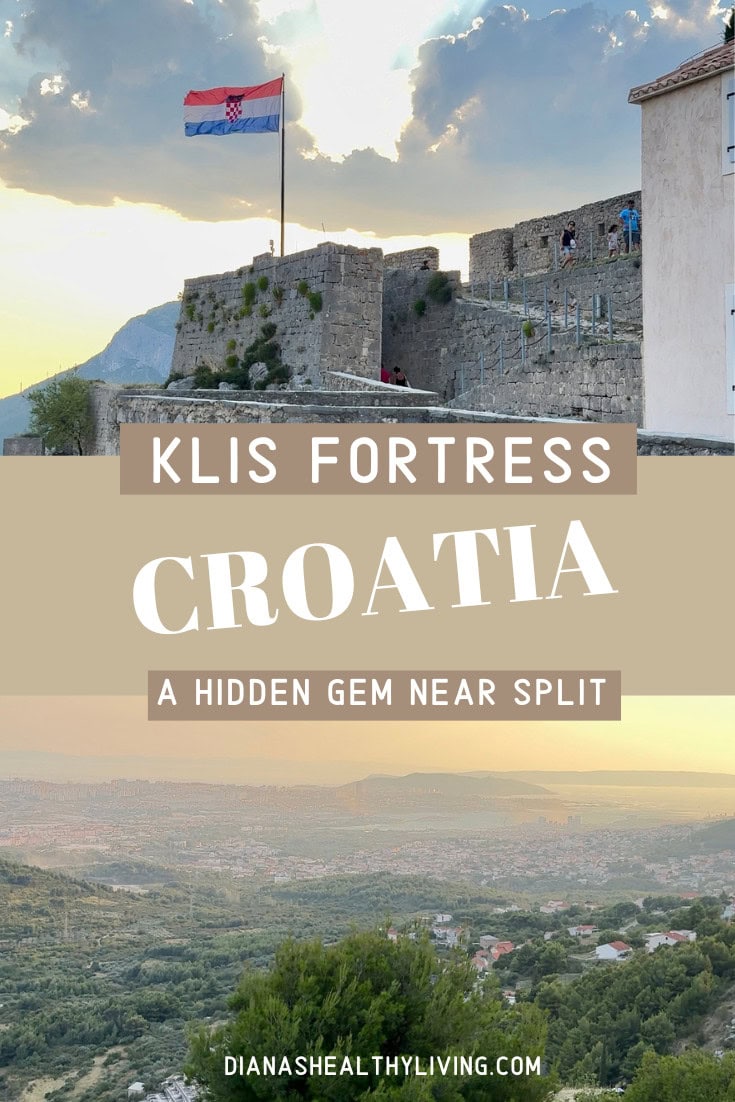
If you’re planning a trip to Split and want to explore beyond the bustling Old Town and beaches, head up into the mountains to discover Klis Fortress — one of Croatia’s most impressive historical landmarks. Perched high above the Dalmatian coast, the fortress offers panoramic views, fascinating history, and a touch of Game of Thrones magic.
Whether you’re a history lover, photographer, or simply seeking a memorable day trip from Split, here’s everything you need to know about visiting Klis Fortress — including how to get there, what to see, opening hours, costs, and the best time to visit.
This post contains affiliate links. If you book through them, I may earn a commission at no extra cost to you. Basically the internet’s version of a tip jar. Thank you!

Where Is Klis Fortress?
Table of Contents
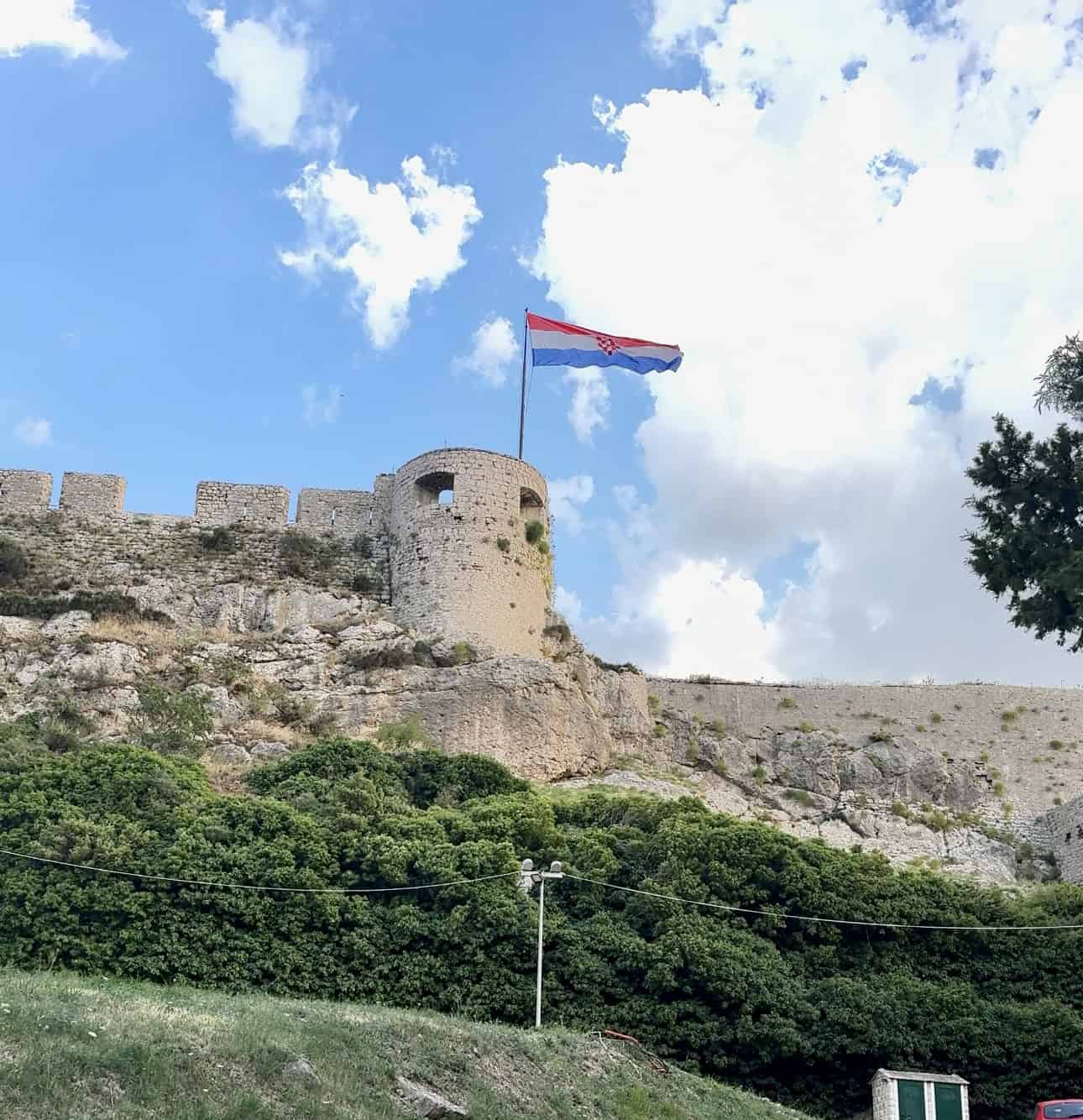
Klis Fortress (Tvrđava Klis) is located in the small hillside village of Klis, Croatia, just 13 km northeast of Split. The fortress sits dramatically atop a rocky ridge, 360 meters above sea level, offering some of the most spectacular views over Split, the Adriatic Sea, and the nearby islands of Brač and Šolta.
Because of its elevated position, Klis was historically one of the most important defensive strongholds in Dalmatia — guarding the pass between the coast and inland Croatia for centuries.
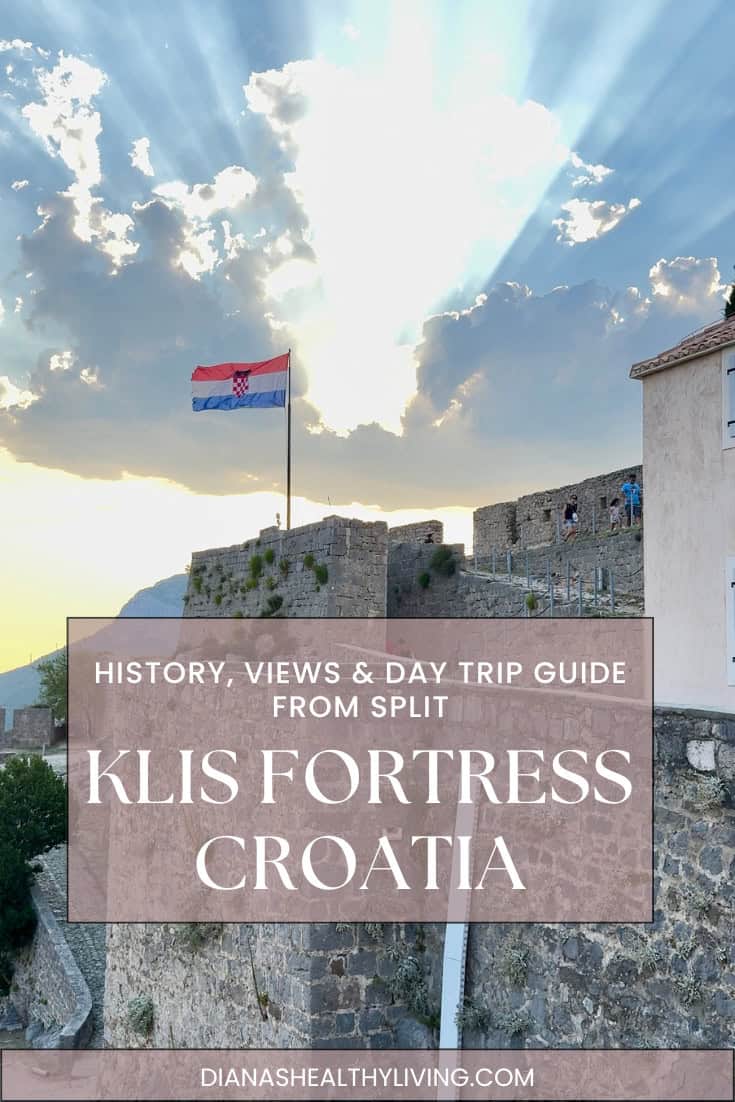
Quick FAQs About Klis Fortress History
- What was filmed at Klis Fortress?
Klis Fortress appeared as Meereen in Game of Thrones, where Daenerys Targaryen frees the slaves and takes control of the city. - How old is Klis Fortress?
Klis Fortress dates back over 2,000 years, originally built by the Illyrians before being expanded by the Romans. - Why was Klis Fortress important?
It controlled the main mountain pass between the coast and inland Croatia, earning the nickname “Key to Dalmatia.” - Who defended Klis Fortress?
Croatian hero Petar Kružić and his Uskok soldiers famously defended Klis for over 20 years against the Ottoman Empire. - When did the Ottomans capture Klis?
The fortress fell to the Ottomans in 1537 after decades of siege and fierce resistance. - Who recaptured Klis Fortress from the Ottomans?
The Venetians retook Klis in 1648, during the wars between Venice and the Ottoman Empire. - What empires ruled Klis over the centuries?
Illyrian, Roman, Croatian, Ottoman, Venetian, French (Napoleonic), and Austrian (Habsburg) powers all controlled Klis at different times. - What makes Klis Fortress unique today?
It’s one of Croatia’s best-preserved medieval fortresses, showcasing layers of architecture from multiple eras — and it’s also a Game of Thrones filming site.
The Fascinating History of Klis Fortress, Croatia
Perched high above the Dalmatian coast, Klis Fortress has stood watch over Croatia’s heartland for more than two millennia. Its position between the Kozjak and Mosor mountains made it one of the most strategically important strongholds in the region—so much so that it earned the name “The Key to Dalmatia.”
From Illyrian Beginnings to Roman Rule
The story of Klis begins long before Croatia existed as a nation. The first fortifications were built by the Illyrian tribe Dalmatae around the 2nd century BCE. They chose this rocky ridge for its commanding view over the inland valleys and the Adriatic Sea—a perfect vantage point to defend their settlements from rival tribes.
When the Romans conquered Dalmatia in the 1st century BCE, they recognized the fortress’s importance and reinforced it as part of their defensive network. Klis (known then as Clissa) became a key watchpoint protecting the Roman city of Salona, one of the most significant Roman centers on the Adriatic.
Medieval Croatia and the Kingdom’s Stronghold
After the fall of the Western Roman Empire, Croatian tribes settled in the area, and Klis became the seat of Croatian dukes and kings. For centuries, it was one of the main royal residences of early medieval Croatia, with legends claiming that King Tomislav, Croatia’s first king (crowned around 925 AD), once ruled from this very fortress.
During the 11th to 13th centuries, Klis continued to grow in importance as a royal and administrative center. Its stone walls were expanded, towers added, and its defenses improved to guard against external invasions—from both inland and the sea.
The Heroic Defense Against the Ottomans
Klis’s most dramatic chapter came during the 16th century, when the Ottoman Empire expanded into the Balkans. The fortress became a symbol of resistance for the entire region.
The legendary Petar Kružić, a Croatian nobleman and military captain, led a group of fierce defenders known as the Uskoks. For more than two decades, they held off repeated Ottoman assaults against overwhelming odds. Kružić’s defense from 1515 to 1537 is one of Croatia’s proudest historical episodes—an example of courage, faith, and patriotism.
However, after his death in 1537, the fortress finally fell to the Ottomans. The capture of Klis marked the end of Croatian control over much of Dalmatia’s interior for more than a century.
Venetian and Habsburg Eras
In 1648, during the Cretan War between Venice and the Ottoman Empire, Venetian forces recaptured Klis Fortress. They immediately strengthened its walls, added artillery bastions, and integrated it into their coastal defense system.
After the fall of Venice in the late 18th century, Klis came under French control during the Napoleonic Wars, then passed to the Austro-Hungarian Empire, which maintained it as a military post.
Each empire left behind traces—battlements, gates, chapels, and architectural styles—that make Klis a living museum of Mediterranean military history.
Klis in Modern Times
By the 19th century, the fortress lost its military role and fell into disrepair. But in recent decades, it has been lovingly restored by local historians and the Municipality of Klis, transforming it into one of Croatia’s most atmospheric historic landmarks.
Today, Klis Fortress draws visitors from around the world—not only for its panoramic views over Split and the Adriatic islands, but also as a filming location for Game of Thrones. In the series, Klis appeared as the city of Meereen, bringing a new generation of travelers to this ancient Croatian treasure.
Why Klis Fortress Matters
Klis is more than just an old fortress—it’s a symbol of endurance. For centuries, it has guarded the path between the Dalmatian coast and the Croatian interior. Each layer of its stone tells a different story: Illyrian beginnings, Roman precision, medieval pride, Ottoman conquest, Venetian resurgence, and modern rebirth.
To visit Klis Fortress today is to step through every chapter of Dalmatia’s past—an experience that blends history, culture, and breathtaking scenery in one unforgettable stop.
More History & Interesting Facts
- One notable feature is Oprah Tower, historically called “Oprah” by locals, later renamed in various periods but still known by its original name. Another interesting part is “Position Scala” (a kind of gun-platform) and the third gates, which show different defensive strategies from different eras.
- Klis Fortress has been in use for over 2,000 years, with its earliest fortifications built by the Illyrians, and expanded by the Romans.
- It was a crucial stronghold controlling the passes between the Mosor and Kozjak mountains — in other words, Klis guarded the route from the Dalmatian coast (Split) to the inland of Croatia. Because of this, it was often called the “key to Dalmatia.”
- During the late Middle Ages, Captain Petar Kružić led the Uskoks in defending Klis for over 20 years against Ottoman sieges. He is a major hero in local history.
- Klis fell to the Ottomans in 1537, after years of resistance. After that, it remained under Ottoman control for more than a century.
- In 1648, during the broader conflicts between Venice and the Ottomans, the fortress was recaptured by Venice. It then passed later to the French (after Venetian rule ended), then to the Habsburgs, and ultimately into modern Croatian sovereignty.
- Architecturally, Klis is a palimpsest — you see layers: Roman foundations, medieval walls, Ottoman modifications, Venetian bastions, Austrian-era gates, etc.
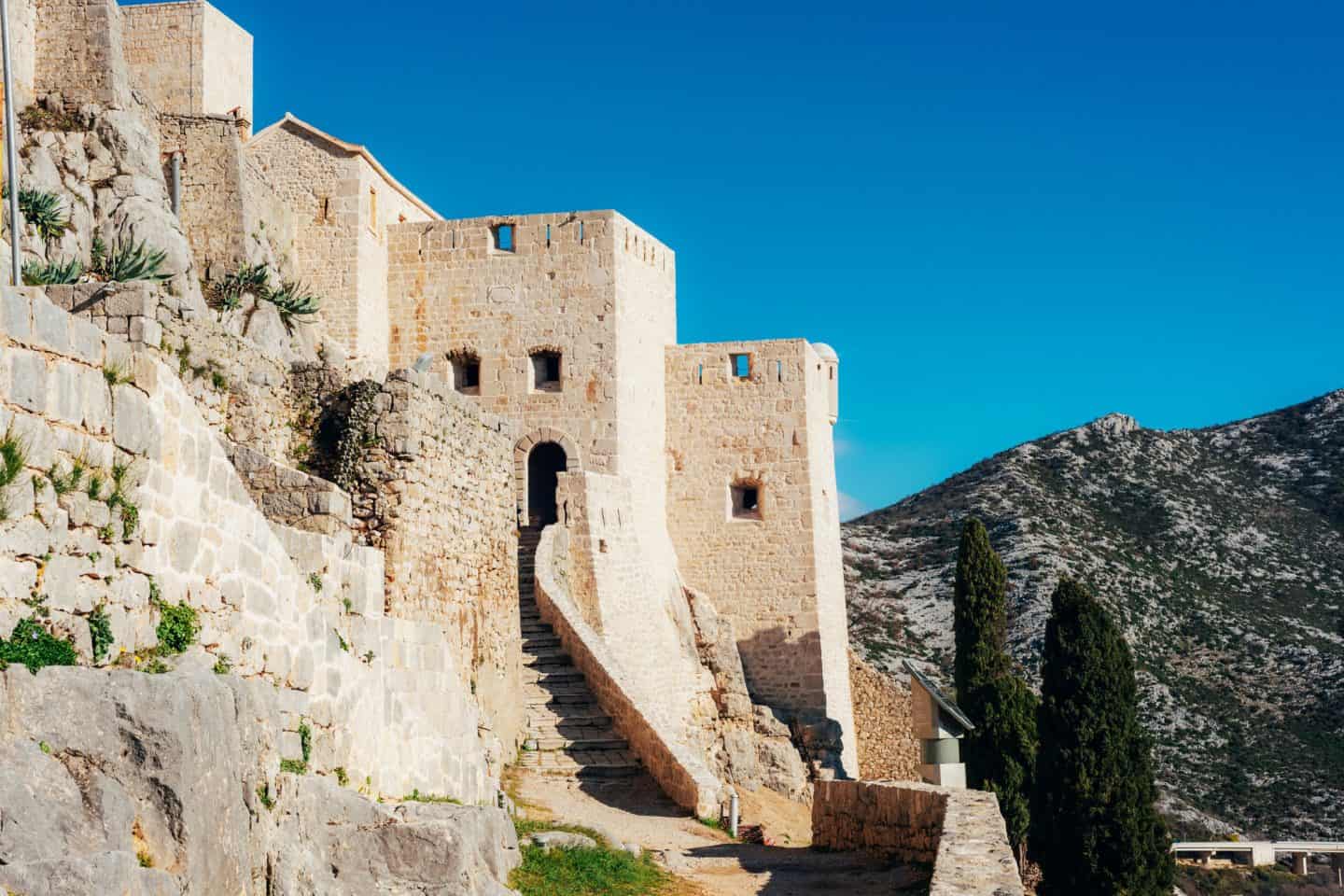
Klis Fortress and Game of Thrones: The Real-Life City of Meereen
If you’re a Game of Thrones fan, Klis Fortress in Klis, Croatia, will feel instantly familiar. High above the Dalmatian coast, this ancient stronghold became one of the most recognizable filming locations in the series — the City of Meereen, the great Slaver City conquered by Daenerys Targaryen.
Filming the City of Meereen
In Season 4 of Game of Thrones, production teams transformed Klis Fortress into the dramatic mountaintop city of Meereen. The fortress’s rugged stone walls, narrow stairways, and panoramic views over Split and the Adriatic Sea provided the perfect real-world setting for the fictional city.
It was here that Daenerys Targaryen, the “Mother of Dragons,” marched her army up the winding path to confront the slave masters of Meereen. Fans will recognize the fortress gates and terraces from several key scenes, including the powerful moment when the people of Meereen rise up and remove the chains that once bound them.
The show’s producers, who scouted dozens of locations across Croatia, ultimately chose Klis because of its authentic medieval architecture and breathtaking vistas. Its fortress-like silhouette, carved into the cliffs, made CGI almost unnecessary — much of what you see on screen is the real Klis.
How Klis Transformed for Filming
To recreate Meereen, HBO’s production crew made subtle modifications to the fortress and its surroundings. CGI towers and domes were later added digitally to give it the signature Meereen skyline, but most of the ground-level shots — the archways, courtyards, and walls — are exactly as they appear today.
Local craftsmen and extras were hired for the filming, bringing excitement to the small town of Klis. Residents still remember the days when the fortress bustled with camera crews, actors, and even dragons (well, digital ones!).
Visiting Klis Fortress as a Game of Thrones Fan
Visiting Klis Fortress today is like stepping straight into the world of Game of Thrones. You can walk the same stone paths where Daenerys stood, explore the terraces where she addressed the freed slaves, and gaze out over the same sweeping views that framed the show’s epic scenes.
There’s even a small Game of Thrones exhibition inside the fortress, featuring behind-the-scenes photos, props, and information about the filming process. Some guided tours in Split include a Game of Thrones filming locations tour that stops at Klis Fortress, Diocletian’s Palace, and Kaštel Gomilica, offering a full day of exploring the show’s real-world backdrops.
Interesting Facts for GOT Fans
- Klis Fortress appears in multiple episodes of Season 4, primarily as the upper city of Meereen.
- ⚔️ Many of the city’s exterior battle scenes were filmed on the fortress’s lower walls and access paths.
- The fortress’s distinct limestone was digitally color-graded to match the desert tones of Meereen.
- Parts of nearby Diocletian’s Palace in Split were used as Daenerys’s throne room and underground chambers.
- Today, Klis is one of the top Game of Thrones filming locations in Croatia, alongside Dubrovnik (King’s Landing) and Trsteno Arboretum (the Red Keep gardens).
Why Game of Thrones Fans Love Visiting Klis Fortress
For many fans, standing atop Klis Fortress feels surreal — a moment where fantasy and reality collide. You can easily imagine the banners of House Targaryen fluttering in the mountain breeze, or the roar of dragons echoing across the cliffs.
Unlike Dubrovnik, which is often crowded with tourists, Klis offers a quieter, more immersive experience. The fortress remains authentic and unspoiled, allowing visitors to explore freely and capture incredible photos from every angle.
If you’re planning a Game of Thrones-inspired trip to Croatia, Klis Fortress is an absolute must. Pair it with a visit to Split’s Diocletian’s Palace, and you’ll have seen two of the most iconic filming sites from the series. Check out other Game of Thrones filming locations in Dubrovnik.
How to Get to Klis Fortress from Split
By Car
The fastest and easiest way to reach Klis Fortress is by car — it’s about a 20–25 minute drive from Split via the D1 road. Parking is available near the entrance.
By Bus
Local buses (lines 22 and 34) run from Split’s Sukošan bus station to Klis. The ride takes about 30–40 minutes, and the bus stop is just a short walk from the fortress entrance.
By Taxi or Uber
A taxi or Uber from Split costs around €20–€30 one way, depending on the time of day and season.
By Tour
If you prefer convenience, consider a guided day trip from Split. Many tours include transportation, entrance fees, and historical insights from a local guide — some even include visits to the nearby Salona ruins or Trogir.
Visiting Klis is a great add on to a 10 days in Croatia itinerarly.

Fortress Opening Hours
Before you visit Klis Fortress, make sure to check the fortress opening hours, which vary slightly by season:
- April – October: 9:00 AM – 8:00 PM
- November – March: 9:00 AM – 4:00 PM
Hours may vary on holidays or during special events, so double-check before visiting.
Check the best times to visit Croatia.
Entrance Fees
- Adults: €10
- Students/Seniors: €6
- Children under 6: Free
Tickets include access to the fortress grounds, museum, and exhibitions. Payment can be made in euros (cash or card).
What to See at Klis Fortress
Visiting Klis Fortress isn’t just about the views — it’s about immersing yourself in centuries of Croatian history and exploring a living monument that has stood the test of time. Here’s what you can’t miss when you’re there:
1. The Fortress Walls and Towers
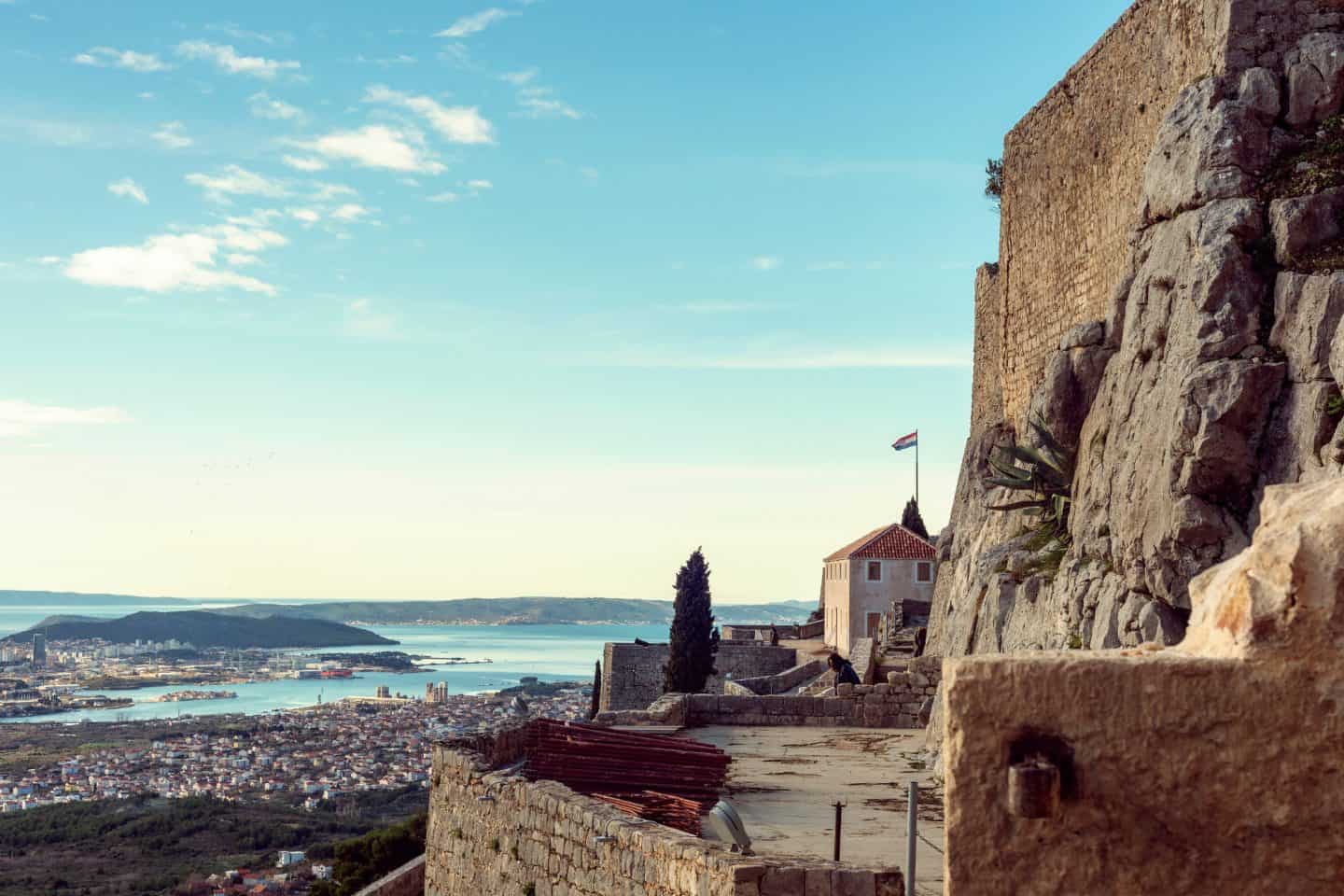
The fortress stretches along a narrow limestone ridge, with massive defensive walls, ramparts, and watchtowers that date back to different historical periods — Illyrian, Roman, Medieval, and Venetian. Walk along the outer walls for incredible panoramic views of Split, the Adriatic Sea, and the Dalmatian islands.
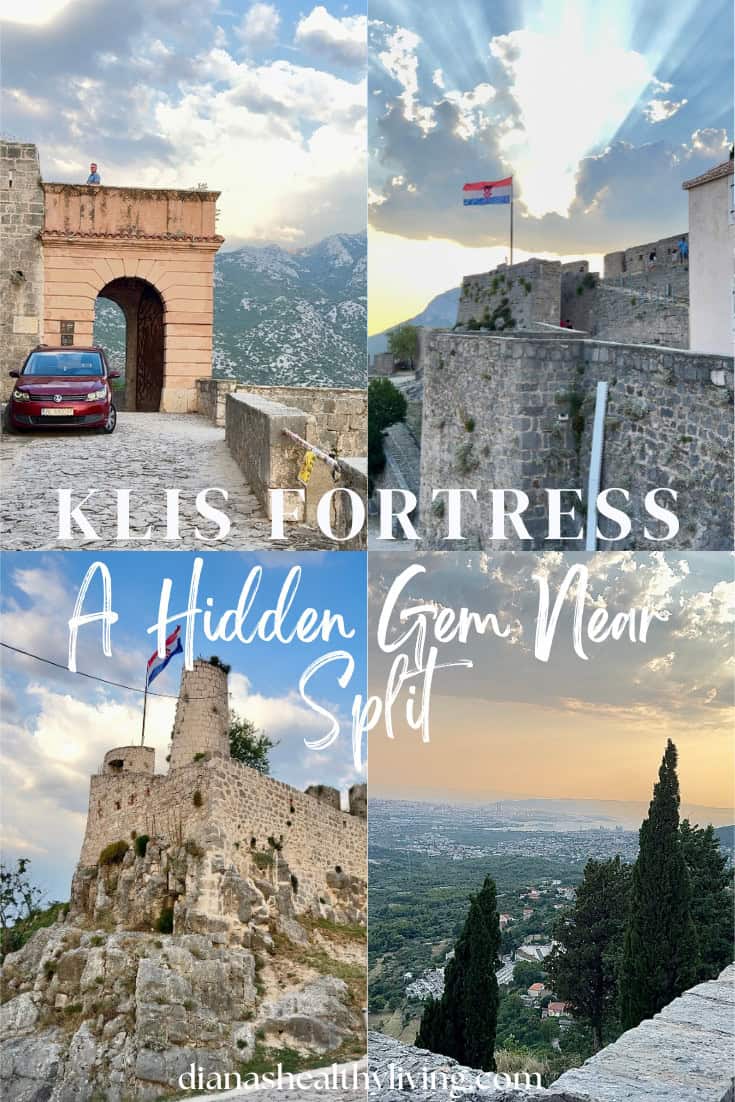
The western tower offers one of the best photo spots in the fortress — you can see the full sweep of Split’s coastline below.
2. The Upper Fortress and Main Gate
Enter through the main stone gate, which was once guarded by Croatian soldiers during the Ottoman invasions. As you climb higher into the Upper Fortress, you’ll pass through layers of ancient architecture, including stone arches and battlements once used for defense.
This area gives you the best sense of how the fortress evolved over time — from a royal residence to a military stronghold.
3. The Klis Uskoks Exhibition (Fortress Museum)
Inside the fortress, you’ll find a small but fascinating museum dedicated to the Uskoks, the legendary Croatian warriors who defended Klis against the Ottoman Empire in the 16th century.
The exhibition includes:
- Traditional weapons and armor (swords, muskets, shields)
- Uniforms and historical costumes
- Models of the fortress and the surrounding landscape
- Artifacts uncovered from centuries of battles
It’s a great way to understand the human stories behind the fortress’s stone walls.
4. Church of St. Vid (Crkva sv. Vida)
At the heart of the fortress stands the Church of St. Vid, a small stone chapel built on the site of an ancient temple. Over the centuries, it has served as a Christian church, a mosque during Ottoman rule, and later, once again, a church.
This sacred space perfectly reflects the layered history of Klis, Croatia — a crossroads of cultures and faiths.
5. Klis Fortress Game of Thrones Filming Sites
Fans of HBO’s Game of Thrones will instantly recognize parts of Klis Fortress as the city of Meereen, where Daenerys Targaryen ruled and freed the slaves.
Key filming spots include:
- The main courtyard, where Daenerys addressed her followers
- The staircases and walls overlooking Split
- The stone passageways used in various Meereen scenes
You can even spot the exact locations used for some of the show’s most iconic moments — making it a must-visit for any Klis Fortress Game of Thrones fan.

6. Panoramic Viewpoints
The 360-degree views from Klis Fortress are reason enough to visit. From the top, you can see:
- The entire city of Split below
- The islands of Brač, Hvar, and Šolta
- The Mosor Mountains behind the fortress
- The inland plains that were once crucial military routes
For photographers, this is pure magic — especially at sunset, when the light turns golden and the sea shimmers below.
7. The Outdoor Amphitheater and Events
In summer, the fortress occasionally hosts cultural events, including traditional music performances, medieval reenactments, and open-air film screenings. If you’re lucky, you might catch a local festival or historical reenactment that brings the fortress’s past to life.
8. Nearby Taverns and Scenic Spots
After exploring, stop by the nearby Perlica Tavern or Konoba Uskok for a well-earned meal and a glass of local wine with a view. These rustic eateries offer traditional Dalmatian dishes like peka, lamb, and grilled vegetables — perfect for refueling after your climb.
Insider Tip
For the best experience, bring water, sunscreen, and wear sturdy shoes — the paths can be uneven. Plan your visit for early morning or golden hour to enjoy cooler temperatures and magical light for photos.
Best Time to Visit Klis Fortress
The best time to visit Klis Fortress is in spring (April–June) or early autumn (September–October), when the weather is warm but comfortable.
Summer offers clear skies but can be hot — especially midday, since there’s little shade. For photographers, sunrise and sunset are magical times to capture the fortress and surrounding landscape.
Make It a Day Trip from Split
Klis Fortress is the perfect half-day or full-day trip from Split. Combine it with nearby attractions like:
- Ancient Salona – Roman ruins just 10 minutes away
- Trogir Old Town – A UNESCO-listed medieval city, 40 minutes away
- Kaštela Bay – For a beach stop on your way back
- Local wineries – Sample Dalmatian wines in the surrounding countryside
You can easily spend the morning exploring Klis Fortress, enjoy lunch in a local tavern, and still make it back to Split by late afternoon.

FAQs About Visiting Fortress of Klis
How long does it take to explore Klis Fortress?
To tour the fortress, museum, viewpoint, gates, AND maybe have a relaxed lunch, plan for 1.5 to 2.5 hours. If combining with another nearby site (Salona ruins, etc.), allow half a day.
Can you visit without a guide?
Yes. The fortress has detailed signs, but guided tours offer richer historical insights.
Is Klis Fortress family-friendly?
Yes, though children should be supervised on uneven terrain and near walls.
Are there restrooms or food inside?
There’s a small café and restrooms near the entrance, but it’s best to bring water and snacks.
Is it worth visiting Klis Fortress?
Absolutely. With its breathtaking views, deep history, and Game of Thrones fame, Klis Fortress is one of the most rewarding and underrated sights in Dalmatia.
How exactly do I get to Klis Fortress using public transport?
Local bus lines from Split run to Klis, especially in summer. Check current Split-Klis bus schedules (“Promet Split” or similar). The bus stop is fairly close to the fortress, though there is a climb (or walk) from the road to the entrance.
Is it hard physically? Any steep climbs or tricky terrain?
The fortress is built on steep cliffs, so there are stone steps, uneven paths, and walking uphill from parking or bus stops. Not extremely difficult for most people if you’re reasonably mobile and wear good shoes.
Is it accessible during winter / bad weather?
Yes, Klis Fortress is open year-round (though hours may be shorter in winter). Weather can be colder, windier, and some parts might be less comfortable. If there’s snow or ice, extra caution is needed.
Are guided tours or audio guides available at the fortress?
Yes. There are guided tours; also interpretative panels and a small museum. Becoming more common are tours that include historical reenactments or guides who explain the layers of architecture, the Uskoks, Ottoman period, Venetian modifications, etc.
Can you combine the visit with other attractions?
Definitely. Many visitors combine Klis Fortress with Salona (ancient Roman ruins), Trogir, Kaštela Bay, or wine / gastronomy in the Dalmatian hinterland. Also, Stella Croatica (ethno park) is close by, often included in combined tickets.
Is photography allowed? Are drones allowed?
Photography is allowed and most people come with cameras. For drones, rules may be stricter — locals often report needing permits or restricted zones. Always check local regulations to avoid surprises.
When is it least crowded?
Morning hours weekdays are best. Also spring and fall tend to have fewer crowds than summer. Midday in summer can be busy. Avoid major public holidays if possible.
Day Trips & Tours via GetYourGuide That Include Klis Fortress
If you prefer to have everything arranged in advance — transportation, guide, tickets — these tours from GetYourGuide are excellent choices:
- Split: Klis Sunset Sightseeing Bus Tour – A short, evening excursion perfect for catching panoramic sunset views over Split while exploring Klis Fortress. Check for tickets here.
- Private Split & Klis Fortress Shore Excursion – Ideal for cruise-goers, this private tour combines Split’s highlights and Klis in about 4 hours, with skip-the-line access. Check for dates here.
- Half Day: Krka Waterfalls + Klis Fortress – Pair the natural beauty of Krka with history at Klis in one day. Check for availability here.
- Salona + Klis Private Tour – Visit the ancient Roman ruins of Salona before climbing to the fortress. Book your tour here.
- Dubrovnik to Klis & Split Day Tour – For travelers coming from Dubrovnik, this option lets you see both on a longer journey. Book here.
These tours offer flexibility in duration and style, so whether you want something quick or a full-day dive, there’s an option that fits.
Final Thoughts on Visiting Klis Fortress Croatia
Klis Fortress isn’t just another landmark—it’s a living story. It’s a place where Illyrians, Romans, medieval Croatian kings, Ottomans, Venetians, Austrians, and modern Croats all left their mark. When you stand on those ramparts, looking down on Split and across the Adriatic to the islands, you’re not just getting a view—you’re stepping into the pages of history.
Whether you’re drawn by its strategic past, its architectural layers, or its modern fame from Game of Thrones, Klis offers something deeply rewarding: a sense of resilience, of breathtaking scenery, and of connection to centuries of struggle and artistry. If you’re anywhere near Split, don’t just pass by—it deserves time, curiosity, and a moment to soak it all in.
Keep Exploring Croatia
If you’re inspired to visit Klis Fortress, don’t stop there — Croatia is full of hidden treasures waiting to be explored. From the ancient ruins of Salona just minutes away to the charming coastal towns of Trogir and Split, each destination tells its own fascinating story.
👉 Discover more of my Croatia travel guides here — including tips on things to do in Split, exploring Dalmatian food and wine, visiting Trogir, and visiting beautiful places like Dubrovnik, Plitvice National Park, and the islands of Hvar and the best beaches Brač.
Whether you’re chasing history, breathtaking views, or simply a perfect Mediterranean sunset, Croatia will capture your heart — one fortress, one cobblestone street, and one stunning vista at a time.